You know that sinking feeling
You walk out of the exam hall, check the mark scheme later, and realise you lost marks on a question you actually knew. Not because the chemistry was too hard. Because you made one of those avoidable mistakes that Cambridge examiners see thousands of times every session.
The good news? These mistakes are predictable. They follow patterns. And once you know what they are, you can train yourself to spot them before they cost you marks. So let's go through the biggest ones, topic by topic, and fix them.
Mistake 1: Ignoring command words
This is the single most expensive mistake across all IGCSE Chemistry papers. The command word tells you exactly what the examiner wants, and a huge number of students ignore it entirely.
| Command word | What it actually means | What students often do instead |
|---|---|---|
| State | Give a brief, factual answer - no explanation needed | Write a full paragraph, wasting time |
| Explain | Give a reason using scientific knowledge - say WHY | Just state the fact without the reasoning |
| Describe | Say what happens, step by step or feature by feature | Give a one-word answer or explain why |
| Suggest | Apply your knowledge to an unfamiliar situation - the answer may not be in the textbook | Panic because it looks unfamiliar, then leave it blank |
| Compare | Identify similarities AND differences - you need both | Only describe one of the two things being compared |
Mistake 2: Confusing ion tests in Identification of Ions and Gases
This topic catches out so many students because the tests for different ions look frustratingly similar on paper. The classic mix-ups happen between cations that all produce white precipitates, and between gas tests that share similar setups.
The wrong approach: A student sees "white precipitate with sodium hydroxide solution" and writes calcium. But they haven't checked whether the precipitate dissolves in excess NaOH. If it does, the ion is aluminium or zinc, not calcium.
Why it loses marks: The mark scheme requires you to distinguish between ions using the full set of test results, not just the first observation. Writing the wrong ion earns zero, even if your reasoning for the partial observation was correct.
The correct approach:
- Always check behaviour in excess reagent. A white precipitate with NaOH that dissolves in excess points to Al3+ or Zn2+. One that stays insoluble points to Ca2+ or Mg2+.
- For gases, learn the specific test and result as a pair. "Turns limewater milky" = carbon dioxide. "Pops with a lighted splint" = hydrogen. "Relights a glowing splint" = oxygen. "Bleaches damp litmus paper" = chlorine. "Turns damp red litmus paper blue" = ammonia.
- Don't confuse the test for sulfate ions (white precipitate with barium chloride, insoluble in dilute HCl) with the test for chloride ions (white precipitate with silver nitrate, soluble in dilute ammonia). The reagents are different. The follow-up check is different.
Mistake 3: Muddling rate of reaction with total amount
Rate of reaction questions trip up students who don't distinguish between how fast a reaction happens and how much product it makes. These are two completely different things, and examiners penalise students who conflate them.
The wrong approach: "Adding a catalyst increases the amount of product formed." This is incorrect. A catalyst speeds up the reaction. It does not change the total yield.
Why it loses marks: The mark scheme is very specific. If the question asks about rate, your answer must address speed. Statements about yield or total volume of gas earn nothing.
The correct approach:
- When asked about rate, talk about how quickly products form or reactants are used up. Use phrases like "the reaction happens faster" or "more successful collisions per second."
- When explaining why a factor changes the rate, always connect it to collision theory. Higher temperature means particles have more kinetic energy, move faster, collide more frequently, and a greater proportion of collisions exceed the activation energy.
- For catalysts specifically: a catalyst provides an alternative reaction pathway with a lower activation energy. It does NOT give particles more energy. It does NOT increase the number of collisions. It lowers the energy barrier.
- On graphs, a faster reaction gives a steeper initial curve that levels off at the same final value. If you're asked to sketch the effect of a catalyst on a graph, your line should be steeper but reach the same final volume or mass.
Mistake 4: Swapping exothermic and endothermic explanations
You'd be surprised how many students can correctly define exothermic and endothermic but then get the details backwards when applied to specific scenarios.
The wrong approach: "In an exothermic reaction, energy is taken in from the surroundings, so the temperature goes up." This contradicts itself. If energy is taken in, the temperature of the surroundings goes down, not up.
Why it loses marks: The mark scheme checks for internal consistency. If your definition says one thing but your temperature prediction says the opposite, you earn zero for both parts.
The correct approach:
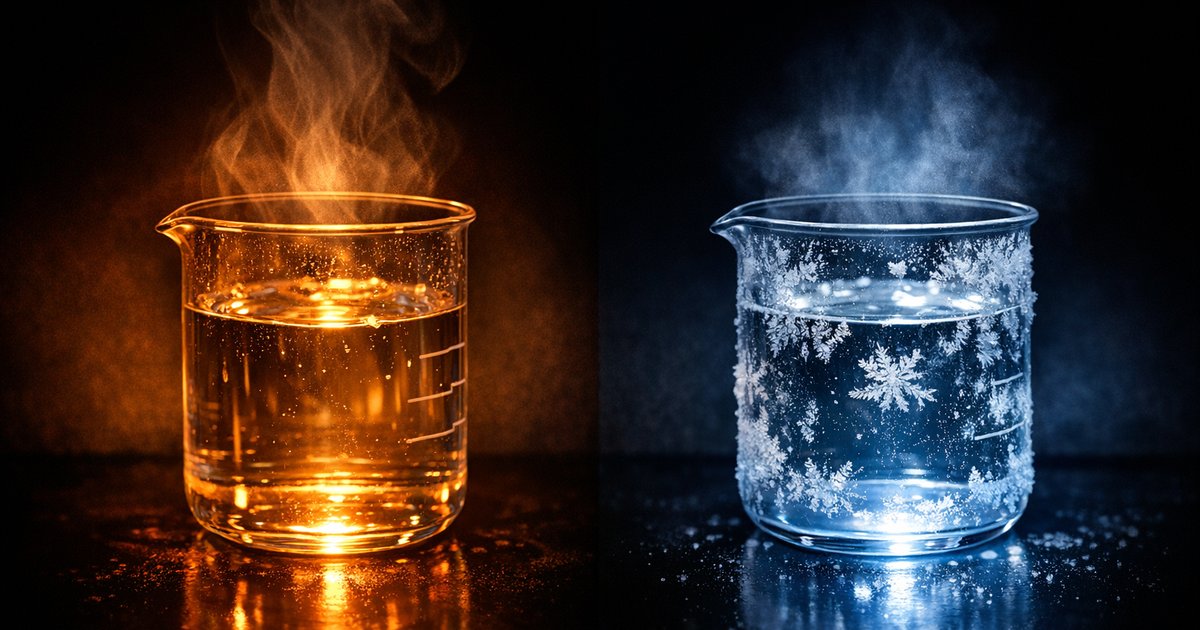
- Exothermic: energy is released to the surroundings. The temperature of the surroundings increases. Examples: combustion, neutralisation, respiration.
- Endothermic: energy is absorbed from the surroundings. The temperature of the surroundings decreases. Examples: thermal decomposition, photosynthesis, dissolving ammonium nitrate in water.
For energy profile diagrams, the mistake is drawing the arrow the wrong way. In an exothermic profile, the products sit lower than the reactants on the energy axis, and the overall energy change arrow points downward. In an endothermic profile, products sit higher, and the arrow points upward. The activation energy hump always goes up from the reactants line to the peak, regardless of whether the reaction is exothermic or endothermic.
Mistake 5: Getting electrode products wrong in electrolysis
Electrolysis is one of those topics where students learn the rules for molten compounds and then apply them incorrectly to aqueous solutions. The result is a confident but wrong answer.
The wrong approach: "Electrolysis of copper sulfate solution produces copper at the cathode and sulfate at the anode." The cathode part is correct, but sulfate ions are not discharged at the anode when the solution is aqueous. Water molecules interfere.
Why it loses marks: Electrolysis questions in IGCSE Chemistry exams almost always involve aqueous solutions, and the mark scheme requires you to account for the competing discharge of water.
The correct approach:
- At the cathode (negative electrode): metals less reactive than hydrogen are deposited as the metal. Metals more reactive than hydrogen remain in solution, and hydrogen gas is produced instead. So copper sulfate solution gives copper at the cathode, but sodium chloride solution gives hydrogen.
- At the anode (positive electrode): if a halide ion (Cl-, Br-, I-) is present in concentrated solution, the halogen is produced. Otherwise, oxygen is produced from the water. So concentrated sodium chloride solution gives chlorine at the anode, but dilute sulfuric acid gives oxygen.
- For molten electrolytes: the rules are simpler. The metal goes to the cathode. The non-metal goes to the anode. No water to compete. Lead bromide, for example, gives lead at the cathode and bromine at the anode.
| Electrolyte | Cathode product | Anode product | Why students get it wrong |
|---|---|---|---|
| Copper sulfate solution (aq) | Copper | Oxygen | They write "sulfate" instead of oxygen |
| Concentrated NaCl solution (aq) | Hydrogen | Chlorine | They write "sodium" at the cathode |
| Dilute sulfuric acid (aq) | Hydrogen | Oxygen | They forget water is the source of both gases |
| Molten lead bromide | Lead | Bromine | This one they usually get right (no water to confuse things) |
Mistake 6: Mixing up air quality and climate concepts
IGCSE Chemistry covers both air pollution and climate change, and students regularly blend the two together into one confused answer. The result? Marks lost on both.
The wrong approach: "Carbon dioxide destroys the ozone layer and causes global warming." This merges two separate issues. Carbon dioxide is a greenhouse gas, but it does not damage the ozone layer. CFCs damage the ozone layer. These are different problems with different chemistry.
Why it loses marks: The mark scheme treats greenhouse effect and ozone depletion as entirely separate topics. Attributing ozone damage to CO2, or climate effects to CFCs, earns zero for both points.
The correct approach:
- Greenhouse effect: caused by CO2, methane, and water vapour trapping infrared radiation re-emitted by the Earth's surface. This warms the atmosphere. Human activity (burning fossil fuels, deforestation) increases CO2 levels.
- Ozone depletion: caused by CFCs (chlorofluorocarbons) breaking down ozone (O3) in the stratosphere. This allows more ultraviolet radiation to reach the Earth's surface. The consequence is increased skin cancer risk, not temperature change.
- Acid rain: caused by sulfur dioxide (from burning fossil fuels containing sulfur impurities) and nitrogen oxides (from high-temperature combustion in car engines) dissolving in rainwater to form sulfuric acid and nitric acid.
Keep these three environmental issues in separate mental boxes. If a question asks about global warming, don't mention ozone. If it asks about acid rain, stick to SO2 and NOx. Mixing them up signals to the examiner that you don't understand the distinctions.
Mistake 7: Calculation errors that throw away easy marks
Chemistry calculations follow a predictable structure, and the mistakes students make are just as predictable. Here are the three that appear most often in IGCSE Chemistry exams.
Forgetting to convert units before calculating. You're given a volume in cm3 but the formula needs dm3. You're given mass in grams but forget to divide by the molar mass to get moles. Always check: are my units consistent before I plug numbers in?
Rounding too early. If a multi-step calculation asks you to find moles, then use that to find mass, keep all your decimal places through the intermediate steps. Round only at the final answer. Early rounding compounds the error, and the mark scheme allows a tight tolerance window.
Missing the units in the final answer. You calculate 4.5, but 4.5 what? Grams? Moles? dm3? The mark scheme often awards a separate mark for the correct unit. No unit, no mark.
Question: Calculate the mass of carbon dioxide produced when 10.0 g of calcium carbonate reacts with excess hydrochloric acid. (Ar values: Ca = 40, C = 12, O = 16, H = 1, Cl = 35.5)
Wrong approach: CaCO3 + HCl -> CaCl2 + CO2 + H2O. Mr of CaCO3 = 100. Mass of CO2 = 10/100 = 0.1 g. (The student divided to get moles but then wrote it as the final mass.)
Correct approach:
1. Write the balanced equation: CaCO3 + 2HCl -> CaCl2 + H2O + CO2
2. Mr of CaCO3 = 40 + 12 + (16 x 3) = 100
3. Moles of CaCO3 = 10.0 / 100 = 0.1 mol
4. From the equation, 1 mol CaCO3 produces 1 mol CO2, so moles of CO2 = 0.1 mol
5. Mr of CO2 = 12 + (16 x 2) = 44
6. Mass of CO2 = 0.1 x 44 = 4.4 g
Mistake 8: Writing incomplete explanations
This one is painful because you clearly know the chemistry - you just didn't write enough of it down. Cambridge mark schemes typically award one mark per distinct scientific point. If the question is worth 3 marks and you write one sentence, you're leaving marks on the table even if that sentence is correct.
The wrong approach: "The rate increases because the particles move faster." This earns 1 mark out of a possible 3.
The correct approach: "Increasing the temperature gives the particles more kinetic energy [1 mark]. They move faster and collide more frequently [1 mark]. A greater proportion of collisions have energy equal to or greater than the activation energy, so more collisions are successful [1 mark]."
Count the marks available. Match your answer's depth to that number. A 1-mark question needs one clear point. A 3-mark question needs three linked points. If your explanation feels too short for the marks available, it probably is.
Mistake 9: Poor time management
Running out of time is not a knowledge problem. It's a planning problem. And it's completely avoidable.
Here's what typically goes wrong. You spend 25 minutes on a 10-mark question because you find it interesting, or because you're stuck on one part and keep trying. Then you reach the final 20-mark section with only 8 minutes left and rush through it, dropping easy marks you would have collected with proper time.
How to fix it:
- Use the 1-minute-per-mark rule. A 6-mark question gets roughly 6 minutes. A 10-mark question gets 10 minutes. This isn't exact, but it prevents you from spending half the exam on one question.
- If you're stuck, move on. Circle the question number, leave space, and come back at the end. The marks you pick up by completing easier questions elsewhere are worth far more than the marks you might rescue by staring at a hard question for another 5 minutes.
- Don't rewrite answers unless they're genuinely wrong. Crossing out a correct answer and rewriting it costs time and sometimes introduces new errors. If your first attempt answered the question, leave it.
- Watch for the 4-6 mark structured questions. These carry the most marks and need the most careful answers. Budget your time so you reach every single one with enough minutes to answer properly.
Pulling it all together
None of the mistakes above are about not knowing enough chemistry. They're about exam technique: reading questions carefully, matching your answer to the command word, keeping concepts separate, showing enough working, and managing your time. These are skills, not knowledge, and they respond to practice.
Here's your action plan for the next time you sit down with a Cambridge IGCSE Chemistry past paper:
- Underline every command word before you start writing.
- For ion tests and electrolysis, draw a quick reference grid on your rough paper before the exam. Two minutes of preparation saves repeated confusion.
- On rate questions, ask yourself: "Am I being asked about speed or amount?" Answer accordingly.
- On energy questions, pause and check: "Does my temperature prediction match my definition?"
- On calculation questions, show every step. Write units at the end. Don't round until you're done.
- Count marks. Match your answer depth to the mark allocation.
- Stick to 1 minute per mark. Move on when stuck.
You already have the chemistry knowledge. Now sharpen the technique, and those lost marks will come back to you.

A practical breakdown of the most common mistakes IGCSE Chemistry students make in exams, from misreading command words to topic-specific errors in electrolysis, rates of reaction, and ion identification. Each mistake is paired with the wrong approach, why it costs marks, and the correct technique to use instead.


Comment(s)