Loading....
|
Press & Hold to Drag Around |
|||
|
Click Here to Close |
|||
Question 1 Report
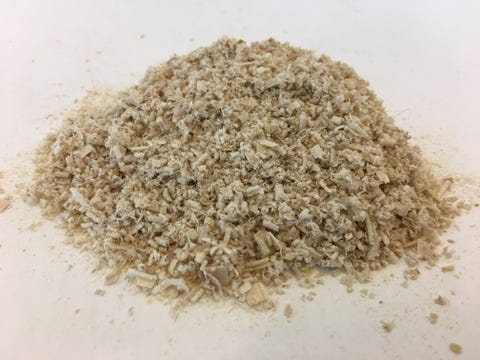
a) (i) identify specimens P and R [2 marks]
Specimen P:

Specimen R:

(ii) State three reasons why the use of specimen P is not recommended in a brooder house [3 marks]
(iii) Mention two other materials that could be used in place of specimen P in a brooder house [2 marks]
(iv) What is the name given to the product formed when poultry droppings mix with specimen P? [1 mark]
(v) State four uses of the product mentioned in (a) (iv) in agricultural production [4 marks]
(b) State three ways of controlling specimen R in crop production. (3 marks]
(a)(i) Identification
(a)(ii) Three reasons why specimen P (sawdust) is not recommended in a brooder house
(a)(iii) Two other materials that could be used in place of specimen P
(a)(iv) Name of the product formed when poultry droppings mix with specimen P
Poultry manure (farmyard manure).
(a)(v) Four uses of the product in agricultural production
(b) Three ways of controlling specimen R (bird) in crop production
Answer Details
(a)(i) Identification
(a)(ii) Three reasons why specimen P (sawdust) is not recommended in a brooder house
(a)(iii) Two other materials that could be used in place of specimen P
(a)(iv) Name of the product formed when poultry droppings mix with specimen P
Poultry manure (farmyard manure).
(a)(v) Four uses of the product in agricultural production
(b) Three ways of controlling specimen R (bird) in crop production
Question 2 Report
(a) (i) identify specimen H, I, J and K [4 marks]
(ii) State two uses of each of specimens J and k [4 marks]
(iii) State three general ways of maintaining specimens H and I [3 marks]
(iv) State four precautions to be taken when using specimen J [4 marks]
(a)(i) Identification of specimens
(a)(ii) Two uses each of J and K
J (knapsack sprayer):
(It is also used for foliar application of liquid fertilizer and for spraying disinfectants on livestock houses.)
K (wheelbarrow):
(a)(iii) Three general ways of maintaining H (shears) and I (sickle)
(a)(iv) Four precautions when using J (knapsack sprayer)
Answer Details
(a)(i) Identification of specimens
(a)(ii) Two uses each of J and K
J (knapsack sprayer):
(It is also used for foliar application of liquid fertilizer and for spraying disinfectants on livestock houses.)
K (wheelbarrow):
(a)(iii) Three general ways of maintaining H (shears) and I (sickle)
(a)(iv) Four precautions when using J (knapsack sprayer)
Question 3 Report
(a) (i) identify specimens A(Clayey soil) and B(Sandy soil) by the feel method. [2 marks]
(ii) Name two crops that would thrive well on each of specimens A and B. [2marks]
(iii) Mention three ways by which specimen B can be improved. (3 marks]
(b) (i) identify specimens C and D. (2 marks]
(ii) State three non-ways in which specimen C is important in crop production. [3 marks]
(iii) State three uses of specimen B in agriculture. [3 marks]
(a)(i) Identification by the feel method
(a)(ii) Two crops that thrive on each
(a)(iii) Three ways specimen B (sandy soil) can be improved
(b)(i) Identification of specimens C and D
(b)(ii) Three ways specimen C (millipede) is important in crop production
(b)(iii) Three uses of specimen D (cow dung) in agriculture
Answer Details
(a)(i) Identification by the feel method
(a)(ii) Two crops that thrive on each
(a)(iii) Three ways specimen B (sandy soil) can be improved
(b)(i) Identification of specimens C and D
(b)(ii) Three ways specimen C (millipede) is important in crop production
(b)(iii) Three uses of specimen D (cow dung) in agriculture
Question 4 Report
Forth maize seeds were sown on a raised bed and thirty-five seeds germinated.
(a) (i) Calculate the percentage of the maize seeds that germinated [2 marks]
(ii) What is the percentage of the maize seeds that did not germinate? [2 marks]
(b) State four conditions that could have enhanced the germination of the thirty-five seeds. [4 marks]
(c) Suggest five reasons why some of the seeds did not germinate [5 marks]
(d) Give two industrial uses of maize seeds.
Given: 40 maize seeds sown, 35 germinated.
(a)(i) Percentage that germinated
\[ \text{Germination \%} = \frac{\text{number germinated}}{\text{number sown}} \times 100 = \frac{35}{40} \times 100 = 87.5\% \](a)(ii) Percentage that did not germinate
Seeds that failed = 40 - 35 = 5.
\[ \frac{5}{40} \times 100 = 12.5\% \](Or simply 100% - 87.5% = 12.5%.)
(b) Four conditions that could have enhanced germination
(c) Five reasons why some seeds did not germinate
(d) Two industrial uses of maize seeds
Answer Details
Given: 40 maize seeds sown, 35 germinated.
(a)(i) Percentage that germinated
\[ \text{Germination \%} = \frac{\text{number germinated}}{\text{number sown}} \times 100 = \frac{35}{40} \times 100 = 87.5\% \](a)(ii) Percentage that did not germinate
Seeds that failed = 40 - 35 = 5.
\[ \frac{5}{40} \times 100 = 12.5\% \](Or simply 100% - 87.5% = 12.5%.)
(b) Four conditions that could have enhanced germination
(c) Five reasons why some seeds did not germinate
(d) Two industrial uses of maize seeds
Would you like to proceed with this action?