Snail Farming
Overview
Long before anyone farmed it, the giant African land snail was simply gathered: children combing the bush after the first rains, market women selling whatever a night's hunting turned up. Snail farming, properly called heliciculture, is the deliberate opposite of that: breeding and rearing edible snails in a controlled pen so that supply no longer depends on the weather or the width of the bush. It is one of the smallest, cheapest livestock enterprises a Nigerian household can start, and one of the most overlooked.
In this lesson you will learn what snail farming actually means, meet the two giant land snail species Nigerian farmers rear, and work through the housing, feeding and breeding routine that keeps a snailery productive. You will finish able to explain why this quiet, low-cost enterprise deserves a place beside poultry and fish farming in any serious discussion of Nigerian livestock production.
Objectives
- Define snail farming
- State the common species of edible snails reared in Nigeria
- Explain the management practices in snail farming
- State the economic importance of snail farming
- Explain the factors that favour snail farming in Nigeria
Lesson Note
Sign Up to Continue
Create a free account to access all learning resources, practice questions, and track your progress.
Lesson Evaluation
Congratulations on completing the lesson on Snail Farming. Now that youve explored the key concepts and ideas, its time to put your knowledge to the test. This section offers a variety of practice questions designed to reinforce your understanding and help you gauge your grasp of the material.
You will encounter a mix of question types, including multiple-choice questions, short answer questions, and essay questions. Each question is thoughtfully crafted to assess different aspects of your knowledge and critical thinking skills.
Use this evaluation section as an opportunity to reinforce your understanding of the topic and to identify any areas where you may need additional study. Don't be discouraged by any challenges you encounter; instead, view them as opportunities for growth and improvement.
- Snail farming is best defined as: A. Collecting snails found wild in the bush after rain B. The deliberate rearing of edible snails in a managed enclosure for food and income C. Hunting snails for sale in the market D. Keeping snails as pets only Answer: B
- Which of the following is a distinguishing feature of Archachatina marginata? A. A narrow conical shell with brown stripes B. A large dark shell with a pale band C. A white shell with no markings D. No shell at all Answer: B
- The enclosure in which farmed snails are housed is called a: A. Coop B. Snailery C. Sty D. Hutch Answer: B
- Which of these is the best reason snails must be kept in shaded, moist conditions? A. They dislike bright colours B. Their soft skin loses water quickly in dry, sunny conditions C. They cannot see in daylight D. Shade improves the taste of the meat Answer: B
- Giant land snails are described as hermaphrodite because each snail: A. Can fertilise its own eggs alone B. Carries both male and female reproductive organs C. Has no reproductive organs D. Changes sex every year Answer: B
Sign Up to Continue
Create a free account to access all learning resources, practice questions, and track your progress.
Sign Up to Continue
Create a free account to access all learning resources, practice questions, and track your progress.
Recommended Books

Past Questions
Wondering what past questions for this topic looks like? Here are a number of questions about Snail Farming from previous years
Question 1 Report

Specimen E (Land snail)
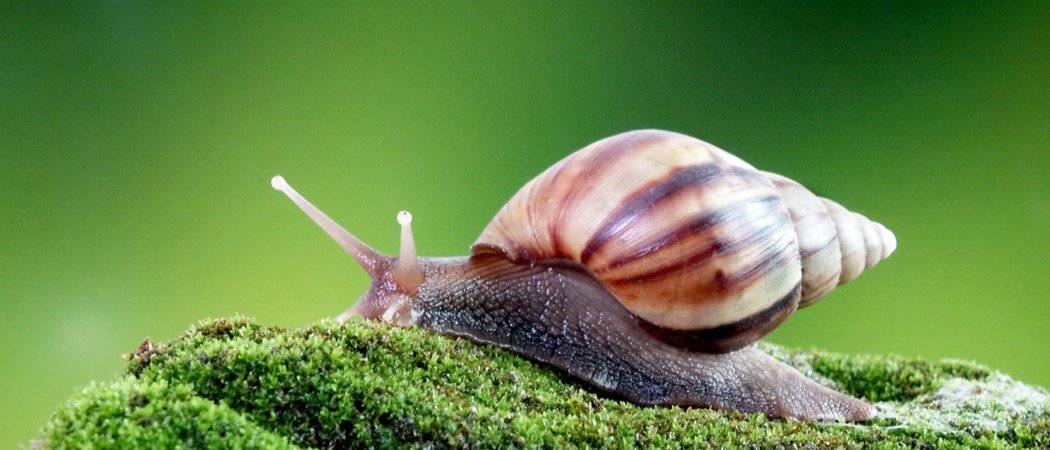
(a)(i) Name two external parts of the body of specimen E.
(ii) State five which could be derived from rearing specimen E.
(iii) Name three pests that could attack specimen E.
Specimen F (Bamboo)
:max_bytes(150000):strip_icc()/how-to-grow-golden-bamboo-5077107-hero-50c7b729a702412b8e106469b2431368.jpg)
(b)(i) State three uses of specimen F on an animal farm.
(ii) Give two disadvantages of using specimen F on an animal farm
Sign Up to Continue
Create a free account to access all learning resources, practice questions, and track your progress.