Snail Farming
Visão Geral
Long before anyone farmed it, the giant African land snail was simply gathered: children combing the bush after the first rains, market women selling whatever a night's hunting turned up. Snail farming, properly called heliciculture, is the deliberate opposite of that: breeding and rearing edible snails in a controlled pen so that supply no longer depends on the weather or the width of the bush. It is one of the smallest, cheapest livestock enterprises a Nigerian household can start, and one of the most overlooked.
In this lesson you will learn what snail farming actually means, meet the two giant land snail species Nigerian farmers rear, and work through the housing, feeding and breeding routine that keeps a snailery productive. You will finish able to explain why this quiet, low-cost enterprise deserves a place beside poultry and fish farming in any serious discussion of Nigerian livestock production.
Objetivos
- Define snail farming
- State the common species of edible snails reared in Nigeria
- Explain the management practices in snail farming
- State the economic importance of snail farming
- Explain the factors that favour snail farming in Nigeria
Nota de Aula
Registe-se para Continuar
Crie uma conta gratuita para aceder a todos os recursos de aprendizagem, perguntas práticas e acompanhar o seu progresso.
Avaliação da Lição
Parabéns por concluir a lição em Snail Farming. Agora que você explorou o conceitos e ideias-chave, é hora de colocar seu conhecimento à prova. Esta seção oferece uma variedade de práticas perguntas destinadas a reforçar sua compreensão e ajudá-lo a avaliar sua compreensão do material.
Irá encontrar uma mistura de tipos de perguntas, incluindo perguntas de escolha múltipla, perguntas de resposta curta e perguntas de redação. Cada pergunta é cuidadosamente elaborada para avaliar diferentes aspetos do seu conhecimento e competências de pensamento crítico.
Use esta secção de avaliação como uma oportunidade para reforçar a tua compreensão do tema e identificar quaisquer áreas onde possas precisar de estudo adicional. Não te deixes desencorajar pelos desafios que encontrares; em vez disso, vê-os como oportunidades de crescimento e melhoria.
- Snail farming is best defined as: A. Collecting snails found wild in the bush after rain B. The deliberate rearing of edible snails in a managed enclosure for food and income C. Hunting snails for sale in the market D. Keeping snails as pets only Answer: B
- Which of the following is a distinguishing feature of Archachatina marginata? A. A narrow conical shell with brown stripes B. A large dark shell with a pale band C. A white shell with no markings D. No shell at all Answer: B
- The enclosure in which farmed snails are housed is called a: A. Coop B. Snailery C. Sty D. Hutch Answer: B
- Which of these is the best reason snails must be kept in shaded, moist conditions? A. They dislike bright colours B. Their soft skin loses water quickly in dry, sunny conditions C. They cannot see in daylight D. Shade improves the taste of the meat Answer: B
- Giant land snails are described as hermaphrodite because each snail: A. Can fertilise its own eggs alone B. Carries both male and female reproductive organs C. Has no reproductive organs D. Changes sex every year Answer: B
Registe-se para Continuar
Crie uma conta gratuita para aceder a todos os recursos de aprendizagem, perguntas práticas e acompanhar o seu progresso.
Registe-se para Continuar
Crie uma conta gratuita para aceder a todos os recursos de aprendizagem, perguntas práticas e acompanhar o seu progresso.
Livros Recomendados

Perguntas Anteriores
Pergunta-se como são as perguntas anteriores sobre este tópico? Aqui estão várias perguntas sobre Snail Farming de anos passados.
Pergunta 1 Relatório

Specimen E (Land snail)
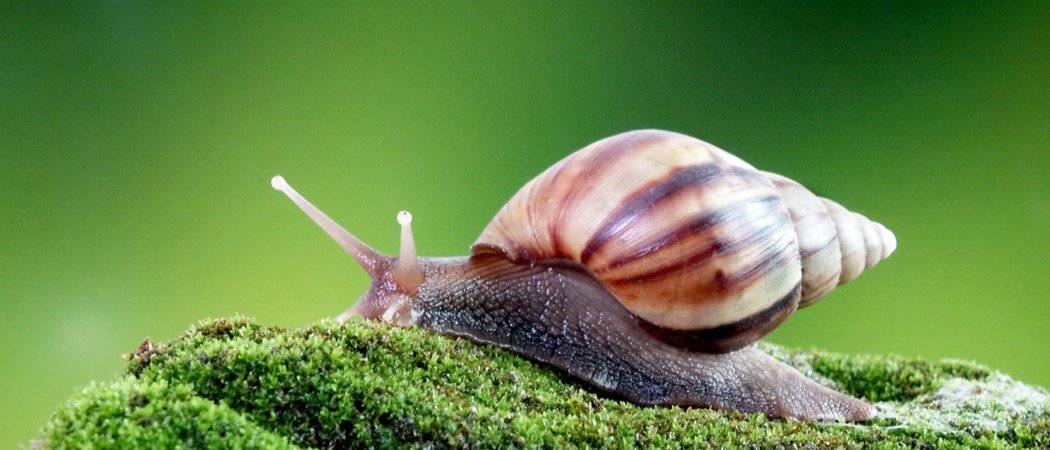
(a)(i) Name two external parts of the body of specimen E.
(ii) State five which could be derived from rearing specimen E.
(iii) Name three pests that could attack specimen E.
Specimen F (Bamboo)
:max_bytes(150000):strip_icc()/how-to-grow-golden-bamboo-5077107-hero-50c7b729a702412b8e106469b2431368.jpg)
(b)(i) State three uses of specimen F on an animal farm.
(ii) Give two disadvantages of using specimen F on an animal farm
Registe-se para Continuar
Crie uma conta gratuita para aceder a todos os recursos de aprendizagem, perguntas práticas e acompanhar o seu progresso.