Your kitchen cupboard and the story of natural resources
Open a kitchen cupboard and look at what is inside. The ceramic plate was fired from clay. The glass jar started life as sand. The salt shaker holds a mineral mined from deep underground. Even the steel hinges on the cupboard door trace back to iron ore pulled from the earth. Every single one of those items began as a natural resource, and understanding how we find, extract, and manage those resources is at the heart of IGCSE Environmental Management.
This article walks you through the Natural Resources section of the Cambridge IGCSE Environmental Management syllabus (0680). We will start where all rock-based resources begin: deep inside the Earth, where rocks are formed, broken down, and reformed in an endless loop. From there, we will look at how humans extract what we need, why that extraction comes with costs, and how we can manage resources sustainably so they last for future generations. Along the way, we will cover energy resources, conservation strategies, and the increasingly discussed topic of fracking.
How rocks are formed: the three families
Think of it like baking. You can make bread three very different ways: you can heat raw dough in an oven (that is your igneous rock), you can press layers of pastry together until they bond (sedimentary rock), or you can take an existing loaf and reshape it under intense heat and pressure until it becomes something new entirely (metamorphic rock). Each process gives you a product with different characteristics, and the Cambridge syllabus expects you to know specific named examples of each.
Igneous rocks
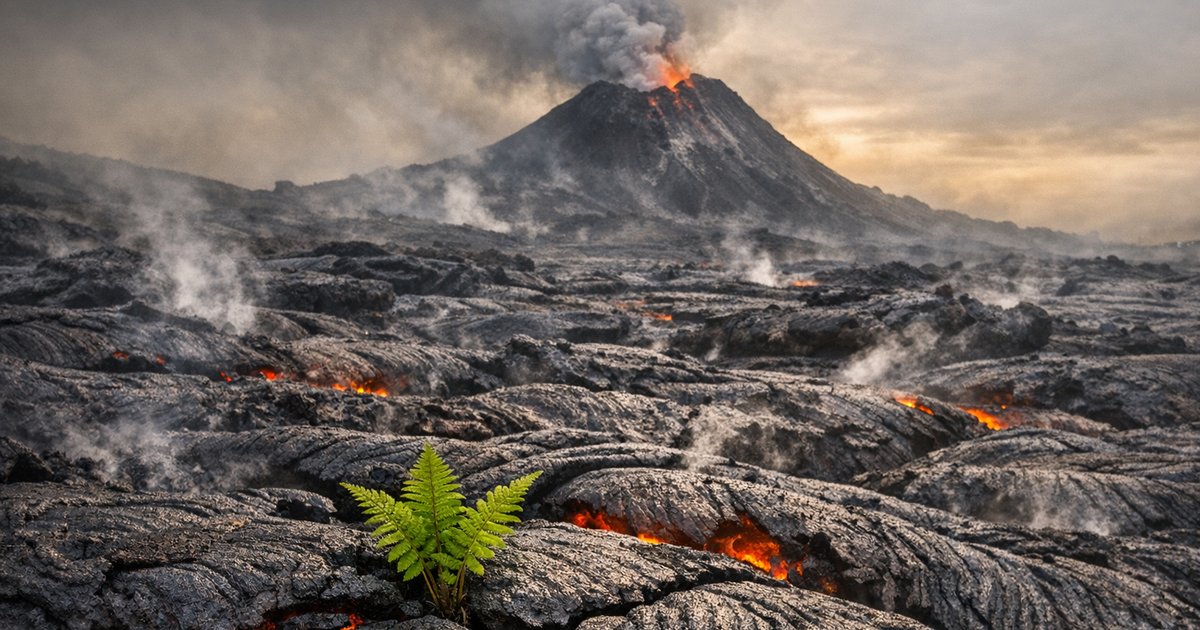
Igneous rocks form when molten magma or lava cools and solidifies. The key factor that determines their texture is the speed of cooling. When magma cools slowly underground, the minerals have plenty of time to grow into large, visible crystals. Granite is the classic example: look closely at a piece and you can see distinct grains of quartz, feldspar, and mica. We call these intrusive igneous rocks because the magma intruded into the surrounding rock before it cooled.
When lava erupts at the surface and cools rapidly, there is no time for large crystals to form. The result is a fine-grained rock like basalt, where the crystals are too small to see without a magnifying glass. These are extrusive igneous rocks. Pumice takes this even further: it cooled so quickly that gas bubbles were trapped inside, making it light enough to float on water.
Sedimentary rocks
Sedimentary rocks form through a process that takes millions of years. Existing rocks are weathered and eroded into tiny fragments. Rivers, wind, and glaciers transport those fragments and deposit them in layers, often at the bottom of seas, lakes, or river deltas. Over time, more layers pile on top, and the weight compresses the lower layers. Water seeping through the gaps deposits natural cements (often calcite or silica) that bind the grains together. This process of compaction and ceite cementation is called lithification.
Sandstone forms from sand-sized grains, typically quartz. Limestone often forms from the accumulated shells and skeletons of marine organisms, which is why you can sometimes find fossils in it. Mudstone (or shale) forms from much finer clay particles. Because sedimentary rocks form in layers, they often display visible bedding planes, and because they can trap the remains of living things, they are the only rock type that commonly contains fossils.
Metamorphic rocks
Metamorphic rocks are the transformed versions of existing rocks. When any rock (igneous, sedimentary, or even another metamorphic rock) is subjected to intense heat and pressure without actually melting, its mineral structure rearranges. The original rock is called the parent rock, and the new rock has different properties.
Marble forms when limestone is metamorphosed. The calcite crystals recrystallise into a harder, more interlocking structure, which is why marble takes a polish so beautifully and why sculptors have loved it for centuries. Slate forms from mudstone or shale. The flat clay minerals align under pressure into parallel layers, giving slate its characteristic ability to split into thin, flat sheets, which is perfect for roofing tiles. Quartzite forms from sandstone and is one of the hardest common rocks you will encounter.
The rock cycle: nothing is permanent
Here is something that surprises a lot of students: no rock is forever. Every rock on Earth is part of an ongoing cycle of creation, destruction, and recreation. The rock cycle describes how rocks change from one type to another over geological time.
Imagine you are standing on a granite mountain. Rain, frost, and plant roots slowly weather the granite into fragments. Rivers carry those fragments to the sea, where they settle in layers on the ocean floor. Over millions of years, they compact and cement into sandstone (a sedimentary rock). If tectonic forces push that sandstone deep underground where temperatures and pressures are extreme, it metamorphoses into quartzite. If the quartzite is pushed even deeper into the mantle and melts, it becomes magma. When that magma eventually cools, a new igneous rock is born. The cycle is complete, but it never truly ends.
The important thing to grasp is that the cycle does not follow a fixed sequence. Igneous rock does not have to become sedimentary before it can become metamorphic. Any rock type can transform into any other, depending on the conditions it encounters. Metamorphic rock can be weathered directly into sediment. Sedimentary rock can melt directly into magma if it reaches a subduction zone. The cycle is a web of possible pathways, not a simple loop.
Permeability: can water pass through?
Permeability is simply a measure of how easily water (or other fluids) can flow through a rock. Think of it like a sponge versus a sheet of glass. Water passes straight through a sponge because it is full of connected pores. Water sits on top of glass because there are no pathways for it to travel through.
Permeable rocks have pores, cracks, or joints that allow water to pass through. Sandstone is a good example: the spaces between sand grains act as tiny channels. Chalk is another permeable rock. These rocks are important because they can act as aquifers, storing groundwater that communities tap for drinking water.
Impermeable rocks block the passage of water. Granite, despite being very hard, is largely impermeable because its interlocking crystals leave very few connected spaces. Clay is also impermeable, which is why clay-lined ponds hold water so well. Slate, with its tightly compressed layers, acts as a barrier too.
Understanding permeability matters for environmental management because it affects where groundwater accumulates, how pollutants spread through the ground, and where we can safely locate landfill sites. If you build a landfill on permeable rock without a liner, contaminants will seep into the groundwater supply.
What is an ore, and why does it matter?
An ore is a naturally occurring rock or mineral from which a metal or valuable mineral can be extracted profitably. That last word is important: profitability. A deposit of iron-rich rock only counts as an ore if it contains enough iron, at a high enough concentration, to make mining it economically worthwhile. If the price of iron drops or the cost of extraction rises, the same deposit might no longer qualify as an ore. The definition is as much economic as it is geological.
Bauxite is the principal ore of aluminium. Haematite is a major ore of iron. Chalcopyrite is an ore of copper. In each case, the metal is locked inside the mineral structure and must be separated through processing (smelting, refining, or electrolysis).
Extraction of rocks, ores, and minerals
Humans extract natural resources through several methods, each with its own environmental footprint. The method chosen depends on the depth, size, and type of deposit.
Surface mining (open-cast or open-pit)
When the resource lies close to the surface, the overlying soil and rock (called overburden) is stripped away to expose the deposit. This is common for coal, sand, gravel, limestone, and some metal ores. Surface mining is efficient for shallow, wide deposits, but the environmental costs are significant: habitat destruction, dust pollution, noise, visual scarring of the landscape, and disruption of drainage patterns.
Underground (subsurface) mining
When deposits lie deep underground, shafts and tunnels are dug to reach them. Underground mining disturbs less surface area than open-cast mining, but it carries risks of tunnel collapse, flooding, and exposure to harmful dust and gases. Subsidence (the gradual sinking of the ground surface above mined-out areas) can damage buildings and infrastructure long after the mine has closed.
Quarrying
Quarrying is a form of surface extraction used mainly for building materials: limestone, granite, marble, slate, and sand. Quarries tend to be large, open excavations that can dominate a local landscape. The noise from blasting and heavy machinery, the dust, and the heavy truck traffic on local roads are common sources of conflict between quarry operators and nearby communities.
Environmental impacts of extraction
| Impact | Details |
|---|---|
| Habitat destruction | Removal of vegetation and topsoil eliminates habitats for plants and animals |
| Water pollution | Acid mine drainage, heavy metal runoff, and sedimentation of rivers |
| Air pollution | Dust from blasting and crushing; exhaust fumes from heavy machinery |
| Noise pollution | Blasting, drilling, and truck movements affect nearby communities and wildlife |
| Landscape scarring | Open-cast mines and quarries leave large, visible holes that take decades to rehabilitate |
| Subsidence | Underground mining can cause the ground surface to sink, damaging buildings and roads |
Sustainable management of rocks, ores, and minerals
Here is the central tension of this topic: we need rocks and minerals for construction, manufacturing, and technology, but every extraction operation damages the environment. Sustainable management is about finding ways to meet our needs without exhausting resources or causing irreversible environmental harm.
Strategies for sustainability
Recycling is one of the most effective strategies. Metals like aluminium, copper, and steel can be melted down and reused almost indefinitely without losing quality. Recycling aluminium uses only about 5% of the energy required to extract it from bauxite ore, which means huge savings in both energy costs and carbon emissions. Glass, too, can be recycled repeatedly.
Substitution means replacing a scarce resource with a more abundant or renewable alternative. For example, using timber from sustainably managed forests instead of quarried stone for certain construction purposes, or using recycled plastic lumber for outdoor furniture instead of hardwood.
Restoration and rehabilitation involve returning a mined or quarried site to a useful state after extraction ends. Old quarries can be flooded to create lakes for recreation or wildlife reserves. Overburden can be replaced and replanted with native vegetation. In some cases, former mines have been converted into underground storage facilities or even tourist attractions.
Legislation and regulation play a role too. Governments can require environmental impact assessments before mining begins, set limits on emissions and waste disposal, and mandate restoration bonds (where the mining company deposits money upfront that is only returned when the site has been properly rehabilitated).
Energy resources: the fuel that runs everything
If rocks and minerals are the building blocks of civilisation, energy is the engine that assembles them. The IGCSE Environmental Management syllabus divides energy resources into two broad categories: non-renewable and renewable.
Non-renewable energy resources
Non-renewable resources are finite. Once used, they cannot be replaced within a human lifetime (or even thousands of human lifetimes). They include:
Fossil fuels (coal, oil, and natural gas) formed from the remains of ancient organisms buried and compressed over millions of years. Coal comes from ancient swamp forests. Oil and natural gas formed from marine organisms deposited in ocean sediments. When burned, fossil fuels release carbon dioxide, a greenhouse gas that contributes to climate change. They also release sulfur dioxide (which causes acid rain) and particulate matter (which affects air quality and human health).
Nuclear energy uses the heat generated by splitting uranium atoms (nuclear fission) to produce steam, which drives turbines. Nuclear power stations produce very little carbon dioxide during operation, but they generate radioactive waste that remains hazardous for thousands of years and must be stored securely. The risk of accidents, though statistically low, carries potentially catastrophic consequences, as events at Chernobyl and Fukushima demonstrated.
Renewable energy resources
Renewable resources are replenished naturally and will not run out if managed properly. They include:
| Source | How it works | Advantages | Limitations |
|---|---|---|---|
| Solar | Photovoltaic cells convert sunlight into electricity | No emissions during operation; low maintenance | Intermittent (depends on sunlight); large land area needed for solar farms |
| Wind | Turbines convert kinetic energy of wind into electricity | No emissions during operation; can be placed offshore | Intermittent; visual impact; noise; bird and bat mortality |
| Hydroelectric | Falling water drives turbines in a dam | Reliable; can respond quickly to demand changes; reservoir for water supply | Displaces communities; floods habitats; disrupts river ecosystems |
| Geothermal | Heat from the Earth's interior generates steam for turbines | Constant supply; small land footprint | Only viable in volcanically active areas; drilling costs |
| Biomass | Organic material (wood, crop waste, biogas) is burned or converted to fuel | Carbon-neutral if replanted; uses waste products | Requires land; can compete with food production; still produces some emissions |
| Tidal | Movement of tides drives turbines in barrages or tidal stream devices | Predictable; no emissions during operation | High construction costs; affects estuarine habitats; limited suitable sites |
Conservation and management of energy resources
Using energy more wisely is just as important as choosing where it comes from. Conservation means reducing the total amount of energy we consume, while efficiency means getting more useful output from each unit of energy we do use. Both approaches work together.
At the household level, insulating walls and roofs reduces heat loss, meaning less energy is needed for heating. Switching to LED lighting cuts electricity use for the same amount of light. Using energy-efficient appliances (rated A++ or equivalent) reduces consumption without changing daily habits.
At the industrial level, combined heat and power (CHP) systems capture waste heat from electricity generation and use it to heat buildings or industrial processes, raising overall efficiency from around 35% to over 80%. Better industrial processes, improved furnace designs, and heat recovery systems all contribute to reducing energy waste in manufacturing.
At the government level, policies such as carbon taxes (which make fossil fuels more expensive and encourage a shift to renewables), subsidies for solar panels and wind farms, building regulations that mandate insulation standards, and public transport investment all help reduce national energy consumption and shift the energy mix toward cleaner sources.
Fracking: the controversial middle ground
Hydraulic fracturing, known as fracking, is a method of extracting natural gas (and sometimes oil) from shale rock deep underground. It involves drilling a borehole down to the shale layer, then drilling horizontally through it. A high-pressure mixture of water, sand, and chemicals is pumped into the borehole, fracturing the rock and releasing trapped gas, which flows back to the surface for collection.
Fracking has become one of the most debated topics in environmental management because it sits right at the intersection of energy security and environmental protection.
Arguments in favour of fracking
- It accesses large reserves of natural gas that were previously unreachable, improving energy security and reducing dependence on imported fuels
- Natural gas produces roughly half the carbon dioxide of coal when burned for electricity, so switching from coal to gas can reduce greenhouse gas emissions in the short term
- It creates jobs in drilling, engineering, and supporting industries
- It generates revenue through taxation and royalties paid to governments and landowners
Arguments against fracking
- The chemicals used in fracking fluid can contaminate groundwater if the well casing leaks or if spills occur at the surface
- Fracking has been linked to small earthquakes (induced seismicity) in areas that do not normally experience them
- It requires vast amounts of water, which can strain local water supplies
- Methane (a potent greenhouse gas) can leak during the extraction process, potentially offsetting the carbon advantages over coal
- It extends our reliance on fossil fuels at a time when many scientists argue we should be transitioning to renewables
Worked example: connecting the concepts
Let us pull these ideas together with a scenario that mirrors what you might see on your IGCSE paper.
Scenario: A government is considering whether to allow open-cast mining of a limestone deposit in a rural area. The limestone would be used for road construction and cement manufacturing. The deposit sits above a major aquifer that supplies drinking water to 50,000 people.
Question: Discuss the environmental and social impacts of this proposal and suggest how the impacts could be managed sustainably.
A strong answer would cover:
The environmental impacts include habitat destruction from removing vegetation and topsoil, dust and noise pollution affecting nearby communities, and the critical risk of contaminating the aquifer. Limestone is a permeable rock, so pollutants from the mining operation could seep through fractures and joints into the groundwater below. This is especially concerning because the aquifer serves as the drinking water source for a large population.
Social impacts include disruption to the rural landscape that may affect tourism and property values, increased heavy vehicle traffic on local roads, and potential health effects from dust inhalation for workers and nearby residents. On the positive side, the mine would create local employment and provide raw materials for infrastructure development.
Sustainable management strategies could include requiring a full environmental impact assessment before approval, installing impermeable liners and drainage systems to protect the aquifer, setting strict limits on blasting times and dust emissions, requiring the company to post a restoration bond, and planning the rehabilitation of the site after extraction ends (for example, converting the quarry into a nature reserve or recreational lake). The government might also consider whether recycled aggregates from demolished buildings could partially substitute for newly quarried limestone, reducing the scale of extraction needed.
Common mistakes students make on this topic
After looking at how students tackle Natural Resources questions in IGCSE Environmental Management, a few patterns stand out.
Confusing rock types with each other. Students sometimes describe the formation process of one rock type but label it as another. Granite is not sedimentary. Sandstone is not igneous. Marble is not formed by compaction of shells. Double-check that your description matches the rock name.
Forgetting that the rock cycle is not a one-way loop. Any rock type can transform into any other. Students who draw the rock cycle as a simple circle (igneous to sedimentary to metamorphic and back) miss the shortcuts. Igneous rock can metamorphose directly. Metamorphic rock can weather into sediment without melting first.
Defining "ore" without the economic component. An ore is not just any rock containing a metal. It must be economically viable to extract the metal from it. If your definition omits the idea of profitable extraction, you will lose a mark.
Writing one-sided answers about fracking or mining. These topics almost always appear as evaluation questions. If you only describe the negatives (or only the positives), you are leaving marks on the table. Always present both sides, then conclude with a reasoned judgement.
Ignoring the link between permeability and pollution. Questions about quarrying or mining near water sources are testing whether you understand how rock permeability affects groundwater contamination. If the rock is permeable, pollutants travel through it. If it is impermeable, it acts as a barrier. Making that connection explicitly in your answer picks up application marks.
Self-check questions
- Name one example each of an igneous, sedimentary, and metamorphic rock, and briefly describe how each forms.
- Explain why the rock cycle is described as a web of pathways rather than a simple loop.
- Define the term "permeability" and give one example of a permeable rock and one example of an impermeable rock.
- Define the term "ore." Why is the economic aspect of the definition important?
- A company proposes to open a quarry on permeable sandstone above an aquifer. Identify two environmental risks and suggest one management strategy to reduce each risk.
- Compare the advantages and disadvantages of solar energy and nuclear energy as alternatives to fossil fuels.
- Explain why recycling aluminium is considered a more sustainable option than extracting new aluminium from bauxite ore.
- A government is debating whether to allow fracking in a region with limited water resources. Outline two arguments for and two arguments against the proposal.

A deep-dive into the Natural Resources topic of Cambridge IGCSE Environmental Management (0680), covering rock formation, the rock cycle, permeability, ore extraction, sustainable resource management, energy sources, conservation strategies, and fracking. Includes worked examples, exam-style self-check questions, and common mistakes to avoid.




Comentário(s)