Snail Farming
Overzicht
Long before anyone farmed it, the giant African land snail was simply gathered: children combing the bush after the first rains, market women selling whatever a night's hunting turned up. Snail farming, properly called heliciculture, is the deliberate opposite of that: breeding and rearing edible snails in a controlled pen so that supply no longer depends on the weather or the width of the bush. It is one of the smallest, cheapest livestock enterprises a Nigerian household can start, and one of the most overlooked.
In this lesson you will learn what snail farming actually means, meet the two giant land snail species Nigerian farmers rear, and work through the housing, feeding and breeding routine that keeps a snailery productive. You will finish able to explain why this quiet, low-cost enterprise deserves a place beside poultry and fish farming in any serious discussion of Nigerian livestock production.
Doelstellingen
- Define snail farming
- State the common species of edible snails reared in Nigeria
- Explain the management practices in snail farming
- State the economic importance of snail farming
- Explain the factors that favour snail farming in Nigeria
Lesnotitie
Aanmelden om door te gaan
Maak een gratis account aan om toegang te krijgen tot alle leermiddelen, oefenvragen en om je voortgang bij te houden.
Lesevaluatie
Gefeliciteerd met het voltooien van de les op Snail Farming. Nu je de sleutelconcepten en ideeën, het is tijd om uw kennis op de proef te stellen. Deze sectie biedt een verscheidenheid aan oefeningen vragen die bedoeld zijn om uw begrip te vergroten en u te helpen uw begrip van de stof te peilen.
Je zult een mix van vraagtypen tegenkomen, waaronder meerkeuzevragen, korte antwoordvragen en essayvragen. Elke vraag is zorgvuldig samengesteld om verschillende aspecten van je kennis en kritisch denkvermogen te beoordelen.
Gebruik dit evaluatiegedeelte als een kans om je begrip van het onderwerp te versterken en om gebieden te identificeren waar je mogelijk extra studie nodig hebt. Laat je niet ontmoedigen door eventuele uitdagingen die je tegenkomt; beschouw ze in plaats daarvan als kansen voor groei en verbetering.
- Snail farming is best defined as: A. Collecting snails found wild in the bush after rain B. The deliberate rearing of edible snails in a managed enclosure for food and income C. Hunting snails for sale in the market D. Keeping snails as pets only Answer: B
- Which of the following is a distinguishing feature of Archachatina marginata? A. A narrow conical shell with brown stripes B. A large dark shell with a pale band C. A white shell with no markings D. No shell at all Answer: B
- The enclosure in which farmed snails are housed is called a: A. Coop B. Snailery C. Sty D. Hutch Answer: B
- Which of these is the best reason snails must be kept in shaded, moist conditions? A. They dislike bright colours B. Their soft skin loses water quickly in dry, sunny conditions C. They cannot see in daylight D. Shade improves the taste of the meat Answer: B
- Giant land snails are described as hermaphrodite because each snail: A. Can fertilise its own eggs alone B. Carries both male and female reproductive organs C. Has no reproductive organs D. Changes sex every year Answer: B
Aanmelden om door te gaan
Maak een gratis account aan om toegang te krijgen tot alle leermiddelen, oefenvragen en om je voortgang bij te houden.
Aanmelden om door te gaan
Maak een gratis account aan om toegang te krijgen tot alle leermiddelen, oefenvragen en om je voortgang bij te houden.
Aanbevolen Boeken

Eerdere Vragen
Benieuwd hoe eerdere vragen over dit onderwerp eruitzien? Hier zijn een aantal vragen over Snail Farming van voorgaande jaren.
Vraag 1 Verslag

Specimen E (Land snail)
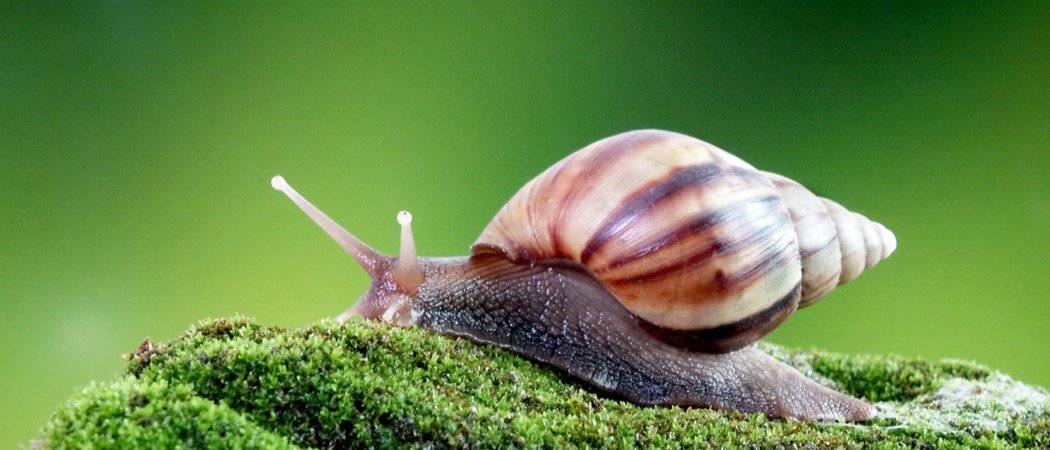
(a)(i) Name two external parts of the body of specimen E.
(ii) State five which could be derived from rearing specimen E.
(iii) Name three pests that could attack specimen E.
Specimen F (Bamboo)
:max_bytes(150000):strip_icc()/how-to-grow-golden-bamboo-5077107-hero-50c7b729a702412b8e106469b2431368.jpg)
(b)(i) State three uses of specimen F on an animal farm.
(ii) Give two disadvantages of using specimen F on an animal farm
Aanmelden om door te gaan
Maak een gratis account aan om toegang te krijgen tot alle leermiddelen, oefenvragen en om je voortgang bij te houden.