The factory that runs on sunlight
Every sandwich you have ever eaten, every bowl of rice, every apple - all of it traces back to a plant that captured light and turned it into food. That process is photosynthesis, and it sits at the heart of IGCSE Biology's plant nutrition topic. Whether you are studying in London, Lagos, or Lahore, the Cambridge exam expects you to understand the same core ideas: what goes in, what comes out, where it happens, and what controls how fast it runs.
Across European, African, and Asian school systems, photosynthesis is taught slightly differently, but the IGCSE version is one of the most exam-focused. Every concept here has appeared in past papers, many of them repeatedly. So rather than memorising paragraphs of notes, focus on the logic: inputs, outputs, location, and rate.
What is photosynthesis?
Photosynthesis is the process by which plants synthesise carbohydrates from raw materials using energy from light. That single sentence is worth learning word for word, because it is the definition the mark scheme rewards.
The raw materials are carbon dioxide (from the air) and water (from the soil). The energy source is light, absorbed by a green pigment called chlorophyll, which is found inside structures called chloroplasts. Chlorophyll transfers energy from light into energy stored in chemical bonds, specifically the bonds in glucose.
The word equation
carbon dioxide + water --(light, chlorophyll)--> glucose + oxygen
You need to know this equation by heart. Notice that light and chlorophyll are written above the arrow because they are conditions for the reaction, not reactants that get used up.
[Extended/Supplement] The balanced chemical equation
6CO2 + 6H2O --(light, chlorophyll)--> C6H12O6 + 6O2
Count the atoms on each side: 6 carbon, 12 hydrogen, and 18 oxygen on the left; 6 carbon, 12 hydrogen, and 18 oxygen on the right. The equation balances. Extended candidates are expected to write this from memory and use it in calculations.
Where photosynthesis happens: leaf structure
A leaf is essentially a flat solar panel with a built-in plumbing system. Its shape, internal layout, and surface features are all adapted to maximise the rate of photosynthesis. The table below links each structural feature to its function - this is exactly the kind of table examiners love to test.
| Leaf feature | Adaptation | How it helps photosynthesis |
|---|---|---|
| Large surface area | Broad, flat blade | Absorbs maximum light |
| Thin shape | Short diffusion distance between surfaces | Carbon dioxide reaches photosynthesising cells quickly |
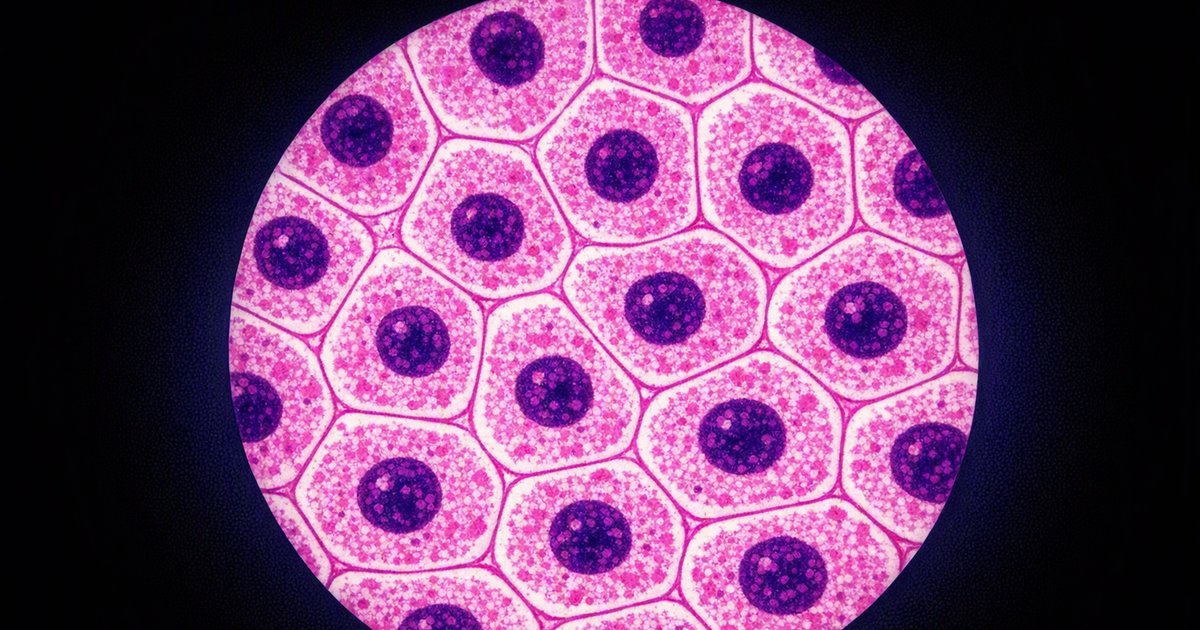
| Palisade mesophyll | Tightly packed column-shaped cells near the upper surface, packed with chloroplasts | Cells closest to the light contain the most chloroplasts, so they photosynthesise at the highest rate |
| Spongy mesophyll | Loosely packed cells with large air spaces | Allows carbon dioxide and oxygen to diffuse freely between cells and stomata |
| Stomata (with guard cells) | Small pores mainly on the lower surface | Allow carbon dioxide in and oxygen out; guard cells open and close the pore to control water loss |
| Network of veins (vascular bundles) | Xylem brings water; phloem carries away dissolved sugars | Supplies water (a raw material) and removes glucose (the product) for use elsewhere in the plant |
| Waxy cuticle | Waterproof layer on upper surface | Reduces water loss from the exposed surface, keeping water available for photosynthesis |
[Extended/Supplement] Palisade mesophyll cell adaptations
Extended candidates need to explain why palisade cells are so effective. Two features stand out:
- Many chloroplasts: a single palisade cell can contain 50 or more chloroplasts, giving it a large capacity for light absorption and the chemical reactions of photosynthesis.
- Elongated shape: the tall, column-like shape means many palisade cells can be packed side by side near the upper epidermis, forming a dense layer that intercepts light before it passes deeper into the leaf.
Factors affecting the rate of photosynthesis
Three environmental factors control how fast a plant photosynthesises:
- Light intensity: more light provides more energy for the reaction. As light increases, the rate of photosynthesis rises - up to a point.
- Carbon dioxide concentration: more CO2 means more raw material. Increasing CO2 boosts the rate - again, up to a point.
- Temperature: photosynthesis involves enzymes. Raising the temperature speeds up enzyme activity, but only until the optimum (around 35-40 degrees Celsius for most plants). Beyond that, enzymes denature and the rate drops sharply.
[Extended/Supplement] Limiting factors
A limiting factor is the factor that is in shortest supply and therefore holds back the overall rate. Even if light is abundant and temperature is perfect, the rate will not increase further if CO2 concentration is too low - CO2 is then the limiting factor.
Graphs of photosynthesis rate typically show a curve that rises and then levels off into a plateau. The rising section shows that the factor being varied (say, light intensity) is limiting. The plateau shows that something else has become the limiting factor - perhaps CO2 or temperature.
A classic practical: the pondweed experiment
One of the most common IGCSE practicals involves counting oxygen bubbles released by an aquatic plant (such as Elodea, also called pondweed) to measure the rate of photosynthesis.
Setup: A piece of pondweed is placed upside down in a beaker of water, with the cut end pointing upward. A lamp is positioned at a measured distance from the beaker. As the plant photosynthesises, oxygen is released from the cut stem as small bubbles.
Method: Count the number of bubbles produced in one minute. Then move the lamp closer (increasing light intensity) and repeat. Record results for at least five different distances.
Key controls:
- Temperature must stay constant (use a water bath or a heat shield between the lamp and the beaker)
- The same piece of pondweed is used throughout
- Allow one minute for the plant to adjust after each lamp position change before counting
- CO2 concentration is kept constant (add a small amount of sodium hydrogen carbonate to the water as a CO2 source)
Expected results: As the lamp moves closer, light intensity increases and the number of bubbles per minute rises. Eventually, moving the lamp closer makes no difference - the rate plateaus because another factor (CO2 or temperature) has become limiting.
What happens to the glucose?
Glucose is the immediate product of photosynthesis, but plants do not just store it as glucose. They convert it into a range of other substances depending on what the plant needs. This is a frequently tested area, and examiners often ask candidates to name the uses and explain why each is important.
| Use of glucose | What the plant makes | Why it matters |
|---|---|---|
| Energy source | Used in respiration to release energy for cell processes | Every living cell in the plant needs energy, even cells in the roots that receive no light |
| Starch storage | Glucose is converted to starch for storage | Starch is insoluble, so it does not affect water balance inside cells; it can be converted back to glucose when needed |
| Cellulose production | Glucose molecules are linked into long cellulose chains | Cellulose forms cell walls, providing structural support for the plant |
| Protein synthesis | Glucose combined with nitrate ions (from soil) to make amino acids, then proteins | Proteins are needed for growth, enzymes, and cell repair |
| Lipid (fat and oil) synthesis | Glucose is converted into lipids for storage in seeds | Lipids are energy-dense, useful as a long-term energy reserve, particularly in seeds |
Why starch, not glucose?
Students across different international curricula sometimes wonder why plants store energy as starch rather than glucose. The answer is osmotic: glucose is soluble, so large amounts of it would draw water into cells by osmosis and cause them to swell or even burst. Starch is insoluble, so it can be packed into storage without affecting the cell's water balance. This point appears in exam questions more often than you might expect.
The starch test
To test whether a leaf has been photosynthesising, you can test it for starch (a product of glucose conversion). The steps are:
- Boil the leaf in water for about one minute to kill the cells and stop reactions.
- Place the leaf in a boiling tube of ethanol (in a hot water bath, never over a naked flame - ethanol is flammable) to remove the green chlorophyll.
- Dip the now-pale leaf in hot water briefly to soften it.
- Spread the leaf on a white tile and add iodine solution.
- If starch is present, the leaf turns blue-black. If no starch, it stays brown-orange.
A variegated leaf (one with green and white sections) gives a clear result: only the green parts turn blue-black, proving that chlorophyll is needed for photosynthesis. A leaf that was kept in the dark will not turn blue-black at all, proving that light is needed.
Mineral ions and plant nutrition
Photosynthesis provides the carbon-based building blocks, but plants also need mineral ions absorbed from the soil for healthy growth. Two ions come up repeatedly in the IGCSE exam:
- Nitrate ions: needed to make amino acids and proteins. A plant lacking nitrates shows stunted growth and yellowing of older leaves.
- Magnesium ions: needed to make chlorophyll. A plant lacking magnesium develops yellow leaves (chlorosis) because it cannot produce the green pigment needed for photosynthesis.
The exam often presents photographs of mineral-deficient plants and asks you to identify the missing ion from the symptoms. Yellow leaves could point to either nitrate or magnesium deficiency, but if the question mentions that photosynthesis is reduced, magnesium is the answer (since it affects chlorophyll directly).
Common exam mistakes
- Saying plants "breathe in" carbon dioxide: plants do not breathe. They absorb CO2 through stomata by diffusion. "Breathe" implies lungs and ventilation, which plants do not have.
- Confusing photosynthesis with respiration: photosynthesis builds glucose using light energy. Respiration breaks glucose down to release energy. They are not opposites - they are different processes that happen simultaneously in plant cells during daylight hours.
- Forgetting that plants respire all the time: a very common error. Plants respire 24 hours a day, just like animals. Photosynthesis only occurs in the light. During the day, the rate of photosynthesis usually exceeds the rate of respiration, so there is a net release of oxygen. At night, only respiration occurs, so the plant takes in oxygen and releases CO2.
- Stating light is "absorbed by the leaf": be precise. Light is absorbed by chlorophyll in the chloroplasts of mesophyll cells. The leaf is the organ; chlorophyll is the pigment that does the absorbing.
- Listing uses of glucose without explanation: stating "glucose is used for protein synthesis" earns partial credit. Explaining that glucose combines with nitrate ions to form amino acids, which are then assembled into proteins, earns full marks.
- Ignoring the safety note in the starch test: ethanol must be heated in a hot water bath, never over a naked flame. Examiners deduct marks if you describe heating ethanol directly.
Self-check questions
- Write the word equation for photosynthesis. What two conditions are needed for the reaction to occur?
- [Extended] Write the balanced chemical equation for photosynthesis and check that the number of atoms on each side matches.
- Name three structural features of a leaf that are adapted for photosynthesis and explain how each one helps.
- A student sets up a pondweed experiment and counts 12 bubbles per minute with the lamp 10 cm away, 20 bubbles at 5 cm, and 21 bubbles at 2 cm. Explain why the rate barely changed between 5 cm and 2 cm.
- Explain why plants store glucose as starch rather than keeping it as glucose.
- A plant is grown in soil that lacks magnesium ions. Predict and explain the effect on the plant's leaves and its rate of photosynthesis.
- List five uses of glucose produced by photosynthesis and, for each, explain why the plant needs it.

Photosynthesis powers almost every food chain on Earth, and it is one of the most heavily tested topics in the IGCSE Biology exam. This guide covers the equations, leaf adaptations, limiting factors, uses of glucose, practical experiments, and the exam pitfalls that cost students marks every session.


Opmerking(en)