WAEC SSCE - Agricultural Science - 2014 (Practical)
Vraag 1 Verslag

a) (i) identify specimens P and R [2 marks]
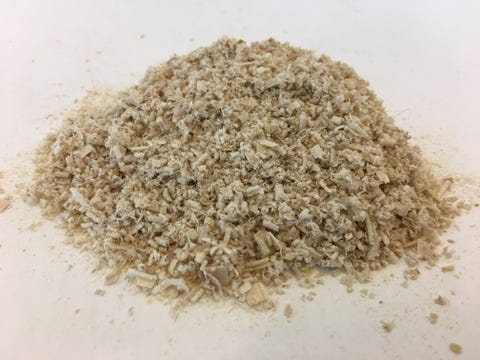
Specimen P:
Specimen R:

(ii) State three reasons why the use of specimen P is not recommended in a brooder house [3 marks]
(iii) Mention two other materials that could be used in place of specimen P in a brooder house [2 marks]
(iv) What is the name given to the product formed when poultry droppings mix with specimen P? [1 mark]
(v) State four uses of the product mentioned in (a) (iv) in agricultural production [4 marks]
(b) State three ways of controlling specimen R in crop production. (3 marks]
(a)(i) Identification
- Specimen P: sawdust.
- Specimen R: a bird (grain-eating pest bird).
(a)(ii) Three reasons why specimen P (sawdust) is not recommended in a brooder house
- It easily contaminates the chicks' feed and water.
- It may enter the eyes of the chicks and cause blindness, or enter the nostrils and cause breathing difficulty.
- Chicks tend to peck and feed on it and may contract disease, and it cakes up easily and loses its ability to absorb droppings.
(a)(iii) Two other materials that could be used in place of specimen P
- Rice husk.
- Wood shavings (also ground maize cobs or dry grass).
(a)(iv) Name of the product formed when poultry droppings mix with specimen P
Poultry manure (farmyard manure).
(a)(v) Four uses of the product in agricultural production
- To improve soil fertility.
- To improve soil structure by binding soil particles together.
- For compost making.
- For fertilisation of fish ponds.
(b) Three ways of controlling specimen R (bird) in crop production
- Use of a scarecrow or bird scarer on the farm.
- Use of a catapult, or drumming and noise-making to frighten the birds away.
- Use of avicides.
Antwoorddetails
(a)(i) Identification
- Specimen P: sawdust.
- Specimen R: a bird (grain-eating pest bird).
(a)(ii) Three reasons why specimen P (sawdust) is not recommended in a brooder house
- It easily contaminates the chicks' feed and water.
- It may enter the eyes of the chicks and cause blindness, or enter the nostrils and cause breathing difficulty.
- Chicks tend to peck and feed on it and may contract disease, and it cakes up easily and loses its ability to absorb droppings.
(a)(iii) Two other materials that could be used in place of specimen P
- Rice husk.
- Wood shavings (also ground maize cobs or dry grass).
(a)(iv) Name of the product formed when poultry droppings mix with specimen P
Poultry manure (farmyard manure).
(a)(v) Four uses of the product in agricultural production
- To improve soil fertility.
- To improve soil structure by binding soil particles together.
- For compost making.
- For fertilisation of fish ponds.
(b) Three ways of controlling specimen R (bird) in crop production
- Use of a scarecrow or bird scarer on the farm.
- Use of a catapult, or drumming and noise-making to frighten the birds away.
- Use of avicides.
Vraag 2 Verslag
(a) (i) identify specimens A(Clayey soil) and B(Sandy soil) by the feel method. [2 marks]
(ii) Name two crops that would thrive well on each of specimens A and B. [2marks]
(iii) Mention three ways by which specimen B can be improved. (3 marks]
(b) (i) identify specimens C and D. (2 marks]
(ii) State three non-ways in which specimen C is important in crop production. [3 marks]
(iii) State three uses of specimen B in agriculture. [3 marks]
(a)(i) Identification by the feel method
- Specimen A (clayey soil): feels smooth, sticky and plastic when wet and can be moulded and rolled into a ribbon.
- Specimen B (sandy soil): feels rough and gritty, is loose and falls apart, and cannot be moulded.
(a)(ii) Two crops that thrive on each
- Specimen A (clayey soil): rice and sugarcane (also cocoa, oil palm, citrus).
- Specimen B (sandy soil): cassava and cowpea (also cashew, pineapple, coconut).
(a)(iii) Three ways specimen B (sandy soil) can be improved
- Application of compost or farmyard manure.
- Mulching and planting of cover crops.
- Application of inorganic fertilizer and addition of clay.
(b)(i) Identification of specimens C and D
- Specimen C: Millipede
- Specimen D: Cow dung
(b)(ii) Three ways specimen C (millipede) is important in crop production
- It helps to break down organic matter and adds nutrients to the soil through defecation and decay.
- It improves soil structure and aeration.
- It improves water percolation and enhances the cation exchange capacity of the soil.
(b)(iii) Three uses of specimen D (cow dung) in agriculture
- Added to the soil to supply plant nutrients and improve soil fertility and structure.
- Used for making compost and farmyard manure.
- Used to generate biogas (fuel) and to fertilize fish ponds.
Antwoorddetails
(a)(i) Identification by the feel method
- Specimen A (clayey soil): feels smooth, sticky and plastic when wet and can be moulded and rolled into a ribbon.
- Specimen B (sandy soil): feels rough and gritty, is loose and falls apart, and cannot be moulded.
(a)(ii) Two crops that thrive on each
- Specimen A (clayey soil): rice and sugarcane (also cocoa, oil palm, citrus).
- Specimen B (sandy soil): cassava and cowpea (also cashew, pineapple, coconut).
(a)(iii) Three ways specimen B (sandy soil) can be improved
- Application of compost or farmyard manure.
- Mulching and planting of cover crops.
- Application of inorganic fertilizer and addition of clay.
(b)(i) Identification of specimens C and D
- Specimen C: Millipede
- Specimen D: Cow dung
(b)(ii) Three ways specimen C (millipede) is important in crop production
- It helps to break down organic matter and adds nutrients to the soil through defecation and decay.
- It improves soil structure and aeration.
- It improves water percolation and enhances the cation exchange capacity of the soil.
(b)(iii) Three uses of specimen D (cow dung) in agriculture
- Added to the soil to supply plant nutrients and improve soil fertility and structure.
- Used for making compost and farmyard manure.
- Used to generate biogas (fuel) and to fertilize fish ponds.
Vraag 3 Verslag
(a) (i) identify specimen H, I, J and K [4 marks]
(ii) State two uses of each of specimens J and k [4 marks]
(iii) State three general ways of maintaining specimens H and I [3 marks]
(iv) State four precautions to be taken when using specimen J [4 marks]
(a)(i) Identification of specimens
- H: Shears (garden/pruning shears)
- I: Sickle
- J: Knapsack sprayer
- K: Wheelbarrow
(a)(ii) Two uses each of J and K
J (knapsack sprayer):
- Spraying insecticides, fungicides and pesticides on crops.
- Spraying herbicides to control weeds.
(It is also used for foliar application of liquid fertilizer and for spraying disinfectants on livestock houses.)
K (wheelbarrow):
- Carrying farm inputs such as manure, seedlings and fertilizer.
- Carrying farm produce and disposing of farm debris and waste.
(a)(iii) Three general ways of maintaining H (shears) and I (sickle)
- Wash and dry them after every use to remove soil and plant sap.
- Sharpen the blades regularly and grease or oil the metal parts before storage to prevent rust.
- Keep the wooden handles away from termites and store the tools in a cool, dry place.
(a)(iv) Four precautions when using J (knapsack sprayer)
- Wear protective clothing (overall, gloves, boots and a nose mask) while spraying.
- Do not eat, drink or smoke while spraying, and wash the hands and face before doing so afterwards.
- Do not spray when it is windy, and never spray against the wind direction.
- Never blow a blocked nozzle with the mouth; clean it with a stick or wire, and wash the sprayer and protective clothing after use.
Antwoorddetails
(a)(i) Identification of specimens
- H: Shears (garden/pruning shears)
- I: Sickle
- J: Knapsack sprayer
- K: Wheelbarrow
(a)(ii) Two uses each of J and K
J (knapsack sprayer):
- Spraying insecticides, fungicides and pesticides on crops.
- Spraying herbicides to control weeds.
(It is also used for foliar application of liquid fertilizer and for spraying disinfectants on livestock houses.)
K (wheelbarrow):
- Carrying farm inputs such as manure, seedlings and fertilizer.
- Carrying farm produce and disposing of farm debris and waste.
(a)(iii) Three general ways of maintaining H (shears) and I (sickle)
- Wash and dry them after every use to remove soil and plant sap.
- Sharpen the blades regularly and grease or oil the metal parts before storage to prevent rust.
- Keep the wooden handles away from termites and store the tools in a cool, dry place.
(a)(iv) Four precautions when using J (knapsack sprayer)
- Wear protective clothing (overall, gloves, boots and a nose mask) while spraying.
- Do not eat, drink or smoke while spraying, and wash the hands and face before doing so afterwards.
- Do not spray when it is windy, and never spray against the wind direction.
- Never blow a blocked nozzle with the mouth; clean it with a stick or wire, and wash the sprayer and protective clothing after use.
Vraag 4 Verslag
Forth maize seeds were sown on a raised bed and thirty-five seeds germinated.
(a) (i) Calculate the percentage of the maize seeds that germinated [2 marks]
(ii) What is the percentage of the maize seeds that did not germinate? [2 marks]
(b) State four conditions that could have enhanced the germination of the thirty-five seeds. [4 marks]
(c) Suggest five reasons why some of the seeds did not germinate [5 marks]
(d) Give two industrial uses of maize seeds.
Given: 40 maize seeds sown, 35 germinated.
(a)(i) Percentage that germinated
\[ \text{Germination \%} = \frac{\text{number germinated}}{\text{number sown}} \times 100 = \frac{35}{40} \times 100 = 87.5\% \](a)(ii) Percentage that did not germinate
Seeds that failed = 40 - 35 = 5.
\[ \frac{5}{40} \times 100 = 12.5\% \](Or simply 100% - 87.5% = 12.5%.)
(b) Four conditions that could have enhanced germination
- Adequate soil moisture (water).
- Suitable warm temperature.
- Sufficient supply of oxygen (good soil aeration).
- Viable, healthy seeds sown at correct depth.
(c) Five reasons why some seeds did not germinate
- The seeds were not viable (dead or too old).
- Seeds were attacked by soil pests or diseases.
- Seeds were sown too deep or too shallow.
- Inadequate moisture (drought) or excess water (waterlogging).
- Seeds were still in dormancy, or unfavourable temperature.
(d) Two industrial uses of maize seeds
- Used in making cornflour, corn starch, corn oil and breakfast cereals.
- Used in producing livestock feed, and in brewing/making of ethanol and glucose syrup.
Antwoorddetails
Given: 40 maize seeds sown, 35 germinated.
(a)(i) Percentage that germinated
\[ \text{Germination \%} = \frac{\text{number germinated}}{\text{number sown}} \times 100 = \frac{35}{40} \times 100 = 87.5\% \](a)(ii) Percentage that did not germinate
Seeds that failed = 40 - 35 = 5.
\[ \frac{5}{40} \times 100 = 12.5\% \](Or simply 100% - 87.5% = 12.5%.)
(b) Four conditions that could have enhanced germination
- Adequate soil moisture (water).
- Suitable warm temperature.
- Sufficient supply of oxygen (good soil aeration).
- Viable, healthy seeds sown at correct depth.
(c) Five reasons why some seeds did not germinate
- The seeds were not viable (dead or too old).
- Seeds were attacked by soil pests or diseases.
- Seeds were sown too deep or too shallow.
- Inadequate moisture (drought) or excess water (waterlogging).
- Seeds were still in dormancy, or unfavourable temperature.
(d) Two industrial uses of maize seeds
- Used in making cornflour, corn starch, corn oil and breakfast cereals.
- Used in producing livestock feed, and in brewing/making of ethanol and glucose syrup.


