Ecosystems: The Foundation of Environmental Management
An ecosystem is the fundamental unit of study in environmental science. It encompasses all the living organisms within a defined area, together with the non-living physical and chemical factors with which those organisms interact. The concept is central to the Cambridge IGCSE Environmental Management (0680) syllabus and underpins a significant proportion of examination questions across both Paper 1 and Paper 2.
Understanding ecosystems requires a systematic grasp of how energy enters, flows through, and leaves biological communities, and of how nutrients are cycled and recycled within them. The sections that follow build this understanding from first principles, beginning with definitions and progressing through the structural and functional components that examiners expect candidates to master.
Key Facts: Ecosystems at a Glance
- An ecosystem comprises all the living organisms (biotic community) and the non-living environment (abiotic factors) in a particular area, interacting as an integrated system.
- Biotic components include producers, consumers (primary, secondary, tertiary), and decomposers.
- Abiotic components include temperature, light, water, soil, wind, and mineral nutrients.
- Energy enters ecosystems as sunlight and flows through trophic levels, with roughly 10% transferred between each level.
- Nutrients such as carbon and nitrogen are recycled through biogeochemical cycles, unlike energy, which flows in one direction.
- Food webs represent the interconnected feeding relationships within an ecosystem, linking multiple food chains.
- Predator and prey populations oscillate in a characteristic pattern with a time lag between their respective peaks.
- Human activities, including deforestation, pollution, overexploitation, and habitat fragmentation, are the primary drivers of ecosystem degradation globally.
Defining an Ecosystem
An ecosystem is a biological system consisting of all the living organisms (the biotic community) within a particular area, together with the non-living (abiotic) physical environment with which they interact. The term was introduced by the British ecologist Arthur Tansley in 1935, and it remains one of the foundational concepts in environmental science.
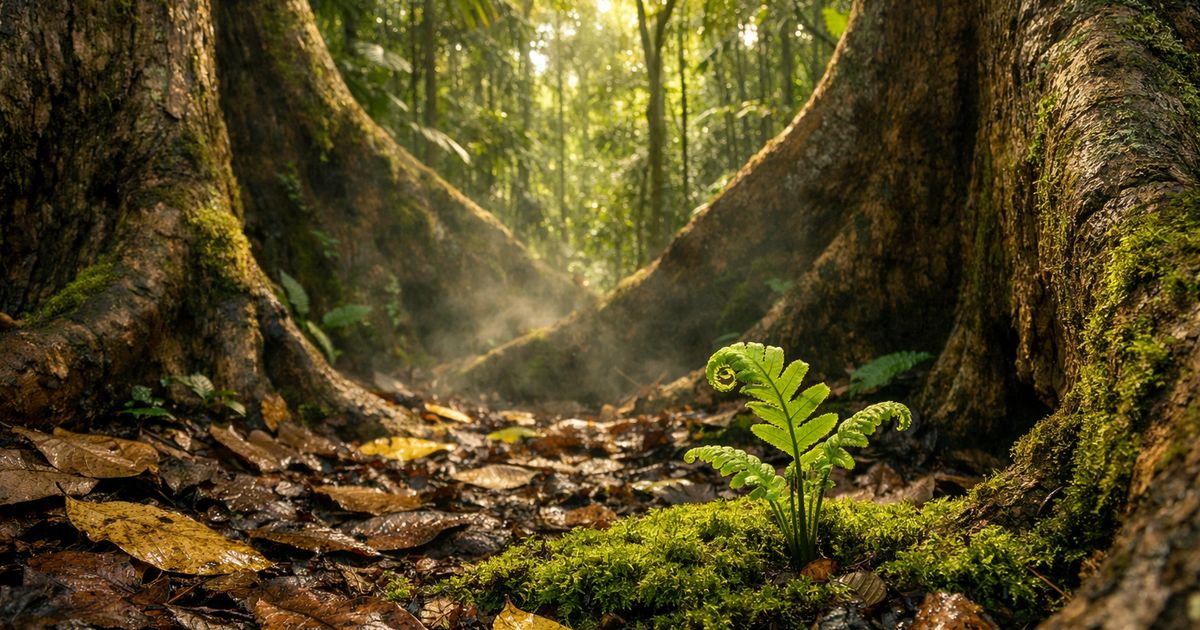
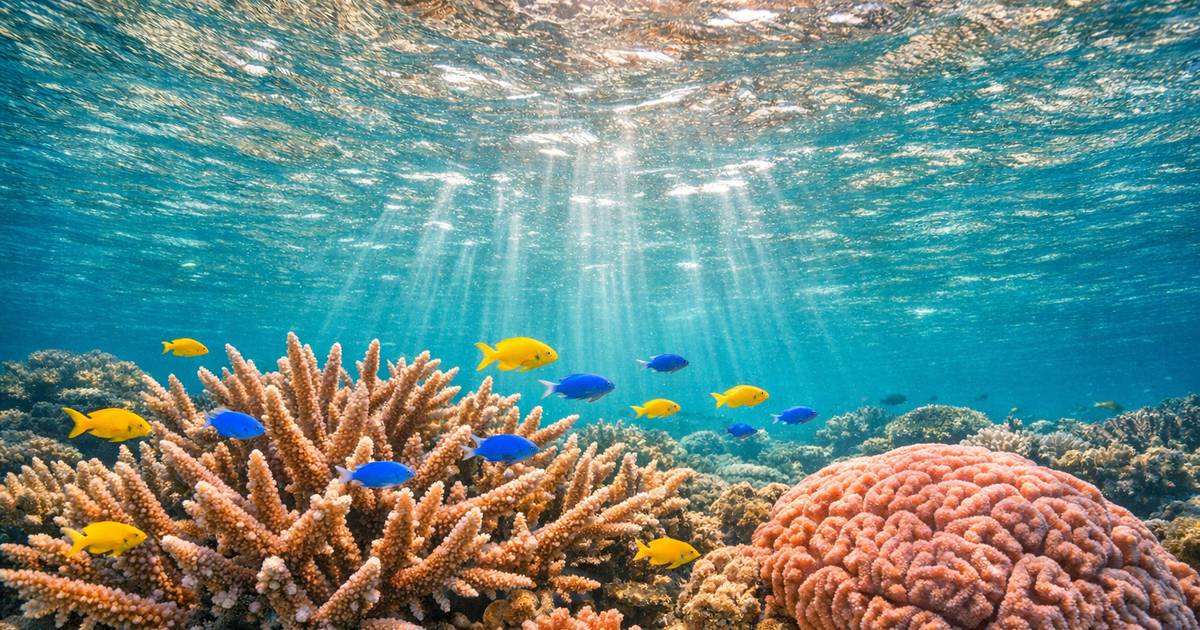
Ecosystems vary enormously in scale. A freshwater pond, a tropical rainforest, a coral reef, and an entire ocean basin can each be described as an ecosystem. What unifies them is the principle that organisms do not exist in isolation: they are bound to one another and to their physical surroundings through flows of energy and cycles of matter.
For the IGCSE Environmental Management examination, the concept of the ecosystem provides the framework within which most other ecological topics are examined. A secure understanding of ecosystem structure and function is therefore essential.
Biotic and Abiotic Components
Every ecosystem can be analysed in terms of two broad categories of component: biotic (living) and abiotic (non-living). Understanding the distinction between these, and the examples that fall into each category, is a frequent requirement on IGCSE examination papers.
Biotic Components
Biotic components encompass all living organisms within the ecosystem. These are conventionally grouped by their role in energy transfer:
- Producers (autotrophs): Organisms that synthesise their own organic molecules from inorganic substances, typically through photosynthesis. Green plants, algae, and cyanobacteria are the most common examples.
- Primary consumers (herbivores): Organisms that feed directly on producers. Examples include rabbits, caterpillars, and zooplankton.
- Secondary consumers: Organisms that feed on primary consumers. These are typically carnivores or omnivores, such as frogs, small birds, and predatory fish.
- Tertiary consumers: Organisms that feed on secondary consumers, occupying the highest trophic levels. Hawks, large predatory fish, and big cats are typical examples.
- Decomposers: Organisms, primarily bacteria and fungi, that break down dead organic matter and waste products, returning nutrients to the soil or water for reuse by producers.
Abiotic Components
Abiotic components are the non-living physical and chemical factors that influence the organisms within an ecosystem. The principal abiotic factors are summarised below.
| Abiotic Factor | Description | Example of Influence |
|---|---|---|
| Temperature | Affects the rate of metabolic reactions in organisms | Tropical ecosystems support higher biodiversity than polar regions due to sustained warmth |
| Light intensity | Drives photosynthesis and determines primary productivity | Deep ocean floors receive no light, limiting producers to chemosynthetic organisms |
| Water availability | Essential for all metabolic processes | Desert ecosystems have low biomass due to limited water |
| Soil type and pH | Determines mineral availability and drainage | Acidic soils in peatlands support different plant communities than alkaline chalk grasslands |
| Wind | Affects transpiration rates and physical structure of vegetation | Exposed coastal habitats have stunted, wind-shaped trees |
| Mineral nutrients | Required for plant growth (nitrogen, phosphorus, potassium) | Nutrient-poor soils in tropical rainforests mean most nutrients are stored in the biomass |
Habitats and Niches
Two terms that candidates must distinguish with precision are habitat and niche.
A habitat is the place where an organism lives. It provides the conditions and resources the organism needs for survival. A pond, a hedgerow, and a coral reef are all examples of habitats.
An ecological niche describes the role and position of a species within its ecosystem. This includes what it eats, what eats it, when and where it is active, and how it interacts with other species and the abiotic environment. The niche is sometimes described as the organism's "profession" within the ecosystem, whereas the habitat is its "address."
No two species can occupy exactly the same niche in the same habitat for an extended period. This principle, known as competitive exclusion, means that if two species compete for identical resources, one will eventually outcompete the other. The result is that species in the same habitat tend to occupy slightly different niches, reducing direct competition.
Food Chains and Food Webs
A food chain is a linear sequence showing the transfer of energy from one organism to the next, beginning with a producer. A simple terrestrial example:
Grass (producer) → Rabbit (primary consumer) → Fox (secondary consumer) → Eagle (tertiary consumer)
Each step in the chain is a trophic level. Producers occupy the first trophic level, primary consumers the second, secondary consumers the third, and so on.
In practice, most organisms feed on more than one type of food and are themselves eaten by more than one predator. A food web represents these interconnected feeding relationships more accurately than a single chain. Food webs demonstrate the complexity and interdependence of organisms within an ecosystem.
The removal or decline of one species in a food web can have cascading effects. If a key predator is removed, its prey population may increase unchecked, leading to overgrazing or overconsumption of resources further down the web. Conversely, the loss of a producer species reduces the energy available to all consumers that depend on it, directly or indirectly.
Energy Flow and Trophic Levels
Energy enters most ecosystems as sunlight, which producers capture through photosynthesis and convert into chemical energy stored in organic molecules (biomass). This energy then passes through the ecosystem as organisms feed on one another.
A critical principle of energy flow is that it is not 100% efficient. At each trophic level, a substantial proportion of energy is lost:
- Through respiration, which releases energy as heat for metabolic processes
- In excretory products such as urine and faeces
- In uneaten parts of organisms, including bones, hair, and cellulose cell walls
As a general rule, only about 10% of the energy at one trophic level is transferred to the next. This is sometimes referred to as the "10% rule," although the actual figure varies between ecosystems and trophic levels.
Why Food Chains Are Short
The progressive loss of energy at each trophic level explains why food chains rarely exceed four or five links. By the time energy reaches a fourth or fifth consumer, there is simply too little energy remaining to sustain a viable population at a higher trophic level. This also explains why pyramids of energy are always upright: the base (producers) always contains the most energy, and each successive level contains less.
| Trophic Level | Example Organism | Approximate Energy Available (relative) |
|---|---|---|
| Producer (T1) | Grass | 10,000 kJ |
| Primary consumer (T2) | Grasshopper | 1,000 kJ |
| Secondary consumer (T3) | Frog | 100 kJ |
| Tertiary consumer (T4) | Snake | 10 kJ |
Nutrient Cycling
Unlike energy, which flows through an ecosystem in one direction and is ultimately lost as heat, nutrients are recycled. The same atoms of carbon, nitrogen, and phosphorus pass repeatedly through living organisms and the abiotic environment in what are known as biogeochemical cycles.
The Carbon Cycle
Carbon moves between the atmosphere, living organisms, the oceans, and geological deposits. The key processes involved are:
- Photosynthesis: Producers absorb CO2 from the atmosphere and incorporate it into organic molecules.
- Respiration: All living organisms release CO2 back into the atmosphere through cellular respiration.
- Decomposition: Decomposers break down dead organisms, releasing CO2 into the atmosphere and returning mineral nutrients to the soil.
- Combustion: Burning fossil fuels and biomass releases stored carbon as CO2.
- Fossilisation: Over geological timescales, dead organisms may form fossil fuels (coal, oil, natural gas), locking carbon underground.
The Nitrogen Cycle
Nitrogen is essential for protein and DNA synthesis in all organisms, yet most organisms cannot use atmospheric nitrogen (N2) directly. The nitrogen cycle involves several key stages:
- Nitrogen fixation: Nitrogen-fixing bacteria (e.g. Rhizobium in legume root nodules) convert atmospheric N2 into ammonia (NH3), which plants can absorb.
- Nitrification: Nitrifying bacteria convert ammonia into nitrites and then into nitrates (NO3-), the form most readily absorbed by plant roots.
- Assimilation: Plants absorb nitrates through their roots and use them to build proteins and nucleic acids.
- Feeding: Consumers obtain nitrogen by eating plants or other animals.
- Decomposition and ammonification: Decomposers break down dead organisms and waste products, releasing ammonia back into the soil.
- Denitrification: Denitrifying bacteria convert nitrates back into atmospheric N2, completing the cycle.
Producers, Consumers, and Decomposers
These three functional groups form the backbone of every ecosystem's energy economy.
Producers are the foundation. Through photosynthesis (or, in rare cases, chemosynthesis), they convert inorganic substances into the organic molecules upon which all other life depends. In terrestrial ecosystems, green plants are the dominant producers. In aquatic ecosystems, phytoplankton and algae fulfil this role.
Consumers obtain their energy by feeding on other organisms. They are classified by what they eat: herbivores consume plants, carnivores consume animals, and omnivores consume both. Consumers may also be classified by trophic level, as described earlier.
Decomposers are often overlooked but are indispensable. Without decomposition, dead organic matter would accumulate, and the nutrients locked within it would be permanently unavailable to producers. Bacteria and fungi are the principal decomposers. Their activity releases mineral nutrients into the soil and CO2 into the atmosphere, sustaining both nutrient cycles and energy flow.
Predator-Prey Relationships
Predator-prey interactions are a fundamental regulatory mechanism within ecosystems. The populations of predators and their prey are interdependent, and their numbers tend to oscillate in a characteristic pattern.
When prey is abundant, the predator population increases because food is plentiful and reproductive success is high. As the predator population grows, predation pressure on the prey increases, causing the prey population to decline. With less food available, the predator population subsequently falls. Reduced predation then allows the prey population to recover, and the cycle repeats.
These oscillations produce the classic predator-prey graphs that appear regularly on IGCSE examination papers. The prey population peaks before the predator population, and the predator population peaks after, with a characteristic time lag between the two curves.
Adaptations
Organisms possess adaptations that enable them to survive and reproduce in their particular habitat. These adaptations develop over many generations through natural selection and can be classified into three broad types.
| Type of Adaptation | Definition | Examples |
|---|---|---|
| Structural | Physical features of the organism's body | Thick fur in Arctic foxes for insulation; long roots in desert plants for accessing deep water; streamlined body shape in fish |
| Behavioural | Actions or patterns of behaviour that aid survival | Migration of birds to warmer regions in winter; nocturnal activity in desert animals to avoid daytime heat; hibernation during food-scarce months |
| Physiological | Internal body processes that aid survival | Antifreeze proteins in Antarctic fish; tolerance of wide body temperature fluctuations in camels; venom production in snakes |
Adaptations are closely linked to the concept of the niche: the specific set of adaptations an organism possesses determines the niche it can occupy within a given ecosystem.
Human Impact on Ecosystems
Human activities represent the single greatest threat to ecosystem stability worldwide. The principal forms of human impact that the IGCSE Environmental Management syllabus requires candidates to understand are as follows.
Deforestation: The large-scale removal of forests destroys habitats, reduces biodiversity, disrupts the water cycle, increases soil erosion, and releases stored carbon into the atmosphere. Tropical deforestation is of particular concern because tropical rainforests contain the highest terrestrial biodiversity of any biome.
Pollution: Chemical pollutants, including pesticides, industrial effluent, and sewage, can contaminate water, soil, and air. Eutrophication, caused by excess nitrates and phosphates entering waterways from agricultural runoff and sewage discharge, leads to algal blooms that deplete dissolved oxygen and kill aquatic organisms.
Overexploitation: Overfishing, overhunting, and excessive harvesting of species reduce populations below sustainable levels. The collapse of cod fisheries in the North Atlantic is a well-documented case study of how overexploitation can fundamentally alter a marine ecosystem.
Habitat destruction and fragmentation: Urban development, agriculture, and infrastructure construction physically destroy or fragment habitats. Fragmentation isolates populations, reducing genetic diversity and increasing vulnerability to local extinction.
Introduction of invasive species: Non-native species introduced by human activity can outcompete native species, prey on them, or introduce diseases to which native organisms have no resistance. The introduction of the Nile perch into Lake Victoria devastated native cichlid fish populations.
Climate change: Rising global temperatures and altered precipitation patterns shift the conditions within ecosystems, forcing species to migrate, adapt, or face extinction. Coral bleaching caused by ocean warming is among the most visible current examples of climate-driven ecosystem damage.
Worked Example: Interpreting a Food Web
Question: In a grassland ecosystem, the following food web exists: grass is eaten by grasshoppers and rabbits; grasshoppers are eaten by frogs and small birds; rabbits are eaten by foxes; frogs are eaten by snakes; small birds and snakes are eaten by hawks. Predict and explain what would happen to the populations of grasshoppers and hawks if a disease killed all the frogs. [4 marks]
Model Answer:
If all frogs were removed by disease, grasshoppers would lose one of their predators (1 mark). With reduced predation pressure, the grasshopper population would likely increase (1 mark). Hawks would lose an indirect food source because snakes, which feed on frogs, would have less prey available and their population would likely decline, reducing one food source for hawks (1 mark). However, hawks also eat small birds, which themselves eat grasshoppers. If more grasshoppers were available, the small bird population might increase, partially compensating for the loss of snakes as a food source for hawks (1 mark).
Worked Example: Energy Transfer Calculation
Question: A producer in a grassland ecosystem fixes 50,000 kJ of energy per year through photosynthesis. If 10% of the energy is transferred to each successive trophic level, calculate the energy available to the tertiary consumer. [2 marks]
Model Answer:
Energy at the primary consumer level: 50,000 x 0.10 = 5,000 kJ (1 mark for method). Energy at the secondary consumer level: 5,000 x 0.10 = 500 kJ. Energy at the tertiary consumer level: 500 x 0.10 = 50 kJ (1 mark for correct final answer).
This calculation illustrates why so little energy remains at the top of a food chain and why apex predator populations are always small relative to the populations at lower trophic levels.
Common Exam Question Patterns
Certain question types appear repeatedly in IGCSE Environmental Management papers on the ecosystems topic. Recognising these patterns allows for efficient and targeted revision.
- Define and distinguish: Questions such as "Define the term ecosystem" or "Distinguish between a habitat and a niche." These require precise, concise definitions. For ecosystem definitions, both biotic and abiotic elements must be mentioned.
- Food web interpretation: Given a food web diagram, predict the consequences of removing or adding a species. Trace energy pathways and identify alternative food sources through multiple routes.
- Energy flow calculations: "Calculate the percentage of energy transferred from one trophic level to the next," or explain why energy is lost at each stage. Show working clearly.
- Describe and explain human impacts: Extended-response questions requiring candidates to explain how a named human activity (e.g. deforestation, overfishing) affects a specific ecosystem. Link the activity to identified ecological consequences.
- Nutrient cycling: Label or describe stages of the carbon or nitrogen cycle. Explain the role of specific organisms (decomposers, nitrogen-fixing bacteria) within the cycle and name the processes they carry out.
Self-Check Questions
Attempt each of the following questions without referring back to the text. Write a full answer, then check it against the relevant section above.
- Define the term "ecosystem" and give two examples of ecosystems at different scales.
- List three abiotic factors that influence the distribution of organisms in an ecosystem, and for each, explain briefly how it exerts its influence.
- Explain the difference between a habitat and an ecological niche, using a named organism as an example.
- Construct a simple food chain with four trophic levels, using named organisms, and label each trophic level.
- Explain why food chains rarely have more than four or five links.
- Describe the role of decomposers in nutrient cycling and explain what would happen if decomposers were removed from an ecosystem.
- Sketch and label a predator-prey graph. Explain why the predator population peak occurs after the prey population peak.
- Name three ways in which human activities damage ecosystems, and for each, describe one specific ecological consequence.
Consolidating Your Understanding
The study of ecosystems provides the conceptual architecture for much of the IGCSE Environmental Management syllabus. Every topic examined under this heading connects to the central principle that living organisms and their physical environment form an integrated, interdependent system. Energy flows through this system via trophic levels, with substantial losses at each stage, while nutrients cycle continuously between the biotic and abiotic components. Human activities increasingly disrupt these natural processes, making the study of ecosystems not only an academic requirement but a matter of practical and global significance.
Candidates who perform well on ecosystem questions are those who can connect causes to consequences across multiple parts of the topic. The ability to trace the effects of removing a species through a food web, to explain why energy decreases at higher trophic levels, or to link deforestation to both carbon release and biodiversity loss distinguishes strong answers from adequate ones. Practice building these connections, and revisit any self-check question above that proved difficult.

A structured guide to ecosystems for IGCSE Environmental Management (0680), covering ecosystem definitions, biotic and abiotic components, food chains and webs, energy flow, nutrient cycling, adaptations, predator-prey dynamics, and human impacts, with worked examples and self-check questions.



Nkwupụta(enwe)