From ancient surveyors to your exam paper
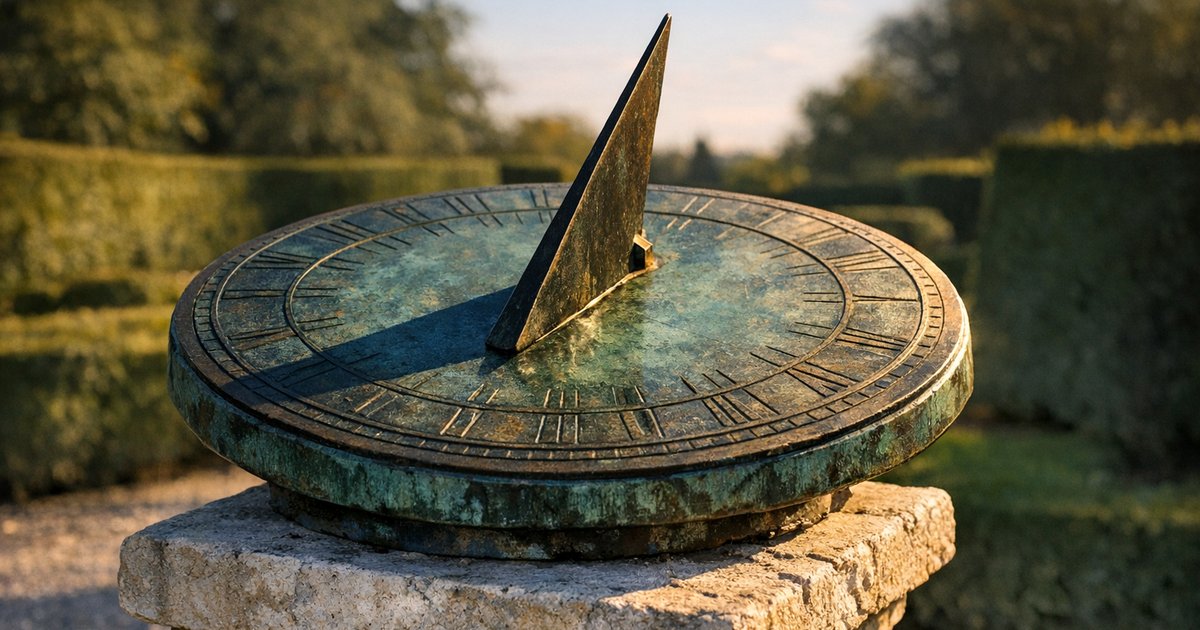
Centuries before satellites or GPS, Egyptian engineers aligned the Great Pyramid of Giza to true north with an error of less than one-fifteenth of a degree. Greek astronomers calculated the circumference of the Earth using shadow angles cast by the sun at different latitudes. Polynesian navigators crossed thousands of kilometres of open Pacific by reading the angles of stars above the horizon. Each of these achievements rested on the same mathematical foundation you are about to study: the relationship between the angles and sides of triangles. Trigonometry, from the Greek trigonon (triangle) and metron (measure), remains one of the most practically powerful branches of mathematics, and it occupies a significant portion of the IGCSE Mathematics syllabus for good reason.
The topic spans Core and Extended content, beginning with Pythagoras' theorem and basic right-angled triangle ratios, then building toward the sine rule, cosine rule, and three-dimensional problems at Extended level. Mastering each layer before progressing to the next is essential, because the Extended tools do not replace the Core ones; they extend them into more complex scenarios.
Pythagoras' theorem: the cornerstone
In any right-angled triangle, the square of the hypotenuse equals the sum of the squares of the other two sides. Written algebraically: c² = a² + b², where c is the longest side, opposite the right angle.
This single relationship unlocks three types of calculation:
- Finding the hypotenuse: given the two shorter sides, square each, add, then take the square root
- Finding a shorter side: rearrange to a² = c² - b², then take the square root
- Checking whether a triangle is right-angled: if a² + b² = c² holds exactly, the angle opposite c is 90 degrees
Worked example 1: finding the hypotenuse
Problem: A right-angled triangle has shorter sides of 5 cm and 12 cm. Find the hypotenuse.
- Square each shorter side: 5² = 25, 12² = 144
- Add the squares: 25 + 144 = 169
- Take the square root: √169 = 13 cm
The hypotenuse is 13 cm. The triple (5, 12, 13) is one of the classic Pythagorean triples worth recognising instantly alongside (3, 4, 5) and (8, 15, 17), as they appear frequently in IGCSE papers without requiring a calculator.
Worked example 2: finding a shorter side
Problem: A ladder 10 m long leans against a wall, with its base 6 m from the wall. How high up the wall does it reach?
- Identify the hypotenuse: the ladder at 10 m
- Rearrange: height² = 10² - 6² = 100 - 36 = 64
- Square root: √64 = 8 m
Right-angled triangle trigonometry: SOH CAH TOA
Pythagoras' theorem connects the three sides of a right-angled triangle but says nothing about the non-right angles. To bring angles into the picture, three ratios are defined relative to a chosen angle (call it θ):
| Ratio | Formula | Mnemonic |
|---|---|---|
| Sine | sin θ = opposite / hypotenuse | SOH |
| Cosine | cos θ = adjacent / hypotenuse | CAH |
| Tangent | tan θ = opposite / adjacent | TOA |
The "opposite" and "adjacent" labels depend on which angle you are working from, not on the shape of the triangle itself. A common source of confusion is labelling these sides relative to the right angle rather than the target angle; doing so reverses opposite and adjacent and produces an incorrect answer.
Choosing the right ratio
Before reaching for the calculator, identify which two of the three quantities (opposite, adjacent, hypotenuse) your problem involves. If you know one side and need the other, and the angle is given, choose the ratio that contains exactly those two sides. If you know two sides and need the angle, use the ratio that matches those sides and apply the inverse function (sin¹, cos¹, or tan¹).
Worked example 3: finding a side using trigonometry
Problem: In triangle ABC, angle B = 90 degrees, angle A = 35 degrees, and BC = 8 cm. Find AB.
- From angle A, BC is opposite and AB is adjacent
- Opposite and adjacent: use tangent. tan 35 = 8 / AB
- Rearrange: AB = 8 / tan 35 = 8 / 0.7002 = 11.4 cm (3 s.f.)
Worked example 4: finding an angle
Problem: A right-angled triangle has opposite side 7 cm and hypotenuse 10 cm. Find the angle.
- Opposite and hypotenuse: use sine. sin θ = 7 / 10 = 0.7
- Inverse sine: θ = sin¹(0.7) = 44.4 degrees (1 d.p.)
Angles of elevation and depression
Real-world trigonometry problems frequently describe an observer looking upward to the top of a building (angle of elevation) or downward from a cliff to a boat at sea (angle of depression). Both angles are measured from the horizontal. Drawing the horizontal line explicitly and marking the angle helps avoid the common mistake of measuring from the vertical, which gives the complement of the intended angle and a wrong answer.
Bearings and trigonometry
Bearings are three-figure angles measured clockwise from north. A ship sailing on a bearing of 060 degrees travels at 60 degrees clockwise from due north. Combining bearings with trigonometry means sketching a north line at each relevant point, marking the bearing angle, and then identifying right-angled triangles within the diagram. Many candidates lose marks not on the trigonometry itself but on misreading which angle the bearing produces inside the triangle.
Exact trigonometric values (Extended)
Extended candidates must recall exact values for five key angles without a calculator. These values are derived from two special triangles: the 45-45-90 triangle (an isosceles right-angled triangle with sides 1, 1, √2) and the 30-60-90 triangle (half of an equilateral triangle with sides 1, √3, 2).
| Angle | sin | cos | tan |
|---|---|---|---|
| 0° | 0 | 1 | 0 |
| 30° | 1/2 | √3/2 | 1/√3 |
| 45° | √2/2 | √2/2 | 1 |
| 60° | √3/2 | 1/2 | √3 |
| 90° | 1 | 0 | undefined |
A useful pattern: the sine values for 0, 30, 45, 60, and 90 degrees follow the sequence √0/2, √1/2, √2/2, √3/2, √4/2. The cosine values are the same sequence in reverse. This symmetry makes memorisation more manageable than it first appears.
The sine rule (Extended)
When a triangle is not right-angled, SOH CAH TOA no longer applies directly. The sine rule fills this gap for triangles where you know an angle and its opposite side, plus one other piece of information:
a / sin A = b / sin B = c / sin C
Use the sine rule when you have:
- Two angles and one side (find the other side)
- Two sides and an angle opposite one of them (find the other angle)
Worked example 5: sine rule to find a side
Problem: In triangle PQR, angle P = 40 degrees, angle Q = 75 degrees, and side p (opposite P) = 9 cm. Find side q.
- Apply sine rule: 9 / sin 40 = q / sin 75
- Rearrange: q = 9 sin 75 / sin 40
- Calculate: q = 9 (0.9659) / 0.6428 = 13.5 cm (3 s.f.)
The cosine rule (Extended)
The cosine rule handles cases the sine rule cannot: when you know two sides and the included angle, or all three sides and need an angle.
To find a side: a² = b² + c² - 2bc cos A
To find an angle: cos A = (b² + c² - a²) / 2bc
Notice that when A = 90 degrees, cos A = 0, and the formula reduces to Pythagoras' theorem. The cosine rule is, in effect, a generalisation of Pythagoras for all triangles, not only right-angled ones.
Worked example 6: cosine rule to find a side
Problem: In triangle XYZ, side y = 8 cm, side z = 11 cm, and the included angle X = 52 degrees. Find side x.
- Apply: x² = 8² + 11² - 2(8)(11) cos 52
- Calculate: x² = 64 + 121 - 176(0.6157) = 185 - 108.4 = 76.6
- Square root: x = √76.6 = 8.75 cm (3 s.f.)
Area of a triangle using trigonometry (Extended)
The standard formula Area = 1/2 base height requires a perpendicular height, which is not always given. When you know two sides and the included angle, use:
Area = 1/2 ab sin C
where a and b are the two known sides and C is the angle between them. This formula is compact and powerful: it appears in navigation, surveying, and architectural design wherever irregular plots of land or structural components need their area computed from field measurements rather than right-angle decompositions.
Worked example 7: area using the sine formula
Problem: Two sides of a triangle are 14 cm and 9 cm, with an included angle of 63 degrees. Find the area.
- Area = 1/2 (14)(9) sin 63
- Area = 63 (0.8910) = 56.1 cm² (3 s.f.)
Three-dimensional trigonometry (Extended)
Many exam questions embed trigonometry within 3D shapes: cuboids, pyramids, wedges, or room interiors. The strategy is always the same: identify a right-angled triangle within the solid, extract its dimensions, and apply Pythagoras or SOH CAH TOA to that flat triangle.
Common right-angled triangles hidden within 3D shapes include:
- The space diagonal of a cuboid, which creates a right triangle with the face diagonal and the vertical edge
- The slant height of a pyramid, forming a right triangle with the perpendicular height and half the base edge
- A line from a corner of a room to the opposite ceiling corner, which involves a two-step process: first find the floor diagonal, then use it as the base of a vertical right triangle
Worked example 8: angle in a cuboid
Problem: A cuboid measures 6 cm by 4 cm by 3 cm. Find the angle that the space diagonal AG makes with the base ABCD.
- Find the base diagonal AC: AC² = 6² + 4² = 36 + 16 = 52, so AC = √52
- The space diagonal AG forms a right triangle with base AC and height CG = 3 cm
- tan θ = 3 / √52 = 3 / 7.211 = 0.4160
- θ = tan¹(0.4160) = 22.6 degrees (1 d.p.)
Deciding which tool to use
One of the most common difficulties is knowing which formula to reach for. The decision tree below covers every scenario you will meet at IGCSE level:
| Situation | Tool |
|---|---|
| Right-angled triangle, two sides known, find third side | Pythagoras' theorem |
| Right-angled triangle, one side and one angle known, find a side or angle | SOH CAH TOA |
| Non-right triangle, two angles and one side known | Sine rule (find side) |
| Non-right triangle, two sides and an opposite angle known | Sine rule (find angle, watch for ambiguous case) |
| Non-right triangle, two sides and the included angle known | Cosine rule (find side) or Area = 1/2 ab sin C |
| Non-right triangle, three sides known, find an angle | Cosine rule (rearranged for angle) |
Common mistakes and how to avoid them
| Mistake | Why it costs marks | Prevention |
|---|---|---|
| Applying SOH CAH TOA to a non-right-angled triangle | The ratios are only defined for right-angled triangles; using them elsewhere produces wrong values | Check for the right-angle symbol before using SOH CAH TOA. If absent, use sine or cosine rule. |
| Subtracting in Pythagoras when you should add | Gives a side shorter than expected, often an impossible triangle | Always add when finding the hypotenuse (longest side). Only subtract when finding a shorter side. |
| Calculator in radian mode | Every angle calculation will be wrong, often by a large margin | Before starting the paper, press the mode button and confirm "DEG" is active. |
| Mislabelling opposite and adjacent | Selects the wrong trig ratio, leading to an entirely incorrect answer | Label sides relative to the angle you are working with, not relative to the right angle. |
| Forgetting the ambiguous case with sine rule | Gives only one solution when two exist, losing marks on Extended papers | When using the sine rule to find an angle, check whether 180 - θ also produces a valid triangle. |
| Using the wrong version of the cosine rule | The side-finding and angle-finding forms look different; mixing them up scrambles the calculation | Write out which version you need before substituting numbers. Side-finding: a² = ... Angle-finding: cos A = ... |
Self-check questions
- A right-angled triangle has legs of 9 cm and 40 cm. Find the hypotenuse.
- The hypotenuse of a right-angled triangle is 15 cm and one leg is 12 cm. Find the other leg.
- In a right-angled triangle, the side opposite a 28-degree angle is 6 cm. Find the hypotenuse.
- A flagpole casts a shadow 12 m long when the angle of elevation of the sun is 55 degrees. How tall is the flagpole?
- Write down the exact values of sin 60, cos 45, and tan 30 without a calculator.
- In triangle ABC, angle A = 48 degrees, angle B = 67 degrees, and side a = 10 cm. Use the sine rule to find side b.
- Two sides of a triangle are 7 cm and 11 cm, with an included angle of 85 degrees. Use the cosine rule to find the third side.
- Find the area of a triangle with sides 8 cm and 13 cm and an included angle of 72 degrees.
- A cuboid has dimensions 5 cm by 12 cm by 4 cm. Find the length of the space diagonal.
- Using the cuboid from question 9, find the angle the space diagonal makes with the base.
Working through these questions in full, showing each step of the method, is the most reliable way to build fluency. Trigonometry rewards careful method and consistent practice, and the patterns you develop here carry directly into the exam hall, where confidence in selecting and applying the right tool makes the difference between partial credit and full marks.

A detailed study guide covering Pythagoras' theorem, right-angled triangle ratios, exact trigonometric values, the sine and cosine rules, and three-dimensional applications for Cambridge IGCSE Mathematics (0580), with worked examples, common pitfalls, and self-check questions.



Nkwupụta(enwe)