Your classroom is a sociological experiment
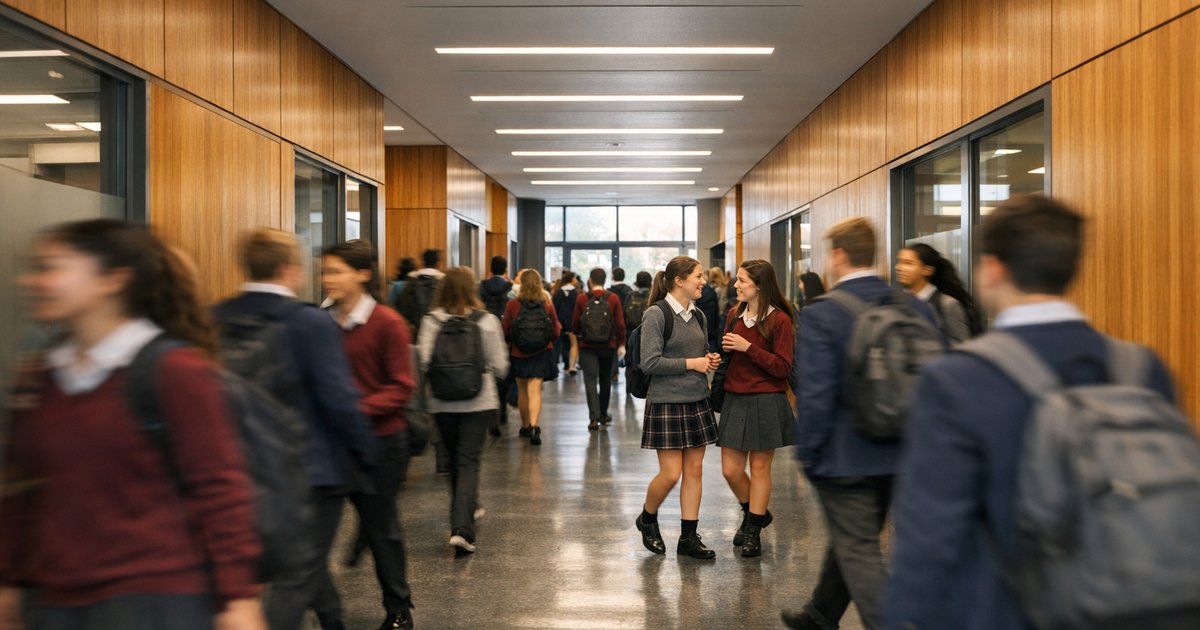
Think about your average school day for a moment. You walk through the gates, change your behaviour almost instantly, sit in rows facing one direction, raise your hand to speak, and follow a timetable someone else designed. You probably don't think twice about any of it. But a sociologist looking at that same scene would be buzzing with questions: Why are schools structured this way? Who benefits from this arrangement? And what happens to students who don't quite fit the mould?
That's what the Education section of IGCSE Sociology is really about. It's not just learning definitions and ticking boxes. It's about putting on a new pair of glasses and seeing your own daily experience through the lens of sociological thinking. And the good news? You've already been doing fieldwork in this topic for years - you just didn't know it yet.
How sociologists study society (and why it matters for education)
Before we can talk about education as a topic, we need to understand how sociologists gather their evidence. Think of it like being a detective. A detective doesn't just guess who committed the crime - they collect evidence, test ideas, and try to rule out false leads. Sociologists do something remarkably similar, except their "crime scene" is society itself.
The scientific method in sociology
Sociologists aim to study society systematically rather than relying on hunches or personal opinions. The scientific method gives them a framework: observe something interesting, form a hypothesis (a testable prediction), collect data, analyse it, and draw conclusions. It sounds neat and tidy on paper, but studying people is far messier than studying chemicals in a lab. People lie in surveys. They behave differently when they know they're being watched. Their answers depend on their mood, the weather, or whether they've had lunch yet.
This tension between wanting scientific rigour and dealing with unpredictable human beings sits at the heart of sociological research. Two broad approaches have emerged from it.
Macro and micro perspectives
A macro perspective zooms out to look at the big picture of society. Functionalists, for example, ask: "What role does education play in keeping society running smoothly?" A micro perspective zooms in to the small-scale interactions between individuals. Interactionists might ask: "How does a teacher's expectation of a student shape that student's behaviour in the classroom?"
You'll need both perspectives for the exam, and the skill lies in knowing when to deploy each one. A question about the "functions of education" calls for macro thinking. A question about teacher-pupil relationships or labelling calls for micro thinking.
Quantitative and qualitative data
Quantitative data deals in numbers: exam results, attendance figures, the percentage of students from different social classes who go to university. It's great for spotting patterns across large groups and making comparisons. Qualitative data deals in words, feelings, and meanings: interview transcripts where students describe how school makes them feel, or observation notes from inside a classroom. It's great for understanding why patterns exist.
| Feature | Quantitative data | Qualitative data |
|---|---|---|
| Format | Numbers, statistics, graphs | Words, descriptions, narratives |
| Strengths | Easy to compare, can spot trends, appears objective | Rich detail, captures meaning, reveals the "why" |
| Weaknesses | Can miss context and meaning behind numbers | Harder to generalise, researcher bias can creep in |
| Example in education | GCSE pass rates by gender over ten years | Interviews with girls about their experience of science lessons |
Causation versus correlation
Here's a mistake that catches students out constantly. Just because two things happen together doesn't mean one causes the other. Students from wealthier families tend to get better exam results. Does wealth cause better results? Not directly. The connection runs through a chain of factors: wealthier families can afford tutors, books, a quiet study space, and schools in areas with better resources. Confusing correlation (two things occurring together) with causation (one thing directly producing another) is one of the fastest ways to lose marks in a sociology exam.
Research methods: the sociologist's toolkit
Each research method has trade-offs, and examiners love asking you to evaluate them. Here's your toolkit, with the strengths and limitations you'll need.
Surveys and questionnaires
Surveys collect standardised data from large numbers of people. They're cheap, quick, and produce quantitative data that's easy to analyse. But they're only as good as the questions they ask. A badly worded question produces meaningless data. And people don't always answer honestly - they might give the answer they think sounds best rather than the truth. This is called social desirability bias.
Interviews
Structured interviews use a fixed set of questions (like a spoken questionnaire). Unstructured interviews are more like guided conversations where the researcher follows up on interesting responses. Semi-structured interviews sit in between - some set questions with room to explore. The more unstructured the interview, the richer the data but the harder it is to compare across participants.
Observations
Participant observation means the researcher joins the group they're studying - perhaps spending months as a classroom assistant to understand school culture from the inside. Non-participant observation means watching from the outside without getting involved. The classic problem with observation is the Hawthorne Effect: people change their behaviour when they know they're being watched. A teacher being observed for a research study might suddenly become more patient and encouraging than they normally are.
Secondary sources and official statistics
Not all research involves collecting new data. Sociologists also analyse existing material: government reports on educational attainment, school inspection records, media coverage of education policy. These sources are readily available and cover large populations, but they were collected for someone else's purpose, which means they might not measure exactly what the sociologist needs.
Sampling and ethics
No researcher can study everyone, so they select a sample. A representative sample reflects the wider population (like a miniature version of it), which allows the findings to be generalised. Random sampling gives everyone an equal chance of being selected. But in practice, samples often end up skewed - perhaps only confident students volunteer for interviews, which means the quieter voices get left out.
Ethics matter enormously. Research participants must give informed consent (they know what they're agreeing to), their data must be kept confidential, and they shouldn't be harmed physically or psychologically by taking part. Studying children in schools raises particular ethical concerns, since young people may feel pressured to participate if a teacher asks them to.
What is education, and what does it actually do?
Education sounds straightforward, but sociologists distinguish between formal education (structured learning in institutions like schools, with a set curriculum and qualifications) and informal education (the learning that happens naturally through family life, friendships, media, and everyday experience). Your parents teaching you to say "please" and "thank you" is informal education. Your chemistry teacher explaining covalent bonding is formal education.
The functionalist view: education as society's glue
Functionalists see education as essential for keeping society running. Emile Durkheim argued that schools teach social solidarity - the shared norms and values that bind people together. When every child in the country learns the same national history, sings the same national anthem, and follows the same rules, it creates a sense of belonging to something bigger than themselves.
Talcott Parsons took this further. He described schools as a bridge between the family and wider society. In your family, you're judged on who you are (your parents love you regardless of your maths grade). In the workplace, you'll be judged on what you can do. School sits in the middle, gradually shifting the basis of judgement from who you are to what you achieve. Parsons called this the transition from particularistic to universalistic standards.
Functionalists also argue that education performs role allocation - it sorts people into the jobs that best match their talents. The most able students get the best qualifications and move into the most important (and best-rewarded) positions. It sounds logical, but critics point out that it assumes the system is fair, which brings us to a very different perspective.
The Marxist view: education as a tool of control
Marxists look at the same school system and see something much less cheerful. They argue that education primarily serves the interests of the ruling class by producing obedient, compliant workers. Bowles and Gintis described a "correspondence principle" - the way schools mirror the workplace. Students learn to accept hierarchy (the head teacher at the top, students at the bottom), follow instructions without questioning them, work for external rewards (grades) rather than genuine interest, and compete against each other. Sound familiar?
The hidden curriculum - all the unofficial lessons schools teach through their structure and culture rather than through the formal timetable - is central to this argument. Schools don't just teach maths and English. They teach punctuality, obedience, acceptance of authority, and the idea that inequality is natural and deserved. A student who internalises these lessons becomes an ideal employee: reliable, rule-following, and unlikely to challenge the system.
Why do some students do better than others?
This is probably the most heavily examined area in the entire IGCSE Sociology course, and for good reason. It touches on class, gender, ethnicity, and the internal workings of schools all at once.
Social class and achievement
Students from middle-class backgrounds consistently outperform those from working-class backgrounds in terms of exam results. The explanations fall into two broad camps.
Factors outside school (material and cultural deprivation): Working-class families are more likely to face financial pressures that affect education. Overcrowded housing makes it hard to find a quiet place to study. Parents working long or unpredictable hours may have less time to help with homework or attend parents' evenings. Cultural capital - the knowledge, attitudes, and skills that middle-class families pass on naturally (like confidence in speaking to authority figures, familiarity with books and museums, or knowing how the university application system works) - gives middle-class children an invisible head start.
Factors inside school: Labelling theory argues that teachers form judgements about students based on their appearance, accent, and behaviour rather than their actual ability. A teacher who labels a working-class student as "less academic" may set lower expectations, give less encouragement, and place them in lower sets. Over time, the student internalises this label and it becomes a self-fulfilling prophecy - they achieve less because less was expected of them, not because they were less capable.
Gender and achievement
Girls now outperform boys at IGCSE level in most subjects across most countries. Explanations include changes in the job market (the decline of traditional male manual work has reduced the "laddish" attitude that education doesn't matter), the influence of feminism on girls' aspirations, changes in assessment methods (coursework tends to favour more organised and consistent study habits), and the feminisation of education (more female teachers and a curriculum that may connect more easily with girls' interests).
But these are broad patterns, not universal rules. Not all girls succeed and not all boys struggle. Social class often has a bigger impact on achievement than gender - a middle-class boy is likely to outperform a working-class girl, which shows how factors intersect rather than operating in isolation.
Ethnicity and achievement
Some ethnic groups achieve above the national average while others fall below it, but these patterns are complicated by social class, gender, language barriers, and school-level factors. Institutional racism - the way an organisation's policies and practices may disadvantage certain ethnic groups even without individual prejudice - is a key concept here. The curriculum itself may reflect a narrow cultural perspective that some students don't see themselves in, which can affect motivation and engagement.
Worked example: applying concepts to exam questions
Let's walk through how to tackle a typical exam question on this topic.
Question: "Explain two ways in which material deprivation may affect educational achievement." [4 marks]
What the examiner wants: Two distinct factors, each identified and briefly explained with a clear link to achievement.
Strong answer:
- "Students from low-income families may lack access to resources such as textbooks, a computer, or a quiet study space at home. Without these tools, completing homework and revision effectively becomes much harder, which can lower exam performance."
- "Financial pressures may mean that some students take part-time jobs to contribute to the household income. This reduces the time available for study and can lead to tiredness in lessons, both of which negatively affect achievement."
Notice how each point names the factor, explains the mechanism (how it works), and links it clearly back to achievement. That three-part chain is what earns full marks.
Weak answer: "Poor students don't have enough money for school things and this makes them do badly." This identifies the general idea but doesn't specify what "school things" means and doesn't explain the mechanism clearly enough. It would earn one mark at most.
Common mistakes to avoid
- Confusing correlation with causation: Don't write "poverty causes low achievement." Write "poverty is associated with lower achievement because..." and then explain the connecting factors.
- Treating perspectives as facts: Functionalism and Marxism are theoretical perspectives, not proven truths. Use language like "Functionalists argue that..." or "From a Marxist perspective..." rather than stating their claims as if they're universally accepted.
- Ignoring internal school factors: Many students focus entirely on home background and forget that what happens inside the school (labelling, setting, teacher expectations, school ethos) also matters enormously.
- Writing one-sided evaluations: If a question asks you to "discuss" or "evaluate," you must consider strengths AND limitations of the argument. A purely positive or purely negative answer will cap your marks.
- Using research methods vocabulary loosely: "Reliable" and "valid" have specific technical meanings in sociology. Reliability means the research can be repeated with consistent results. Validity means it produces a true and accurate picture of what it claims to measure. Don't use these words interchangeably.
Self-check questions
Test yourself with these. If you can answer each one in two or three sentences, you're in strong shape for the exam.
- What is the difference between a macro and a micro perspective in sociology?
- Name one strength and one weakness of using unstructured interviews to study students' experiences of school.
- According to Durkheim, what is the main function of education in society?
- What did Bowles and Gintis mean by the "correspondence principle"?
- Explain what a self-fulfilling prophecy is, using a school-based example.
- Give two reasons why girls now tend to outperform boys at IGCSE level.
- What is the difference between material deprivation and cultural deprivation?
- Why is it important to distinguish between correlation and causation when discussing educational achievement?
Education is one of those IGCSE Sociology topics that rewards genuine understanding over rote memorisation. The concepts connect to each other in ways that make sense once you see them: research methods give you the tools to investigate society, and the education system is one of the most accessible examples of those methods in action. Every time you walk into a classroom, you're walking into a sociological case study. The trick is learning to see it that way - and then showing the examiner that you can.

A warm, accessible guide to the Education section of IGCSE Sociology, covering research methods, sociological perspectives on education (functionalist and Marxist), factors affecting educational achievement by class, gender, and ethnicity, and practical exam technique with worked examples and self-check questions.





Nkwupụta(enwe)