Snail Farming
Bayani Gaba-gaba
Long before anyone farmed it, the giant African land snail was simply gathered: children combing the bush after the first rains, market women selling whatever a night's hunting turned up. Snail farming, properly called heliciculture, is the deliberate opposite of that: breeding and rearing edible snails in a controlled pen so that supply no longer depends on the weather or the width of the bush. It is one of the smallest, cheapest livestock enterprises a Nigerian household can start, and one of the most overlooked.
In this lesson you will learn what snail farming actually means, meet the two giant land snail species Nigerian farmers rear, and work through the housing, feeding and breeding routine that keeps a snailery productive. You will finish able to explain why this quiet, low-cost enterprise deserves a place beside poultry and fish farming in any serious discussion of Nigerian livestock production.
Manufura
- Define snail farming
- State the common species of edible snails reared in Nigeria
- Explain the management practices in snail farming
- State the economic importance of snail farming
- Explain the factors that favour snail farming in Nigeria
Takardar Darasi
Yi Rijista don Ci Gaba
Ƙirƙiri asusu kyauta don samun damar duk kayan koyo, tambayoyin atisaye, da kuma bibiyar ci gaban ka.
Nazarin Darasi
Barka da kammala darasi akan Snail Farming. Yanzu da kuka bincika mahimman raayoyi da raayoyi, lokaci yayi da zaku gwada ilimin ku. Wannan sashe yana ba da ayyuka iri-iri Tambayoyin da aka tsara don ƙarfafa fahimtar ku da kuma taimaka muku auna fahimtar ku game da kayan.
Za ka gamu da haɗe-haɗen nau'ikan tambayoyi, ciki har da tambayoyin zaɓi da yawa, tambayoyin gajeren amsa, da tambayoyin rubutu. Kowace tambaya an ƙirƙira ta da kyau don auna fannoni daban-daban na iliminka da ƙwarewar tunani mai zurfi.
Yi wannan ɓangaren na kimantawa a matsayin wata dama don ƙarfafa fahimtarka kan batun kuma don gano duk wani yanki da kake buƙatar ƙarin karatu. Kada ka yanke ƙauna da duk wani ƙalubale da ka fuskanta; maimakon haka, ka kallesu a matsayin damar haɓaka da ingantawa.
- Snail farming is best defined as: A. Collecting snails found wild in the bush after rain B. The deliberate rearing of edible snails in a managed enclosure for food and income C. Hunting snails for sale in the market D. Keeping snails as pets only Answer: B
- Which of the following is a distinguishing feature of Archachatina marginata? A. A narrow conical shell with brown stripes B. A large dark shell with a pale band C. A white shell with no markings D. No shell at all Answer: B
- The enclosure in which farmed snails are housed is called a: A. Coop B. Snailery C. Sty D. Hutch Answer: B
- Which of these is the best reason snails must be kept in shaded, moist conditions? A. They dislike bright colours B. Their soft skin loses water quickly in dry, sunny conditions C. They cannot see in daylight D. Shade improves the taste of the meat Answer: B
- Giant land snails are described as hermaphrodite because each snail: A. Can fertilise its own eggs alone B. Carries both male and female reproductive organs C. Has no reproductive organs D. Changes sex every year Answer: B
Yi Rijista don Ci Gaba
Ƙirƙiri asusu kyauta don samun damar duk kayan koyo, tambayoyin atisaye, da kuma bibiyar ci gaban ka.
Yi Rijista don Ci Gaba
Ƙirƙiri asusu kyauta don samun damar duk kayan koyo, tambayoyin atisaye, da kuma bibiyar ci gaban ka.
Littattafan da ake ba da shawarar karantawa

Tambayoyin Da Suka Wuce
Kana ka na mamaki yadda tambayoyin baya na wannan batu suke? Ga wasu tambayoyi da suka shafi Snail Farming daga shekarun baya.
Tambaya 1 Rahoto

Specimen E (Land snail)
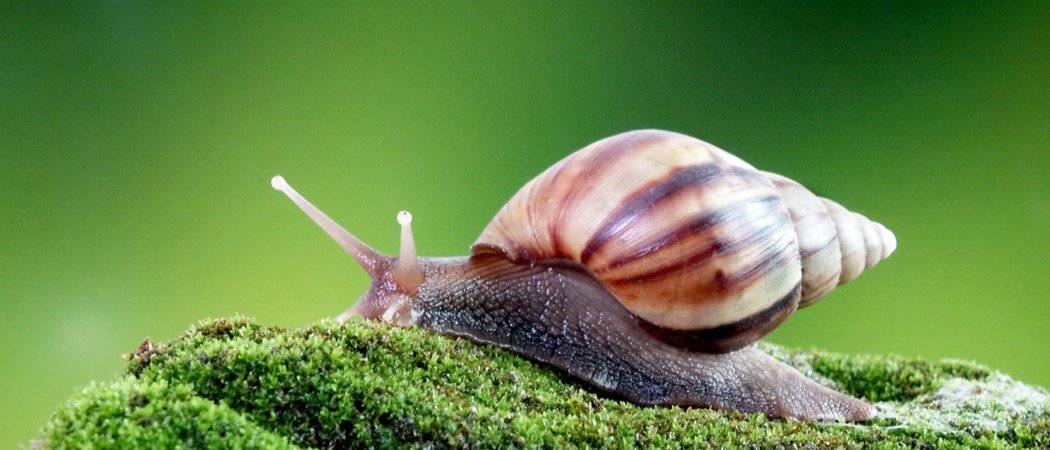
(a)(i) Name two external parts of the body of specimen E.
(ii) State five which could be derived from rearing specimen E.
(iii) Name three pests that could attack specimen E.
Specimen F (Bamboo)
:max_bytes(150000):strip_icc()/how-to-grow-golden-bamboo-5077107-hero-50c7b729a702412b8e106469b2431368.jpg)
(b)(i) State three uses of specimen F on an animal farm.
(ii) Give two disadvantages of using specimen F on an animal farm
Yi Rijista don Ci Gaba
Ƙirƙiri asusu kyauta don samun damar duk kayan koyo, tambayoyin atisaye, da kuma bibiyar ci gaban ka.