Forage Conservation And Utilization
Bayani Gaba-gaba
Grass grows fastest exactly when livestock need it least. Through the rains, pasture around Kaduna, Makurdi or Jos grows thick and lush, far more than a herd can eat in a day, while by January the same fields are bare and brown and animals lose condition fast. Forage conservation is the answer to that mismatch: cutting the wet season's surplus grass and legume at their best and locking that quality in, as hay or silage, so it is still good feed months later when the dry season bites.
The two methods that do this work in almost opposite ways. Hay making dries forage until it is too dry for anything to spoil it. Silage making seals moist forage away from air until fermentation itself keeps it from spoiling. This lesson takes you through both processes step by step, shows you how to tell one from the other by moisture content alone, and covers how conserved forage is actually fed out and checked for quality once the harmattan arrives.
Manufura
- Define forage conservation
- Explain the methods of forage conservation
- Distinguish between hay making and silage making
- Explain the methods of forage utilisation
- State the importance of forage conservation to livestock production
Taswirar tunani
An zana wannan batu don ka ga yadda ra'ayoyi ke hadewa.
Katunan tunawa
Gwaji mai sauri kan abin da ake jarraba a wannan batu.
Takardar Darasi
Yi Rijista don Ci Gaba
Ƙirƙiri asusu kyauta don samun damar duk kayan koyo, tambayoyin atisaye, da kuma bibiyar ci gaban ka.
Nazarin Darasi
Barka da kammala darasi akan Forage Conservation And Utilization. Yanzu da kuka bincika mahimman raayoyi da raayoyi, lokaci yayi da zaku gwada ilimin ku. Wannan sashe yana ba da ayyuka iri-iri Tambayoyin da aka tsara don ƙarfafa fahimtar ku da kuma taimaka muku auna fahimtar ku game da kayan.
Za ka gamu da haɗe-haɗen nau'ikan tambayoyi, ciki har da tambayoyin zaɓi da yawa, tambayoyin gajeren amsa, da tambayoyin rubutu. Kowace tambaya an ƙirƙira ta da kyau don auna fannoni daban-daban na iliminka da ƙwarewar tunani mai zurfi.
Yi wannan ɓangaren na kimantawa a matsayin wata dama don ƙarfafa fahimtarka kan batun kuma don gano duk wani yanki da kake buƙatar ƙarin karatu. Kada ka yanke ƙauna da duk wani ƙalubale da ka fuskanta; maimakon haka, ka kallesu a matsayin damar haɓaka da ingantawa.
- Forage conservation is best described as: A. Growing more pasture during the dry season B. Preserving surplus wet season forage for use when pasture is scarce C. Removing weeds from a pasture D. Fencing a pasture into paddocks Answer: B
- The approximate moisture content of properly cured hay ready for baling is: A. 12 to 15 percent B. 30 to 35 percent C. 50 to 55 percent D. 65 to 70 percent Answer: A
- Silage is preserved mainly by: A. Drying the forage until it is too dry to spoil B. Sealing moist forage away from air so it ferments C. Adding chemical preservatives D. Freezing the chopped forage Answer: B
- Which organisms are responsible for preserving silage through fermentation? A. Moulds B. Lactic acid bacteria C. Nematodes D. Yeasts alone Answer: B
- A sign that stored hay is no longer safe to feed is that it: A. Rustles when handled B. Smells musty and shows grey mould patches C. Is stacked in an open sided barn D. Was cut while still leafy Answer: B
Yi Rijista don Ci Gaba
Ƙirƙiri asusu kyauta don samun damar duk kayan koyo, tambayoyin atisaye, da kuma bibiyar ci gaban ka.
Yi Rijista don Ci Gaba
Ƙirƙiri asusu kyauta don samun damar duk kayan koyo, tambayoyin atisaye, da kuma bibiyar ci gaban ka.
Littattafan da ake ba da shawarar karantawa

Tambayoyin Sake Nazari
Kana ka na mamaki yadda tambayoyin baya na wannan batu suke? Ga wasu tambayoyi da suka shafi Forage Conservation And Utilization daga shekarun baya.
Tambaya 1 Rahoto
Specimen A (Dry groundnut haulm)

(a)i. Outline the procedure for obtaining specimen A.
(ii) State three benefits that farm animals could derive from feeding on specimen A.
Specimen B (Guinea grass)
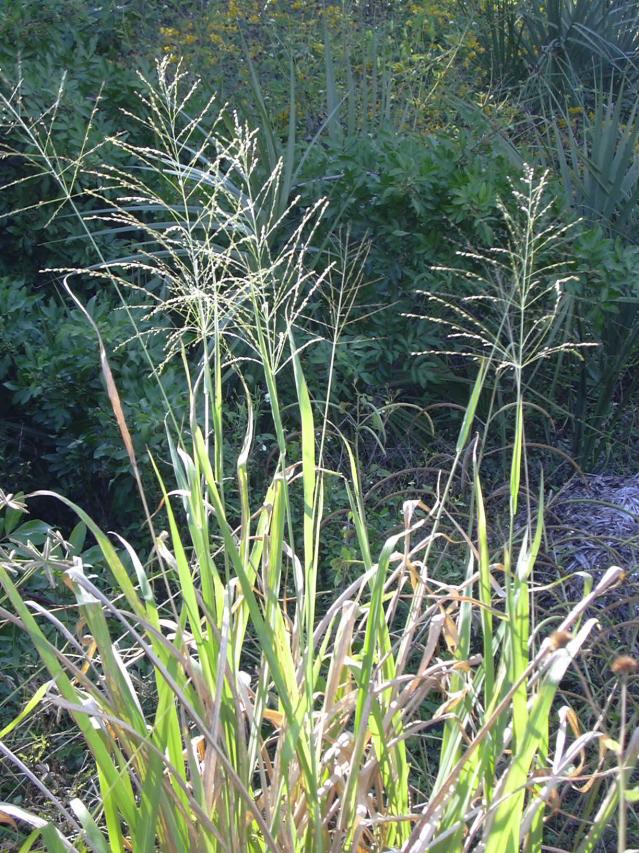
(b)(i) Mention two each that could be used to propagate specimen B;
(ii) preserve specimen B.
Specimen C (Kitchen knife)
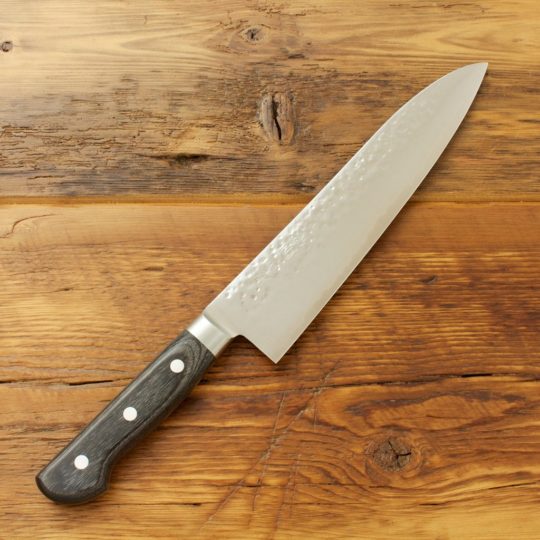
(c) State four of specimen C in animal production
Bayanin Amsa
Specimen A - Dry groundnut haulm is the dried above-ground part of the groundnut plant (the stems, vines and leaves) that remains after the pods have been removed. A labelled diagram of the plant it comes from:
(a)(i) Procedure for obtaining Specimen A.
- Harvest the mature groundnut crop by uprooting the whole plants from the field.
- Detach the pods (nuts) from the plants by picking or threshing, leaving the stems, vines and leaves.
- Spread the remaining haulms in the open to dry in the sun (or under shade for slower, greener drying).
- Turn the material over at intervals so that it dries evenly and does not rot or grow mould.
- When it is properly dry, cut or chop it into smaller pieces.
- Pack it into jute bags or a suitable container and store in a dry place until it is needed as feed.
(a)(ii) Three benefits farm animals derive from feeding on Specimen A.
- It is rich in crude protein (groundnut is a legume), which supports growth and body building.
- It is high in fibre (roughage), which promotes rumination and healthy digestion in ruminants.
- It is readily available and stores well, providing valuable fodder during the dry season when green pasture is scarce.
Specimen B - Guinea grass (Panicum maximum), a tall, tufted forage grass.
(b)(i) Two materials used to propagate Specimen B.
- Seeds.
- Vegetative planting material: root or stem splits (slips) taken from the crown or rooted stem cuttings.
(b)(ii) Two methods used to preserve Specimen B.
- Hay making: cutting the grass and drying it to a low moisture content for storage.
- Silage making: chopping the fresh grass and ensiling it under airtight (anaerobic) conditions in a silo.
Specimen C - Kitchen knife, a hand-held cutting tool.
(c) Four uses of Specimen C in animal production.
- Cutting and chopping forage or fodder into smaller pieces for feeding.
- Slaughtering and dressing (skinning and cutting up) farm animals during processing.
- Castration and other minor surgical operations, and cutting the umbilical cord of newborn animals.
- Cutting ropes and opening feed bags during routine handling of animals.
Yi Rijista don Ci Gaba
Ƙirƙiri asusu kyauta don samun damar duk kayan koyo, tambayoyin atisaye, da kuma bibiyar ci gaban ka.