Two Ecosystems, One Central Question
Ecosystems do not exist in isolation. They are shaped by climate, geology, and biological interactions, and they are increasingly reshaped by human activity. The Cambridge IGCSE Geography syllabus (0460) examines this idea through two contrasting case studies: the Antarctic ecosystem and the tropical rainforest. These two environments could hardly be more different in temperature, biodiversity, and human presence, yet both face mounting pressures that demand careful management. Understanding how each ecosystem functions, what threatens it, and how those threats can be addressed is central to performing well on this part of the exam.
This topic sits within the broader theme of the natural environment and how it changes over time. Examiners regularly draw questions from it because it tests your ability to connect physical processes (climate, nutrient cycling, adaptation) with human decision-making (resource extraction, conservation policy, international agreements). The IGCSE mark schemes reward candidates who can demonstrate that connection with precision.
The Antarctic Ecosystem: Characteristics
Location and Setting
Antarctica is the continent centred on the South Pole, surrounded by the Southern Ocean. It covers approximately 14 million square kilometres and is the coldest, driest, and windiest continent on Earth. Its geographic isolation, combined with its extreme latitude (extending from roughly 60 degrees South to 90 degrees South), makes it one of the most inhospitable environments for life.
Climate
The Antarctic climate is governed by several reinforcing factors. Its high latitude means the sun strikes at a very low angle, spreading solar energy over a large surface area and reducing the heating effect per unit area. During the polar winter, the continent receives no direct sunlight at all for months. A persistent high-pressure system (the polar high) dominates the interior, producing dry, sinking air that suppresses cloud formation and precipitation. Average annual temperatures in the interior range from -40 degrees Celsius to -60 degrees Celsius, with the coastal margins somewhat milder at around -10 degrees Celsius in summer.
Despite being surrounded by ocean, Antarctica is technically a desert. Annual precipitation, falling almost entirely as snow, averages only 50 mm in the interior. The ice sheet that covers 98% of the continent has accumulated over millions of years precisely because so little of it melts or sublimates.
Features of the Ecosystem
The Antarctic ecosystem is characterised by low biodiversity on land but remarkable productivity in its surrounding ocean. Terrestrial life is limited to mosses, lichens, and microorganisms that colonise the small patches of exposed rock. There are no trees and no flowering plants in the interior. The ocean, by contrast, supports a rich food web. Phytoplankton (microscopic photosynthetic organisms) thrive in the nutrient-rich, cold waters during the brief summer, forming the base of a food chain that sustains krill, fish, squid, seals, whales, and seabirds.
Krill (Euphausia superba) occupy a pivotal position in this food web. These small crustaceans, typically 4-6 cm long, exist in vast swarms and provide the primary food source for baleen whales, crabeater seals, Adelie penguins, and many fish species. A decline in krill populations cascades through the entire marine ecosystem.
Interrelationships Between Abiotic and Biotic Factors
Abiotic factors (non-living elements such as temperature, light availability, wind, salinity, and ice cover) exert powerful control over the biotic community (living organisms) in Antarctica. The extreme cold limits the metabolic rate of organisms and restricts the growing season to a few weeks. Light availability determines when phytoplankton can photosynthesise, creating a pronounced seasonal pulse of productivity in the ocean. Ice cover dictates where seals can haul out and where penguins can breed. Wind speeds, regularly exceeding 200 km/h in blizzards, restrict the movement and nesting of land-based species.
These relationships run in both directions. Phytoplankton growth draws down carbon dioxide from the atmosphere and releases oxygen, influencing atmospheric composition. Penguin colonies deposit guano (droppings rich in nitrogen and phosphorus), which fertilises the sparse soil and enables patches of moss and lichen to grow near breeding sites.
Adaptations of Flora and Fauna
Survival in Antarctica demands specialised adaptations. These can be categorised as structural, behavioural, and physiological.
| Organism | Adaptation | Type | Function |
|---|---|---|---|
| Emperor penguin | Huddling in large groups | Behavioural | Reduces heat loss by minimising exposed surface area; individuals rotate from the cold outer edge to the warm centre |
| Emperor penguin | Thick layer of blubber and dense, waterproof feathers | Structural | Insulation against sub-zero temperatures and icy water |
| Weddell seal | Counter-current heat exchange in flippers | Physiological | Warm arterial blood heats cold venous blood returning from extremities, reducing heat loss |
| Lichens | Extremely slow growth rate | Physiological | Conserves energy in an environment with minimal nutrients and brief growing seasons |
| Antarctic hair grass | Low-growing cushion form | Structural | Reduces exposure to high winds and traps a layer of warmer air near the ground |
Threats to the Antarctic Ecosystem and Management
Resource Exploitation
Antarctica holds significant mineral deposits, including iron ore, coal, and potentially oil and gas beneath the continental shelf. Historically, the Southern Ocean was heavily exploited for whaling (particularly in the early twentieth century) and sealing. While commercial whaling has largely ceased, the pressure to exploit mineral and hydrocarbon resources persists as global demand for raw materials grows.
Climate Change
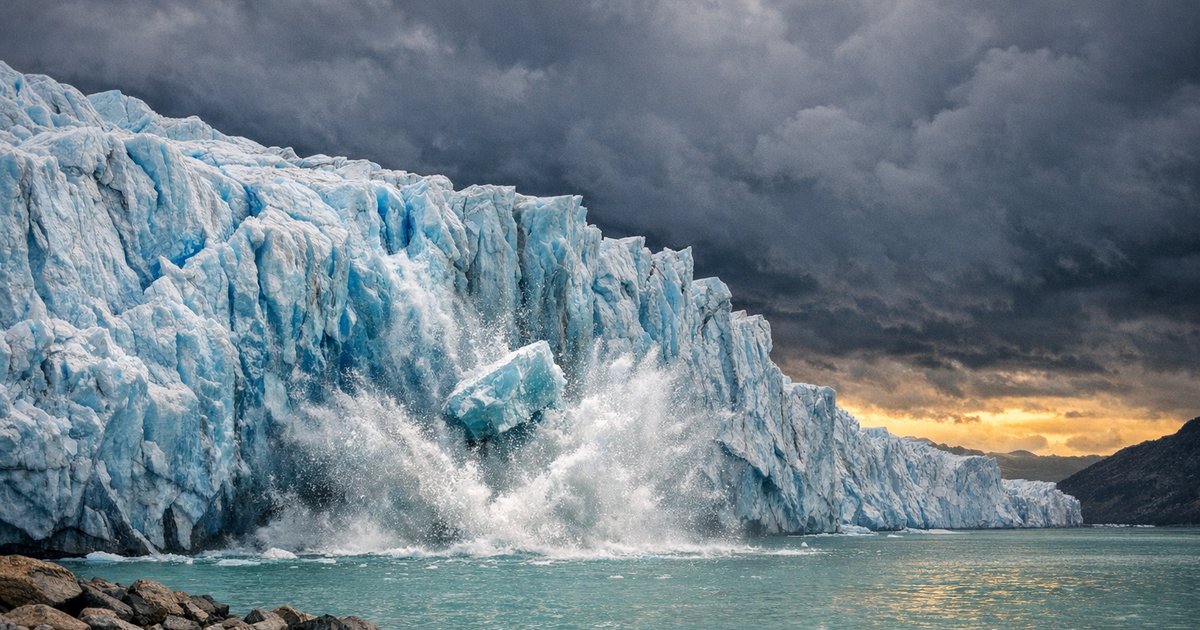
Rising global temperatures are having measurable effects on Antarctica. The Antarctic Peninsula has experienced some of the most rapid warming on Earth, with average temperatures rising by nearly 3 degrees Celsius over the past 50 years. This warming accelerates ice shelf collapse (the Larsen B ice shelf disintegrated spectacularly in 2002), reduces sea ice extent, and alters the habitats available to ice-dependent species such as krill and penguins. Reduced sea ice means less surface area for the algae that grow on the underside of ice, which in turn reduces the food available to krill.
Fishing
Commercial fishing for krill and toothfish (marketed as "Chilean sea bass") places direct pressure on the food web. Overfishing of krill could starve the species that depend on it. Illegal, unreported, and unregulated (IUU) fishing remains a persistent problem in the Southern Ocean despite monitoring efforts.
Tourism
Tourist numbers to Antarctica have grown substantially, from a few hundred visitors per year in the 1980s to over 100,000 annually in recent years. While tourism raises awareness of conservation, it also introduces risks: disturbance to wildlife breeding colonies, potential introduction of non-native species (seeds carried on clothing, for example), and localised pollution from ship fuel and waste.
The Antarctic Treaty
The Antarctic Treaty, signed in 1959 and entering force in 1961, is the principal international framework for managing the continent. Its key provisions include:
- Antarctica shall be used for peaceful purposes only; military activity is prohibited
- Freedom of scientific investigation and cooperation between nations
- Territorial claims are frozen; no new claims can be made
- Nuclear explosions and the disposal of radioactive waste are banned
The treaty has been supplemented by additional agreements, most notably the Protocol on Environmental Protection (the Madrid Protocol, 1991), which designates Antarctica as a "natural reserve devoted to peace and science" and bans mining and mineral exploitation for at least 50 years (subject to review in 2048). The Commission for the Conservation of Antarctic Marine Living Resources (CCAMLR) regulates fishing in the Southern Ocean to prevent overharvesting.
The treaty system is not without limitations. Enforcement relies on mutual inspection rather than a central authority, and the 2048 review date for the mining ban creates uncertainty about long-term protection. Still, it represents one of the more successful examples of international environmental governance.
The Tropical Rainforest Ecosystem: Characteristics
Location
Tropical rainforests are found in a belt around the equator, roughly between the Tropics of Cancer (23.5 degrees North) and Capricorn (23.5 degrees South). Major areas include the Amazon Basin in South America, the Congo Basin in Central Africa, and the islands of Southeast Asia (Borneo, Sumatra, Papua New Guinea). They occupy approximately 6% of the Earth's land surface but contain more than half of the world's terrestrial species.
Climate
The equatorial climate that supports tropical rainforests is characterised by consistently high temperatures and high rainfall throughout the year. Average monthly temperatures remain between 25 and 28 degrees Celsius, with very little seasonal variation (the annual temperature range is typically less than 3 degrees Celsius). Rainfall is heavy, usually exceeding 2,000 mm per year and often surpassing 3,000 mm. Rain falls on most days, frequently as convectional storms triggered when intense solar heating causes moist air to rise rapidly, cool, condense, and precipitate.
This combination of heat and moisture creates the ideal conditions for rapid plant growth and decomposition, which in turn drives the ecosystem's extraordinary biodiversity and nutrient cycling.
Features of the Ecosystem
Tropical rainforests have a distinctive layered structure. Each layer receives different amounts of light and supports different communities of organisms.
| Layer | Height | Characteristics |
|---|---|---|
| Emergent layer | 40-60 m | Tallest trees that protrude above the main canopy; exposed to wind and strong sunlight; home to eagles, butterflies, and bats |
| Canopy | 25-40 m | Dense, continuous layer of interlocking branches and leaves; intercepts most sunlight; greatest biodiversity of any layer |
| Under-canopy | 10-25 m | Younger trees and shade-tolerant species; receives only 2-5% of sunlight |
| Shrub layer | 1-10 m | Shrubs, ferns, and seedlings adapted to very low light |
| Forest floor | 0-1 m | Dark and humid; thin leaf litter decomposes rapidly; fungi and invertebrates dominate |
Biodiversity is the hallmark of this ecosystem. A single hectare of tropical rainforest may contain over 200 tree species. This diversity extends to insects, amphibians, mammals, and birds. The warm, wet conditions and year-round growing season allow many ecological niches to develop, supporting species that are often highly specialised.
The nutrient cycle in a tropical rainforest is rapid and tightly closed. Despite the lush vegetation, the soils are generally thin and nutrient-poor (laterite soils). Most nutrients are stored in the living biomass rather than the soil. When leaves and branches fall to the forest floor, they decompose quickly in the warm, humid conditions, and the released nutrients are almost immediately reabsorbed by the dense network of shallow roots. This rapid cycling means that the removal of vegetation breaks the cycle: nutrients are washed away by heavy rain (a process called leaching), and the soil becomes infertile within a few years.
Interrelationships Between Abiotic and Biotic Factors
The tropical rainforest demonstrates tightly woven connections between its living and non-living components. High temperatures and rainfall (abiotic) drive rapid photosynthesis and decomposition (biotic processes). Trees transpire enormous volumes of water back into the atmosphere, contributing to local cloud formation and rainfall in a feedback loop. The dense canopy moderates the microclimate beneath it, maintaining humidity levels above 80% on the forest floor even during drier periods. Epiphytes (plants such as orchids and bromeliads that grow on other plants without parasitising them) exploit the canopy structure to access light, while their root masses trap moisture and create micro-habitats for frogs, insects, and other small animals.
Adaptations of Flora and Fauna
- Buttress roots: large, fin-like extensions at the base of tall trees that provide stability in shallow, waterlogged soils and increase the surface area for nutrient absorption
- Drip tips: pointed leaf tips that channel rainwater off the leaf surface quickly, preventing the growth of algae and fungi that could block light
- Lianas: woody climbing plants that use trees as structural support to reach the canopy, where light is available for photosynthesis
- Camouflage: many animals, such as leaf-tailed geckos and stick insects, have evolved body shapes and colours that mimic leaves or branches, reducing predation risk
- Prehensile tails: monkeys such as spider monkeys have tails that can grip branches, functioning as a fifth limb for navigating the canopy
- Bright colouration (aposematism): poison dart frogs advertise their toxicity through vivid colours, warning potential predators
Threats to Tropical Rainforests and Management
Deforestation
Deforestation, the permanent removal of forest cover, is the most significant threat to tropical rainforests. The rate of clearance has been staggering: the Amazon alone lost over 17% of its forest cover in the last five decades. The main drivers are:
Agriculture: Both small-scale subsistence farming (slash and burn) and large-scale commercial farming (cattle ranching, soybean plantations, palm oil plantations) convert forest to farmland. Slash and burn involves cutting vegetation and setting it alight; the ash temporarily fertilises the soil, but nutrient depletion forces farmers to move on within a few years, leaving degraded land behind.
Logging: Commercial logging targets valuable hardwood species such as mahogany and teak. Even selective logging (where only certain trees are felled) damages surrounding vegetation, since heavy machinery compacts the soil and felled trees bring down neighbours as they fall.
Mining: Extraction of minerals (gold, bauxite, iron ore) requires forest clearance and often contaminates rivers with heavy metals and sediment. The Carajas mining project in the eastern Amazon illustrates the scale of forest loss that large mining operations can cause.
Road building and infrastructure: New roads open previously inaccessible forest to settlers, loggers, and farmers. The construction of the Trans-Amazonian Highway in the 1970s triggered a wave of deforestation along its route.
Climate Change
Climate change threatens rainforests through altered rainfall patterns and increased temperatures. Prolonged droughts make forests more vulnerable to fire (healthy rainforests rarely burn naturally). Higher temperatures can exceed the thermal tolerance of some species, forcing migration or causing local extinction. There is also a potential feedback loop: as forests are cleared or degraded, they release stored carbon, which accelerates warming, which further stresses remaining forest.
Consequences of Deforestation
- Loss of biodiversity: species lose their habitat and face extinction, reducing the genetic pool
- Soil erosion: without tree roots to bind the soil and a canopy to intercept rainfall, heavy rain washes topsoil away
- Disruption of the water cycle: reduced transpiration leads to lower local rainfall, potentially converting forest margins to savanna
- Contribution to climate change: burning and decay of cleared trees release stored carbon dioxide into the atmosphere
- Loss of indigenous livelihoods: forest-dwelling communities lose their homes, food sources, and cultural heritage
Sustainable Management Strategies
The IGCSE syllabus expects you to evaluate a range of strategies, recognising that each has advantages and limitations.
Selective logging: Only mature trees of certain species are harvested, leaving the rest of the forest intact. This reduces the impact compared to clear-felling, allows the forest to regenerate, and maintains habitat continuity. The limitation is that enforcement is difficult, and even selective logging causes collateral damage to surrounding trees.
Ecotourism: Tourism focused on experiencing natural environments with minimal disturbance. Revenue from ecotourism gives local communities an economic incentive to preserve the forest rather than clear it. Costa Rica is often cited as a success story, where ecotourism generates significant income while protecting large tracts of forest. The limitation is that poorly managed ecotourism can itself disturb wildlife and degrade trails.
Debt-for-nature swaps: A portion of a developing country's international debt is cancelled in exchange for investment in conservation. This approach addresses the economic pressures that drive deforestation by providing financial relief tied to environmental commitments. The limitation is that the scale of debt relief is often small relative to the economic pressures involved.
National parks and protected areas: Legally designated zones where logging, mining, and farming are restricted or prohibited. Brazil's network of indigenous reserves and protected areas has slowed deforestation in some regions. Enforcement remains the core challenge, particularly in remote areas with limited ranger presence.
Reforestation and afforestation: Replanting trees on degraded land or establishing forests on previously unforested land. While this helps restore some ecosystem functions, a planted monoculture does not replicate the biodiversity of a primary rainforest.
International agreements and certification: Schemes such as REDD+ (Reducing Emissions from Deforestation and Forest Degradation) offer financial incentives to countries that demonstrably reduce deforestation. Certification bodies like the Forest Stewardship Council (FSC) label timber products from sustainably managed forests, allowing consumers to make informed choices.
| Strategy | Advantages | Limitations |
|---|---|---|
| Selective logging | Maintains forest structure; allows regeneration; provides timber income | Collateral damage to surrounding trees; difficult to enforce; logging roads open access |
| Ecotourism | Generates income for local communities; raises environmental awareness; low-impact if well managed | Can disturb wildlife; infrastructure development may damage ecosystems; benefits may not reach local people |
| Debt-for-nature swaps | Reduces economic pressure to exploit forests; channels funds directly to conservation | Scale often insufficient; relies on political will; may not address root causes of deforestation |
| National parks | Legal protection; preserves large contiguous areas; supports research | Enforcement in remote areas is costly; may displace indigenous communities; boundaries can be redrawn |
Comparing the Two Ecosystems
IGCSE exam questions frequently ask you to compare these two environments. Preparing a clear mental framework for comparison will save time and improve the quality of your responses.
| Feature | Antarctic | Tropical Rainforest |
|---|---|---|
| Temperature | Extremely cold (-40 to -60 degrees C interior) | Consistently hot (25-28 degrees C year-round) |
| Precipitation | Very low (around 50 mm/year interior); falls as snow | Very high (over 2,000 mm/year); falls as rain |
| Biodiversity | Low on land; moderate to high in surrounding ocean | Extremely high across all taxonomic groups |
| Nutrient cycling | Slow (cold temperatures inhibit decomposition) | Rapid (warm, humid conditions accelerate decomposition) |
| Primary threat | Climate change and potential resource exploitation | Deforestation for agriculture and logging |
| Key management approach | Antarctic Treaty and Madrid Protocol | Selective logging, ecotourism, national parks, REDD+ |
Worked Example
Question: Explain why the tropical rainforest has much greater biodiversity than the Antarctic ecosystem. [4 marks]
Model Answer:
The tropical rainforest has consistently high temperatures (25-28 degrees C) and high rainfall (over 2,000 mm/year), which support year-round plant growth and provide a continuous supply of food and habitat for animals (1 mark). The layered structure of the forest, from the forest floor to the emergent layer, creates a wide range of different habitats and ecological niches, allowing many species to coexist (1 mark). By contrast, Antarctica's extreme cold (as low as -60 degrees C) severely limits metabolic activity and restricts the growing season to a few brief weeks, meaning fewer species can survive (1 mark). The low precipitation and lack of liquid water on land in Antarctica further limits the types of organisms that can establish themselves, confining significant biodiversity to the surrounding ocean rather than the continent itself (1 mark).
Common Mistakes to Avoid
- Stating that Antarctica has no life. It has limited terrestrial biodiversity, but the surrounding ocean is rich with life. Ignoring marine organisms loses marks.
- Confusing the Antarctic with the Arctic. The Antarctic is a continent surrounded by ocean. The Arctic is an ocean surrounded by land. Polar bears live in the Arctic, not Antarctica. Penguins live in the Antarctic, not the Arctic.
- Describing rainforest soil as fertile. Despite the dense vegetation, tropical rainforest soils are typically thin and nutrient-poor. Most nutrients are held in the biomass, not the soil. This is a crucial point that examiners test repeatedly.
- Listing management strategies without evaluation. Higher-mark questions expect you to discuss advantages and limitations. Saying "ecotourism helps protect the forest" without explaining how or noting its drawbacks will not earn full marks.
- Forgetting abiotic-biotic links. Many candidates describe climate and organisms separately. The syllabus explicitly requires you to explain how they interact. Practice writing sentences that connect an abiotic factor to a biotic response.
Self-Check Questions
Work through these questions using the material above. Aim for two to three sentences per answer before reviewing.
- Explain three reasons why Antarctica has such low temperatures.
- Describe the role of krill in the Antarctic food web.
- What is the Antarctic Treaty, and how does it protect the ecosystem?
- Draw and label the layered structure of a tropical rainforest, naming all five layers.
- Explain why deforestation breaks the nutrient cycle in a tropical rainforest.
- Compare one adaptation of an Antarctic organism with one adaptation of a rainforest organism, explaining how each relates to its environment.
- Evaluate the effectiveness of ecotourism as a strategy for managing tropical rainforests.
- Explain the difference between selective logging and clear-felling, and state which is more sustainable.
Bringing It Together
The Changing ecosystems topic in IGCSE Geography is fundamentally about understanding how physical processes and human decisions shape the natural world. The Antarctic and the tropical rainforest represent two extremes of the climate spectrum, yet both illustrate the same core principle: ecosystems are balanced systems where abiotic and biotic components are interdependent, and disruption of that balance, whether through climate change, resource extraction, or land clearance, can trigger cascading consequences.
Strong exam performance requires you to move beyond description and into explanation. Do not simply state that "deforestation is bad for the rainforest." Explain the mechanism: removal of trees breaks the nutrient cycle because nutrients stored in biomass are lost, heavy rainfall leaches remaining nutrients from exposed soil, and the soil becomes infertile within a few years. That level of detail is what separates competent answers from excellent ones.
Revise the comparison table above until you can reproduce it from memory. Practice writing four-mark and six-mark answers that explicitly link both ecosystems. And remember: every management strategy has both strengths and weaknesses. Examiners are testing your ability to evaluate, not just recall.

A thorough revision guide to Changing ecosystems for IGCSE Geography (0460), covering the Antarctic and tropical rainforest ecosystems, their abiotic and biotic interrelationships, threats from human activity and climate change, and management strategies including the Antarctic Treaty and sustainable forestry practices.

Commentaire(s)