Inorganic chemistry within the Edexcel IGCSE Science Double Award is where the Periodic Table comes alive. Here you will learn how groups of elements behave, how metals and acids interact, and how to identify unknown substances through simple tests.
The chemistry: inorganic chemistry edexcel igcse section of the 4SD0 specification covers seven distinct topics: Group 1 (alkali metals), Group 7 (halogens), gases in the atmosphere, the reactivity series, acids, alkalis and titrations, acids, bases and salt preparations, and chemical tests. Together they account for a substantial portion of Paper 2, and elements of this material also appear on Paper 1 as short-answer and structured questions. These edexcel igcse science double award revision notes walk you through every topic with the level of detail the exam demands.
Group 1: the alkali metals
The Group 1 elements - lithium, sodium and potassium - share a set of properties that make them distinctive. They are soft metals that can be cut with a knife, they have low densities (lithium, sodium and potassium all float on water), and they are highly reactive. Reactivity increases as you move down the group because the outer electron is further from the nucleus and more easily lost.
When Group 1 metals react with water, they produce a metal hydroxide and hydrogen gas. The general equation is:
2M(s) + 2H2O(l) -> 2MOH(aq) + H2(g)
where M represents the Group 1 metal. Lithium fizzes gently, sodium melts into a ball and moves rapidly across the surface, and potassium reacts vigorously enough to ignite the hydrogen produced with a lilac flame. The resulting hydroxide solutions are alkaline, which is why these elements are called alkali metals.
Group 1 metals also react with the halogens. Sodium burns in chlorine gas to produce sodium chloride: 2Na(s) + Cl2(g) -> 2NaCl(s). The product is always an ionic compound with a 1+ metal ion and a 1- halide ion.
Group 7: the halogens
The halogens - fluorine, chlorine, bromine and iodine - sit on the opposite side of the Periodic Table. Unlike the alkali metals, they are non-metals, they exist as diatomic molecules (F2, Cl2, Br2, I2), and their reactivity decreases as you move down the group.
| Halogen | State at room temperature | Colour |
|---|---|---|
| Chlorine | Gas | Yellow-green |
| Bromine | Liquid | Red-brown |
| Iodine | Solid | Dark grey (purple vapour) |
The trend in reactivity is explained by electron gain. Halogens react by gaining one electron to form a 1- ion. As you go down the group, the outer shell is further from the nucleus, so the attraction for an incoming electron is weaker. Fluorine is the most reactive; iodine is the least.
Displacement reactions demonstrate this trend neatly. A more reactive halogen will displace a less reactive halide from solution. If you add chlorine water to potassium bromide solution, the solution turns orange-brown because chlorine displaces bromide: Cl2(aq) + 2KBr(aq) -> 2KCl(aq) + Br2(aq). Bromine cannot displace chloride, because bromine is less reactive than chlorine.
Gases in the atmosphere
The Earth's atmosphere is approximately 78% nitrogen, 21% oxygen and about 1% argon, with trace amounts of carbon dioxide and water vapour. The igcse 4sd0 chemistry: inorganic chemistry specification expects you to know these proportions and to describe how they have changed over geological time.
Early in Earth's history, the atmosphere was rich in carbon dioxide and water vapour, with very little oxygen. Photosynthetic organisms gradually converted carbon dioxide into oxygen over billions of years. Carbon dioxide was also locked away in fossil fuels, sedimentary rocks (such as limestone) and dissolved in the oceans. The proportion of oxygen increased to its current level, enabling complex life to develop.
The specification also covers atmospheric pollutants. Combustion of fossil fuels produces carbon dioxide (contributing to global warming), sulfur dioxide (causing acid rain) and nitrogen oxides (formed when nitrogen and oxygen from the air react at the high temperatures inside engines). Incomplete combustion produces carbon monoxide, a colourless, odourless toxic gas, and particulates (soot).
The reactivity series
The reactivity series ranks metals in order of their tendency to lose electrons and form positive ions. From most reactive to least reactive, the edexcel igcse science double award specification lists: potassium, sodium, lithium, calcium, magnesium, aluminium, zinc, iron, copper, silver, gold. Carbon and hydrogen are included as reference points for extraction methods.
Metals above carbon in the reactivity series must be extracted by electrolysis because carbon cannot reduce their oxides. Metals below carbon can be extracted by heating their oxides with carbon (or carbon monoxide) in a process called reduction. Iron, for example, is extracted from iron oxide in the blast furnace: Fe2O3(s) + 3CO(g) -> 2Fe(l) + 3CO2(g).
Displacement reactions between metals and metal salt solutions also follow the reactivity series. If you place a piece of zinc into copper sulfate solution, the zinc displaces the copper: Zn(s) + CuSO4(aq) -> ZnSO4(aq) + Cu(s). The blue solution fades as copper is deposited on the zinc. This works because zinc is more reactive than copper.
Acids, alkalis and titrations
Acids produce H+ ions in aqueous solution. Alkalis produce OH- ions. The pH scale runs from 0 to 14: values below 7 are acidic, 7 is neutral, and values above 7 are alkaline. Indicators such as litmus, methyl orange and phenolphthalein change colour depending on whether a solution is acidic or alkaline.
Neutralisation is the reaction between an acid and a base: H+(aq) + OH-(aq) -> H2O(l). This ionic equation applies to every neutralisation reaction and is a required piece of knowledge for the exam.
Titrations are quantitative experiments used to find the exact volume of acid needed to neutralise a given volume of alkali (or vice versa). The edexcel igcse science double award explained procedure is as follows:
- Measure a known volume of alkali using a pipette and place it in a conical flask.
- Add a few drops of indicator.
- Fill a burette with acid of known concentration.
- Add the acid slowly until the indicator changes colour (the end point).
- Record the volume of acid used and repeat for concordant results (within 0.10 cm3 of each other).
From the titration data you can calculate the concentration of an unknown solution using the formula: concentration = moles / volume.
Acids, bases and salt preparations
Acids react with different types of bases to produce salts. The four key reactions are:
| Reaction | Products | Example |
|---|---|---|
| Acid + metal | Salt + hydrogen | Mg + H2SO4 -> MgSO4 + H2 |
| Acid + metal oxide | Salt + water | CuO + 2HCl -> CuCl2 + H2O |
| Acid + metal hydroxide | Salt + water | NaOH + HNO3 -> NaNO3 + H2O |
| Acid + metal carbonate | Salt + water + carbon dioxide | CaCO3 + 2HCl -> CaCl2 + H2O + CO2 |
The name of the salt depends on the acid used: hydrochloric acid produces chlorides, sulfuric acid produces sulfates, and nitric acid produces nitrates. To prepare a pure, dry sample of an insoluble salt, you use a precipitation reaction: mix solutions containing the two ions, filter off the precipitate, wash it with distilled water, and dry it in an oven or between filter papers.
For a soluble salt from an insoluble base (e.g. copper sulfate from copper oxide and sulfuric acid), add excess base to the acid, filter off the unreacted solid, then crystallise the filtrate by evaporating the water. The edexcel igcse science double award notes for this topic should include the practical steps, not just the theory.
Chemical tests
The final topic in this section covers the tests you need to know for identifying gases, cations and anions. These appear regularly in the exam as short practical-style questions.
Gas tests:
- Hydrogen: Place a burning splint at the mouth of the test tube. A squeaky pop confirms hydrogen.
- Oxygen: Place a glowing splint into the gas. It relights if oxygen is present.
- Carbon dioxide: Bubble the gas through limewater (calcium hydroxide solution). It turns milky (cloudy white) if carbon dioxide is present, due to the formation of insoluble calcium carbonate.
- Chlorine: Hold damp litmus paper in the gas. It is bleached white.
Tests for cations (positive ions):
- Flame tests: lithium (crimson red), sodium (yellow), potassium (lilac), calcium (orange-red), copper (blue-green).
- Adding sodium hydroxide solution: copper(II) gives a blue precipitate, iron(II) gives a green precipitate, iron(III) gives a brown precipitate. Calcium and aluminium both give white precipitates, but aluminium hydroxide dissolves in excess NaOH (it is amphoteric).
Tests for anions (negative ions):
- Carbonates: add dilute acid and test the gas with limewater. Effervescence followed by limewater turning milky confirms a carbonate.
- Sulfates: add dilute hydrochloric acid followed by barium chloride solution. A white precipitate of barium sulfate confirms a sulfate ion.
- Halides: add dilute nitric acid followed by silver nitrate solution. Chloride gives a white precipitate (silver chloride), bromide gives a cream precipitate (silver bromide), and iodide gives a yellow precipitate (silver iodide).
Bringing it together for the exam
Inorganic chemistry in the edexcel igcse science double award practice questions often combines topics. You might be given a reactivity series question that requires you to predict whether a displacement reaction will occur, then asked to name the salt produced when the displaced metal's oxide reacts with an acid. Being comfortable with each individual topic is essential, but so is seeing how they connect.
When you study the edexcel igcse science double award chemistry: inorganic chemistry section, work through these topics in order. Group 1 and Group 7 introduce the idea that elements within a group share properties. The reactivity series extends that idea across the entire table. Acids, bases and salts give you the reactions, while chemical tests give you the tools to identify what has been formed. If you treat them as a connected narrative rather than seven isolated checklists, you will find the material easier to retain and significantly easier to apply under exam conditions.
Use the Green Bridge CBT platform for edexcel igcse science double award practice questions on each topic, then revisit your edexcel igcse science double award notes to fill any gaps. The exam rewards precise recall of reactions, equations and test results, so active retrieval practice is far more effective than passive re-reading.

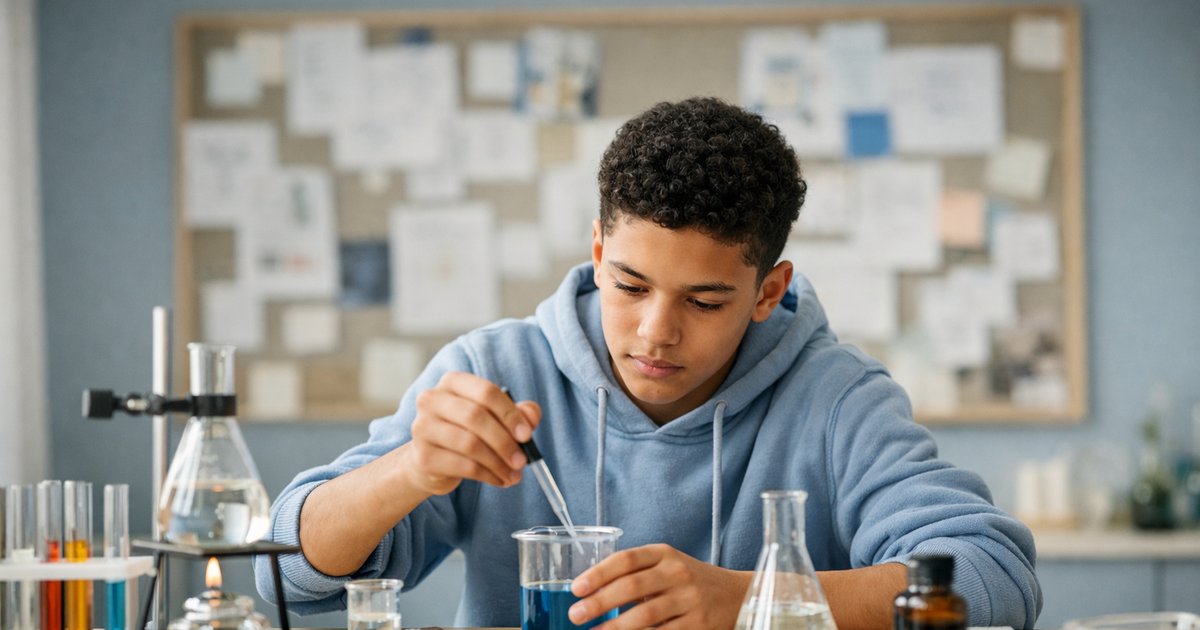
Edexcel IGCSE Science Double Award revision notes on inorganic chemistry: Group 1, Group 7, reactivity series, acids and chemical tests.





Comentario(s)