Imagine You're Running a Kitchen Garden
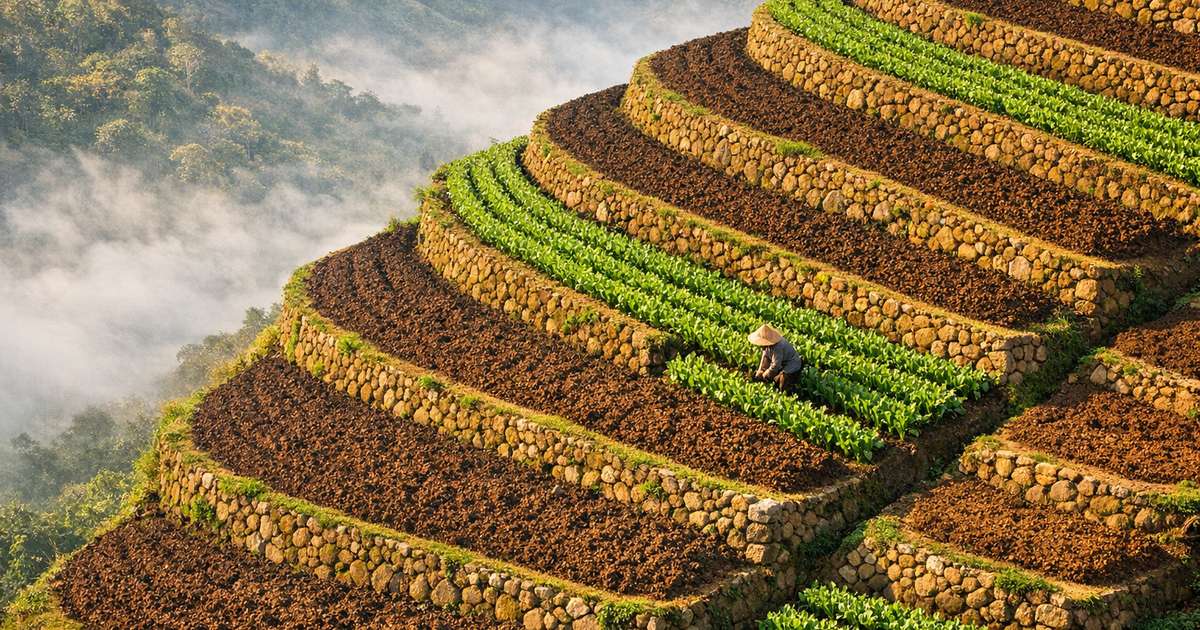
Picture this: you have a small patch of soil in your back garden. You plant ten tomato seeds. Some sprout quickly, others struggle. One corner stays too soggy, another bakes dry in the afternoon sun. By the end of summer, you harvest a bowl of tomatoes rather than the bushel you dreamed about. That gap between what you planted and what you actually collected? That is crop yield in miniature. Now scale that garden up to millions of hectares feeding billions of people, and you start to see why food production and crop yield sit right at the heart of your IGCSE Environmental Management course.
This topic appears across Paper 1 and Paper 2 of the Cambridge IGCSE Environmental Management (0680) syllabus, and examiners love it because it ties together soil science, climate, technology, economics, and sustainability all in one place. Getting comfortable with it will pay off across multiple questions.
Key Facts at a Glance
- Food production refers to the processes involved in growing crops and raising livestock to feed human populations.
- Crop yield is the amount of crop harvested per unit area of land (commonly measured in tonnes per hectare).
- Global food production has more than doubled since the 1960s, largely due to the Green Revolution.
- Around 37% of the world's land surface is used for agriculture.
- Food security means having reliable access to enough affordable, nutritious food.
- Intensive farming maximises output per hectare but can degrade soil and water resources.
- Sustainable farming aims to maintain yields without compromising the environment for future generations.
What Exactly Are Food Production and Crop Yield?
Think of food production as the whole pipeline from planting a seed to putting food on someone's plate. It includes preparing the soil, sowing seeds, nurturing the growing crop, harvesting, processing, and distributing the finished product. Crop yield is just one number within that pipeline: how much usable crop you actually get from a given area of land.
Examiners frequently ask you to distinguish between subsistence farming (growing just enough to feed your family) and commercial farming (growing large quantities to sell). Subsistence farms tend to have lower crop yields because they rely on simpler tools, fewer inputs, and traditional seed varieties. Commercial farms chase higher yields through technology, fertilisers, and improved crop varieties.
Factors That Affect Crop Yield
Why do some fields produce mountains of grain while others barely scrape by? Several interconnected factors control the answer.
Soil Quality
Soil is the foundation. Think of it like... the mattress your plants sleep on. A good soil holds the right balance of minerals, organic matter, water, and air spaces. Soils rich in humus (decomposed organic material) retain moisture and nutrients well. Sandy soils drain too fast; clay soils waterlog easily. The pH matters too: most crops prefer a slightly acidic to neutral range (pH 6 to 7). If soil is degraded through erosion, compaction, or nutrient depletion, yields fall sharply.
Water Availability
Plants need water for photosynthesis, nutrient transport, and cooling. Too little water causes wilting and stunted growth. Too much drowns roots and encourages fungal diseases. Rainfall patterns, access to irrigation, and the water-holding capacity of the soil all influence how much water reaches the crop at the right time.
Climate and Weather
Temperature, sunlight hours, and seasonal patterns set the boundaries for what can grow and when. Tropical regions can sometimes manage two or three harvests per year because warmth and light are plentiful year-round. Temperate regions often get a single growing season. Extreme weather events like droughts, floods, and unseasonal frosts can wipe out harvests entirely.
Pests and Diseases
Insects, fungi, bacteria, and weeds compete with crops for resources or attack them directly. Locusts can strip a field bare in hours. Fungal blights can rot grain on the stalk. Weeds steal sunlight, water, and soil nutrients. Without management, pest and disease losses can reduce yields by 20% to 40%.
Human Inputs and Technology
The seeds a farmer chooses, the fertilisers applied, the machinery available, and the knowledge the farmer brings all shape outcomes. A farmer with access to irrigation, high-yield seed varieties, and modern equipment will nearly always outperform one relying on rain, traditional seeds, and hand tools, assuming the soil and climate are similar.
| Factor | How It Affects Yield | Example |
|---|---|---|
| Soil quality | Nutrient-rich, well-drained soil supports strong root growth and high yields | Volcanic soils in Java produce exceptional rice harvests |
| Water availability | Consistent moisture keeps photosynthesis running and prevents crop stress | Irrigation in Egypt's Nile valley allows year-round farming in a desert |
| Climate | Temperature and sunlight set the growing season length and crop suitability | Wheat thrives in temperate zones; rice needs tropical warmth and moisture |
| Pests and diseases | Unchecked pests can destroy large portions of a harvest | Desert locust swarms in East Africa, 2020 |
| Technology and inputs | Improved seeds, fertilisers, and machinery raise output per hectare | Combine harvesters reduce grain loss during harvesting |
Methods to Increase Food Production
Humans have been inventing ways to coax more food out of the land for thousands of years. Your syllabus groups these into biological, chemical, and mechanical approaches.
Selective Breeding
Selective breeding is the oldest trick in the agricultural book. Farmers choose plants (or animals) with desirable traits and breed them together, hoping the offspring inherit those traits. Over many generations, this produces crop varieties with higher yields, better disease resistance, or shorter growing periods. Think of it like... picking the fastest runners from a school sports team and training their children together. Eventually, you get a squad of naturally quick athletes.
Most modern wheat, rice, and maize varieties are products of centuries of selective breeding. The drawback is that it takes time and reduces genetic diversity, because you keep narrowing the gene pool to "winning" traits.
Genetic Modification (GM)
Genetic modification goes a step further. Scientists directly insert or alter specific genes in a crop's DNA to give it traits that selective breeding alone could never achieve, or could only achieve very slowly. Examples include Bt cotton (which produces a natural insecticide), Golden Rice (enriched with vitamin A), and drought-tolerant maize varieties.
Irrigation
Irrigation delivers water to crops when and where rainfall falls short. Methods range from simple flood irrigation (channelling water across a field) to highly efficient drip irrigation (delivering water drop by drop directly to each plant's root zone). Drip systems can cut water use by 30% to 50% compared with flood irrigation while boosting yields, because plants receive steady moisture without waterlogging.
Fertilisers
Fertilisers replace nutrients that crops remove from the soil. They come in two broad types:
- Inorganic (chemical) fertilisers - manufactured products containing precise concentrations of nitrogen (N), phosphorus (P), and potassium (K). They work quickly and can be applied in exact doses. However, overuse leads to eutrophication of waterways, soil acidification, and groundwater contamination.
- Organic fertilisers - animal manure, compost, and green manure (ploughing a cover crop back into the soil). They release nutrients more slowly, improve soil structure over time, and carry less pollution risk. The trade-off is lower nutrient concentration and bulkier handling.
Pesticides and Herbicides
Pesticides kill or repel organisms that damage crops. Herbicides target weeds specifically. Together they protect yields by removing competition and direct damage. The downside? Chemical pesticides can accumulate in food chains (bioaccumulation), harm non-target species like pollinators, contaminate water supplies, and create resistant pest populations over time.
Mechanisation
Tractors, combine harvesters, seed drills, and automated milking systems allow one farmer to manage far more land than would be possible by hand. Mechanisation increases the speed and efficiency of planting, weeding, and harvesting. The catch is that machinery is expensive, uses fossil fuels, and compacts soil if used carelessly.
The Green Revolution
If there is one historical episode your IGCSE examiner wants you to know by name, it is the Green Revolution. During the 1960s and 1970s, scientists developed high-yielding varieties (HYVs) of wheat and rice, promoted the use of chemical fertilisers and pesticides, and expanded irrigation infrastructure across Asia, Latin America, and parts of Africa.
The results were dramatic. India, for example, went from importing grain to becoming self-sufficient in wheat within about two decades. Mexico tripled its wheat harvest. Global cereal production soared.
But the Green Revolution was not a fairy tale with a clean happy ending. It also brought serious problems:
- Heavy reliance on chemical inputs polluted rivers and degraded soils.
- Irrigation drew down groundwater reserves faster than they could recharge.
- Small-scale farmers who could not afford the new seeds and chemicals fell further behind.
- Genetic diversity decreased as a handful of HYVs replaced hundreds of traditional local varieties.
- Monoculture (growing one crop over vast areas) made harvests vulnerable to a single disease outbreak.
Intensive vs Sustainable Farming
These two approaches sit at opposite ends of a spectrum, and exam questions love to compare them.
| Feature | Intensive Farming | Sustainable Farming |
|---|---|---|
| Goal | Maximise output per hectare in the short term | Maintain yields while protecting the environment long term |
| Inputs | High use of chemical fertilisers, pesticides, machinery, and irrigation | Organic fertilisers, biological pest control, water conservation, crop rotation |
| Biodiversity | Low (monoculture common) | Higher (polyculture, hedgerows, wildlife corridors) |
| Soil health | Can degrade over time (erosion, compaction, nutrient depletion) | Maintained or improved through organic matter addition and minimal tillage |
| Water impact | Risk of eutrophication and groundwater depletion | Reduced runoff, better water retention in soil |
| Yield per hectare | Higher in the short term | May be slightly lower but more stable over decades |
The real-world tension is that a growing global population needs high food output right now, but degrading the land to get it means lower yields in the future. Finding the middle ground is one of the biggest challenges in environmental management.
Food Security
Food security exists when all people, at all times, have physical and economic access to enough safe, nutritious food to meet their dietary needs. It rests on four pillars:
- Availability - Is enough food being produced or imported?
- Access - Can people afford the food and physically reach it?
- Utilisation - Is the food nutritious and safe to eat? Do people have clean water and sanitation to prepare it properly?
- Stability - Is the food supply consistent, or does it collapse during droughts, conflicts, or price spikes?
Threats to food security include climate change (shifting growing seasons, more extreme weather), population growth, soil degradation, water scarcity, conflict, and economic inequality. For your IGCSE exam, be ready to link these threats back to the specific factors and farming methods discussed above.
Organic Farming
Organic farming avoids synthetic chemical fertilisers, pesticides, herbicides, and genetically modified organisms. Instead, it relies on crop rotation, composting, biological pest control (introducing natural predators), and green manuring to maintain soil fertility and protect crops.
Benefits include healthier soils, less water pollution, greater biodiversity on farmland, and no chemical residues in food. Challenges include lower yields per hectare (typically 10% to 25% less than conventional farming), higher labour costs, and premium pricing that not all consumers can afford. For exam purposes, be precise: organic does not automatically mean "small-scale" or "low-tech." Large commercial organic operations exist worldwide.
Hydroponics
Hydroponics grows plants without soil, using nutrient-rich water solutions instead. Roots sit in an inert medium (gravel, perlite, or even just air in aeroponic systems) while a pump circulates water containing dissolved minerals.
Why bother? Hydroponic systems use up to 90% less water than soil-based farming because the water recirculates. They can operate indoors under artificial lighting, making them independent of climate and season. Pests are easier to manage in a controlled environment, reducing or eliminating the need for pesticides. Yields per square metre can be very high because plants can be stacked vertically.
The limitations are real, though. Setup costs are high. The systems depend on electricity and technical knowledge. Only certain crops suit hydroponics well (leafy greens, herbs, tomatoes, strawberries). Staple grains like wheat and rice are impractical to grow this way at scale.
Worked Example: A Typical Exam Question
Let's walk through one together so you can see how the examiner thinks.
Question: Describe two methods used to increase crop yield and evaluate the environmental impact of each. [6 marks]
Model Answer:
One method is the use of inorganic fertilisers, which provide crops with nitrogen, phosphorus, and potassium in precise concentrations. These nutrients promote vigorous plant growth and can significantly increase the mass of crop harvested per hectare (1 mark for description). However, excess fertiliser can be washed into rivers and lakes by surface runoff, causing eutrophication: algal blooms block light, and when the algae die, decomposing bacteria use up dissolved oxygen, killing aquatic organisms (1 mark for environmental impact). This creates dead zones where few species can survive (1 mark for developed impact).
A second method is drip irrigation, which delivers water directly to the root zone of each plant through a network of tubes and emitters (1 mark for description). It reduces water waste compared with flood irrigation and maintains consistent soil moisture, supporting steady crop growth (1 mark for further description). The environmental benefit is that less water is extracted from rivers or aquifers, helping to preserve freshwater ecosystems and slow groundwater depletion (1 mark for environmental impact).
Common Exam Traps
- Confusing food production with food processing. Production is growing and harvesting. Processing is turning raw produce into packaged goods. The syllabus focuses on production.
- Saying fertilisers "make plants grow." Be more specific: fertilisers supply essential nutrients (N, P, K) that plants need for photosynthesis, root development, and cell division.
- Writing that organic farming "uses no chemicals." Organic farming avoids synthetic chemicals. It may still use naturally derived substances like pyrethrin (a plant-based insecticide) or copper sulfate (a fungicide).
- Forgetting the social dimension. The Green Revolution's drawbacks were not only environmental. Small-scale farmers were economically excluded when they could not afford new inputs. Examiners reward you for mentioning social and economic impacts alongside environmental ones.
- Treating hydroponics as the solution to everything. It works for certain crops in certain settings. You cannot feed the world's rice and wheat demand through hydroponics. Be realistic in your evaluation.
Self-Check Questions
Give each of these a go in two or three sentences before scrolling back to check your answers. Honest practice builds real confidence.
- Define crop yield and state the units it is commonly measured in.
- Name three natural factors that affect crop yield and explain how each one influences the harvest.
- What is the difference between selective breeding and genetic modification?
- Outline two advantages and two disadvantages of the Green Revolution.
- Explain why food security depends on more than just producing enough food.
- Compare intensive farming and sustainable farming in terms of their impact on soil health.
- Describe how hydroponics works and identify one crop for which it is well suited.
- A farmer switches from flood irrigation to drip irrigation. Explain one benefit to crop yield and one benefit to the environment.
Bringing It All Together
Food production and crop yield is a topic where everything connects. Soil quality affects what fertilisers you need. Climate determines which crops are viable. Technology shapes how efficiently you can farm. Economic conditions decide whether a farmer can afford improved seeds or irrigation. And all of these feed into the bigger question of food security for a growing global population.
The strongest IGCSE Environmental Management answers show those connections clearly. Rather than listing isolated facts, practise linking causes to consequences: "Because soil is depleted by intensive monoculture, farmers apply more inorganic fertiliser, which increases the risk of eutrophication in nearby waterways." That kind of chain of reasoning is exactly what earns top marks.
Keep your everyday analogies in mind. The kitchen garden, the cake recipe, the four-legged table. They anchor abstract ideas to something tangible, and they work just as well in your exam answers as they do in your revision notes. Go back through those self-check questions, and if any felt shaky, revisit that section. You have got this.

A warm, analogy-driven guide to food production and crop yield for IGCSE Environmental Management (0680), covering factors affecting yield, the Green Revolution, intensive and sustainable farming, food security, and exam-ready worked examples.


Comentario(s)