What chemical energetics actually means for your exam
Chemical energetics is about one thing: where does the energy go during a reaction? Every chemical reaction either releases energy to the surroundings or absorbs it. Your job in the IGCSE Chemistry exam is to identify which type it is, explain why, and - at Extended level - calculate the energy change using bond energies.
This topic appears regularly on Papers 2, 4, and 6. The good news: the core ideas are straightforward once you stop overthinking them.
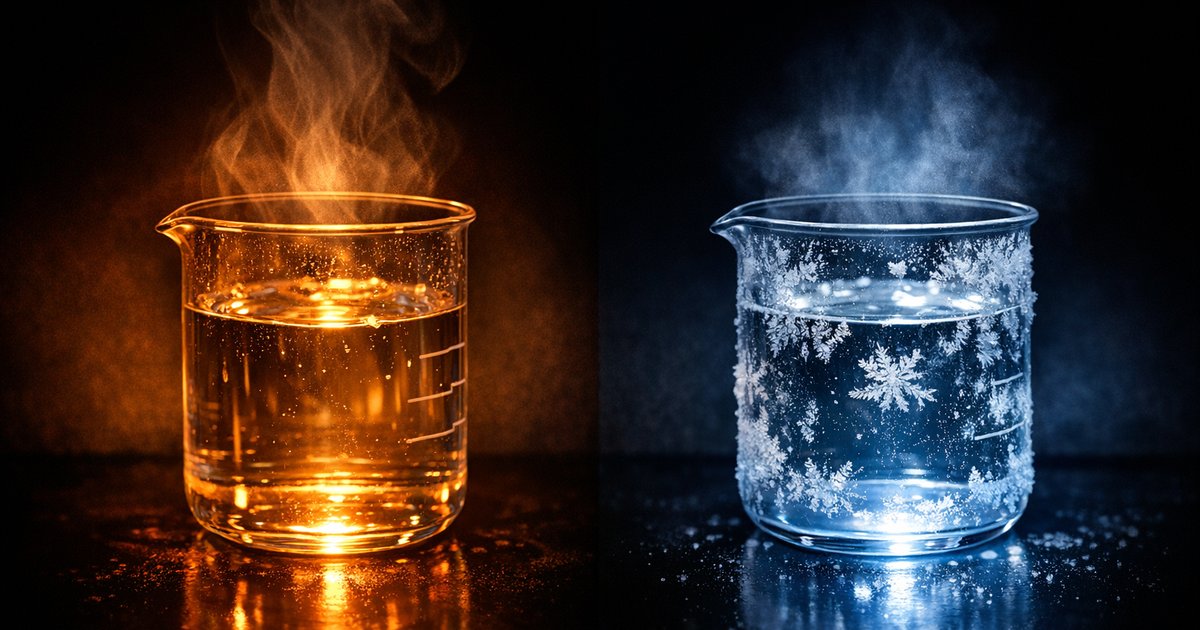
Exothermic vs endothermic: the two categories
Every reaction falls into one of two boxes. Here is the breakdown you need to memorise:
| Feature | Exothermic | Endothermic |
|---|---|---|
| Energy transfer | Transfers energy to surroundings | Takes in energy from surroundings |
| Temperature of surroundings | Increases | Decreases |
| Sign of delta H | Negative (-) | Positive (+) |
| Everyday examples | Combustion, neutralisation, respiration | Thermal decomposition, photosynthesis, dissolving ammonium nitrate |
| What it feels like | Container gets hot | Container gets cold |
Enthalpy change: the number that tells you everything
The enthalpy change of a reaction is written as delta H. It measures the total energy transferred during a reaction at constant pressure.
- Exothermic reactions have a negative delta H (energy is lost by the system)
- Endothermic reactions have a positive delta H (energy is gained by the system)
When you see delta H = -890 kJ/mol for the combustion of methane, that negative sign tells you 890 kilojoules of energy are released per mole of methane burned. No ambiguity.
Reaction pathway diagrams
These diagrams show up in nearly every energetics question on IGCSE Chemistry papers. You need to read them quickly and accurately. The x-axis represents the progress of the reaction (sometimes labelled "reaction coordinate" or "reaction pathway"), and the y-axis represents energy. Here is what to look for:
Exothermic reaction pathway
The reactants sit higher on the energy axis than the products. The overall energy change arrow points downward from the reactant energy level to the product energy level. The difference between these two levels is delta H, and because the products are lower, the value is negative. Picture a ball rolling downhill - it ends up with less potential energy than it started with, and the difference has been transferred to the surroundings as heat.
Endothermic reaction pathway
The products sit higher than the reactants. The overall energy change arrow points upward from reactants to products. Delta H is positive because the system has gained energy from the surroundings. The ball has been pushed uphill - it now holds more energy than before, and that energy came from somewhere outside the reaction.
Activation energy on the diagram
Both types of diagram show a "hump" between reactants and products. The height from the reactant level to the top of this hump is the activation energy (Ea). This is the minimum energy that colliding particles must have to react. Even exothermic reactions need this initial energy input to get started - think of striking a match. The match releases far more energy than you put in, but it will not ignite without that initial friction.
A catalyst lowers the activation energy without changing delta H. On the diagram, the hump becomes shorter but the start and end levels stay the same.
Bond breaking and bond making
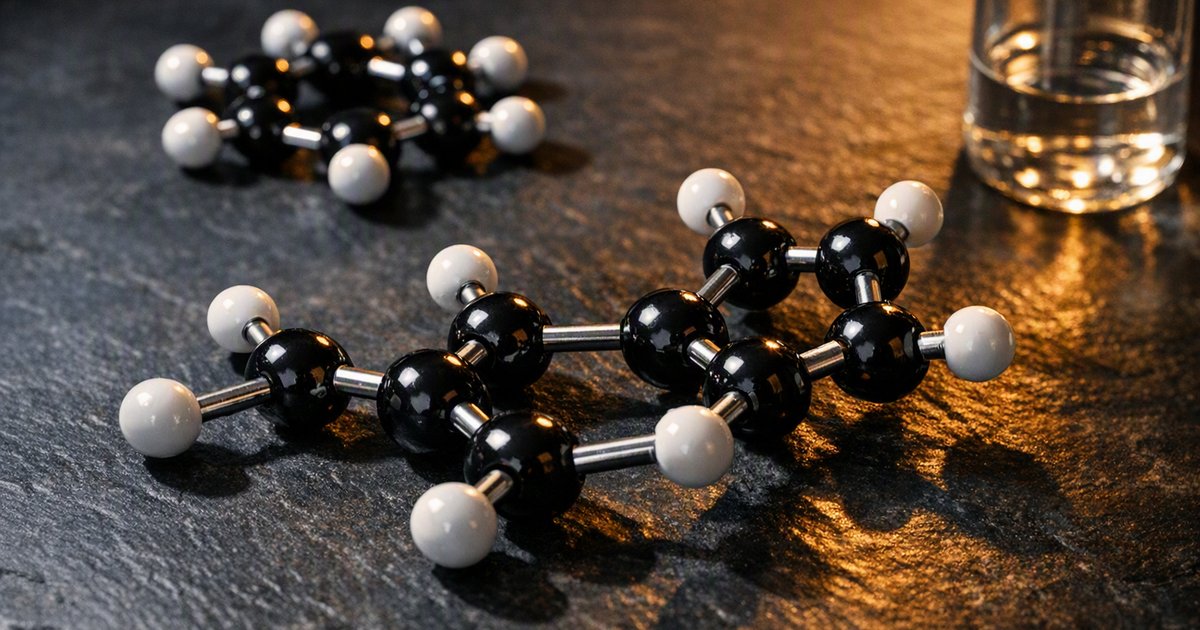
So what actually happens at the particle level during a reaction? This is where the IGCSE Chemistry syllabus gets to the heart of energetics. Every reaction involves old bonds being broken in the reactants and new bonds being formed in the products. The energy balance between these two processes determines whether the reaction is exothermic or endothermic overall.
Here are the two rules you need to know cold:
- Breaking bonds requires energy (endothermic process)
- Making bonds releases energy (exothermic process)
The overall enthalpy change depends on the balance between these two:
- If more energy is released making new bonds than is needed to break old bonds, the reaction is exothermic
- If more energy is needed to break old bonds than is released making new bonds, the reaction is endothermic
Think of it as a budget. Breaking bonds costs energy. Making bonds earns energy. If you earn more than you spend, the reaction is exothermic.
Calculating enthalpy change from bond energies
At Extended level, you will be asked to calculate delta H using bond energy values. The formula is simple:
Delta H = total energy to break bonds in reactants - total energy released making bonds in products
Or in short: delta H = bonds broken - bonds made.
Reaction: 2H2 + O2 -> 2H2O
Bond energies: H-H = 436 kJ/mol, O=O = 498 kJ/mol, O-H = 463 kJ/mol
Step 1: Bonds broken (reactants)
2 x H-H = 2 x 436 = 872 kJ
1 x O=O = 498 kJ
Total broken = 872 + 498 = 1370 kJ
Step 2: Bonds made (products)
2 x H2O contains 4 x O-H bonds
4 x 463 = 1852 kJ
Step 3: Calculate delta H
Delta H = 1370 - 1852 = -482 kJ/mol
The answer is negative, confirming combustion is exothermic. That checks out.
Reaction: 2H2O -> 2H2 + O2
Using the same bond energies as above:
Bonds broken: 4 x O-H = 4 x 463 = 1852 kJ
Bonds made: 2 x H-H + 1 x O=O = 872 + 498 = 1370 kJ
Delta H = 1852 - 1370 = +482 kJ/mol
Positive delta H confirms this is endothermic. Notice it is exactly the reverse of Example 1 - same magnitude, opposite sign.
What examiners look for in energetics questions
Having marked through hundreds of IGCSE Chemistry scripts, certain patterns stand out in how marks are awarded and lost on this topic:
| Question type | What earns marks | What loses marks |
|---|---|---|
| Define exothermic/endothermic | Mention energy transfer AND direction AND temperature change of surroundings | Saying "releases heat" without specifying surroundings |
| Label a reaction pathway diagram | Correct arrows for Ea and delta H with labels | Swapping Ea and delta H positions |
| Bond energy calculation | Clear working showing bonds broken and bonds made separately | Subtracting in the wrong order or miscounting bonds |
| Explain why a reaction is exothermic | "More energy is released making bonds than is needed to break bonds" | Vague answers like "bonds release energy" |
Quick-fire revision checklist
Before you walk into your IGCSE Chemistry exam, make sure you can confidently do all of these:
- State the definitions of exothermic and endothermic with reference to surroundings
- Give two examples of each type
- Sketch a reaction pathway diagram for both types, labelling Ea and delta H
- Explain what activation energy is and how a catalyst affects it
- State that bond breaking is endothermic and bond making is exothermic
- Calculate delta H from bond energy data using bonds broken minus bonds made
- Determine whether a reaction is exothermic or endothermic from the sign of delta H
Everyday examples worth knowing
Examiners sometimes ask you to classify reactions you have met elsewhere in the course. Here are the key ones to remember:
- Exothermic: combustion of fuels (burning methane, propane, octane), neutralisation (acid + alkali), respiration in living cells, reaction of metals with acids (e.g. magnesium + hydrochloric acid), oxidation reactions
- Endothermic: thermal decomposition (e.g. calcium carbonate breaking down when heated), photosynthesis in plants, dissolving ammonium nitrate in water (used in instant cold packs), electrolysis (energy must be continuously supplied)
If you are asked for an example in the exam, pick one you are confident about and state the reactants and products. "Combustion" on its own is not enough - say "the combustion of methane" or "burning natural gas" to show you understand what the reaction is.
Practice questions to test yourself
- Methane (CH4) burns in oxygen to form carbon dioxide and water. Given bond energies C-H = 413, O=O = 498, C=O = 805, O-H = 463 (all in kJ/mol), calculate the enthalpy change for this reaction. Is it exothermic or endothermic?
- A student adds magnesium ribbon to dilute hydrochloric acid. The temperature of the solution rises from 22 degrees C to 35 degrees C. Classify this reaction and explain your answer.
- Draw a reaction pathway diagram for an endothermic reaction. Label the axes, reactants, products, activation energy, and delta H.
- Explain why all reactions, including exothermic ones, require activation energy to get started.

A direct, exam-focused guide to chemical energetics for IGCSE Chemistry (0620). Covers exothermic and endothermic reactions, enthalpy change, activation energy, reaction pathway diagrams, and bond energy calculations with worked examples.



Kommentar(e)